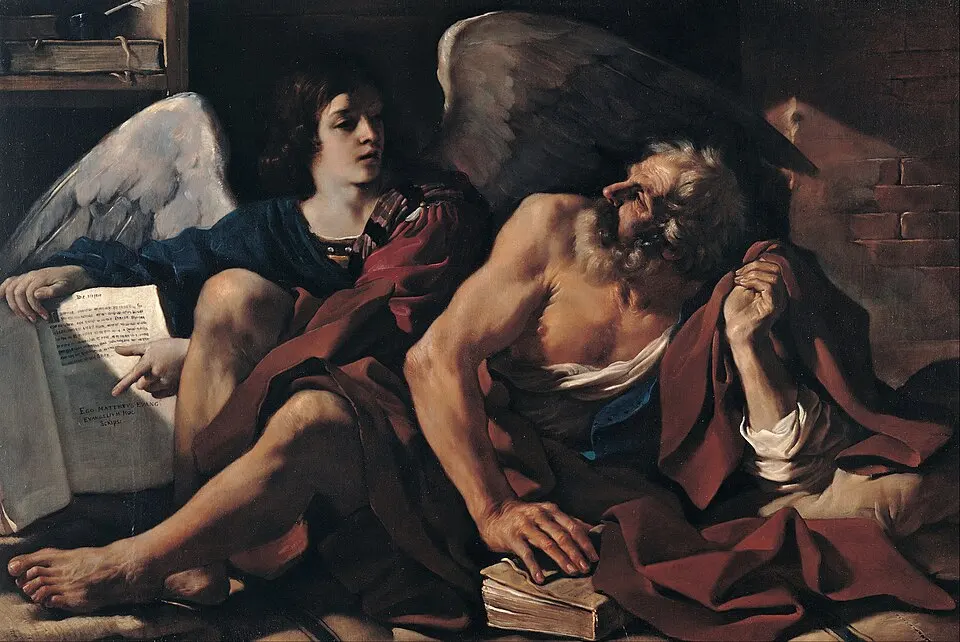
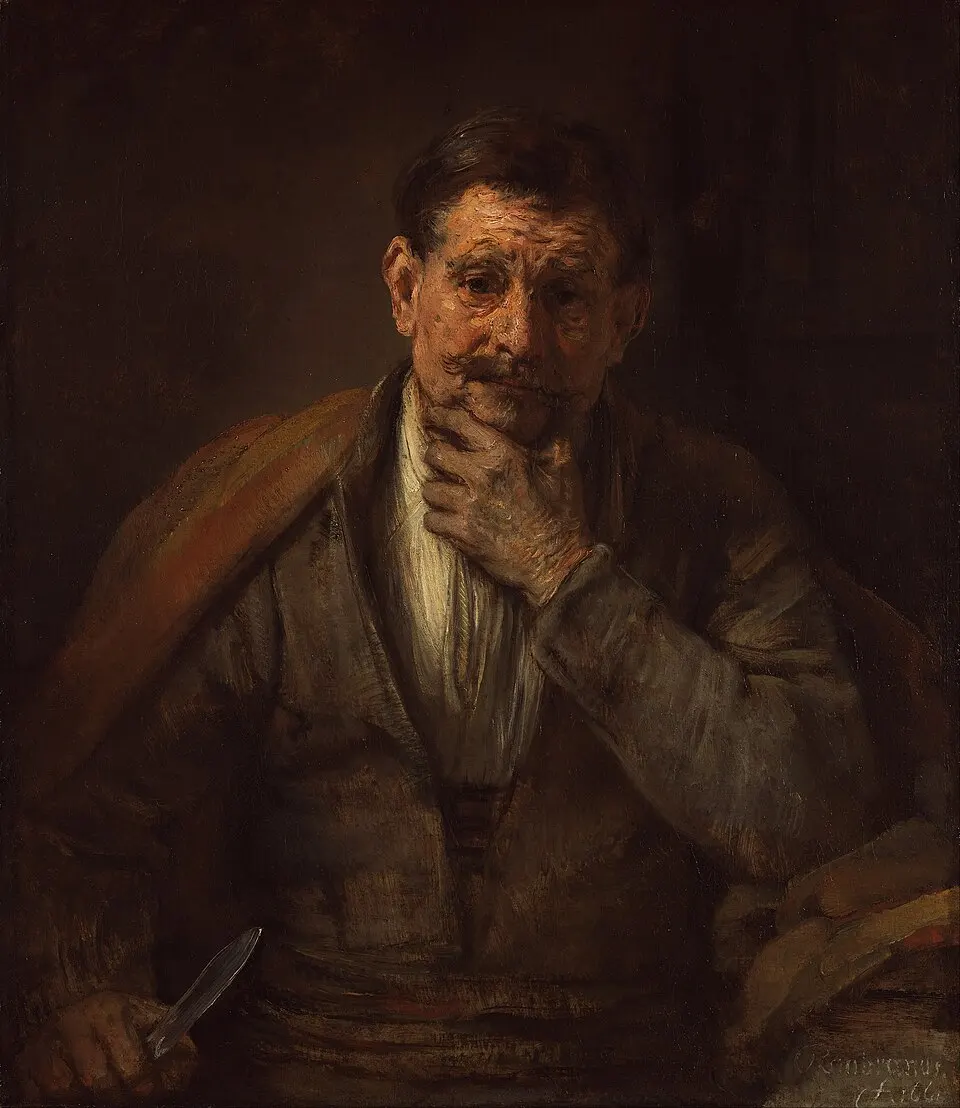
A knife points to the tradition of Bartholomew’s flaying. Some artists give him the blade alone, others also show the flayed skin.
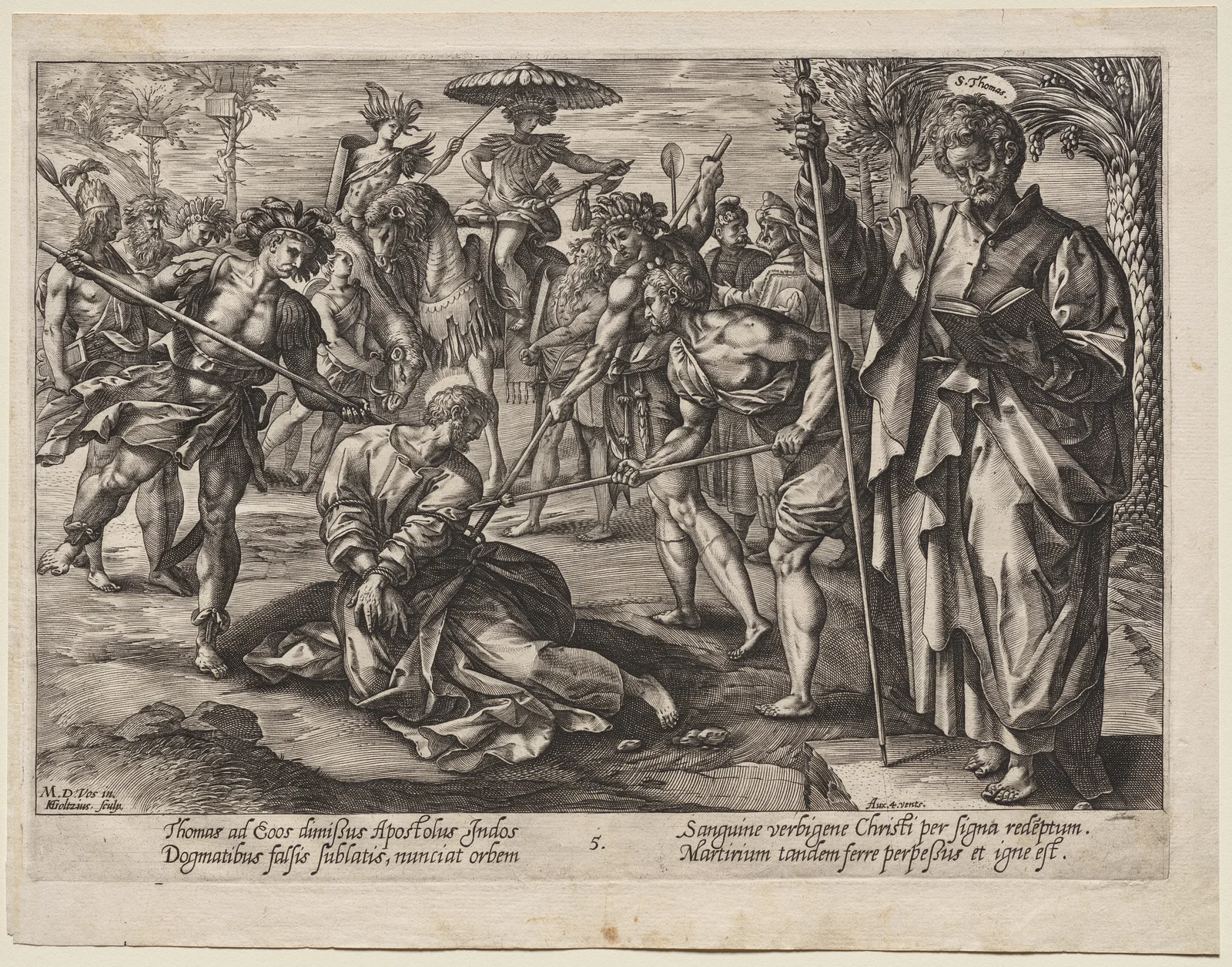
Artwork 1 · Saint BartholomewFollow Thomas’s hand towards the wound in Christ’s side. In an apostle portrait a builder’s square can identify him without the Gospel scene.
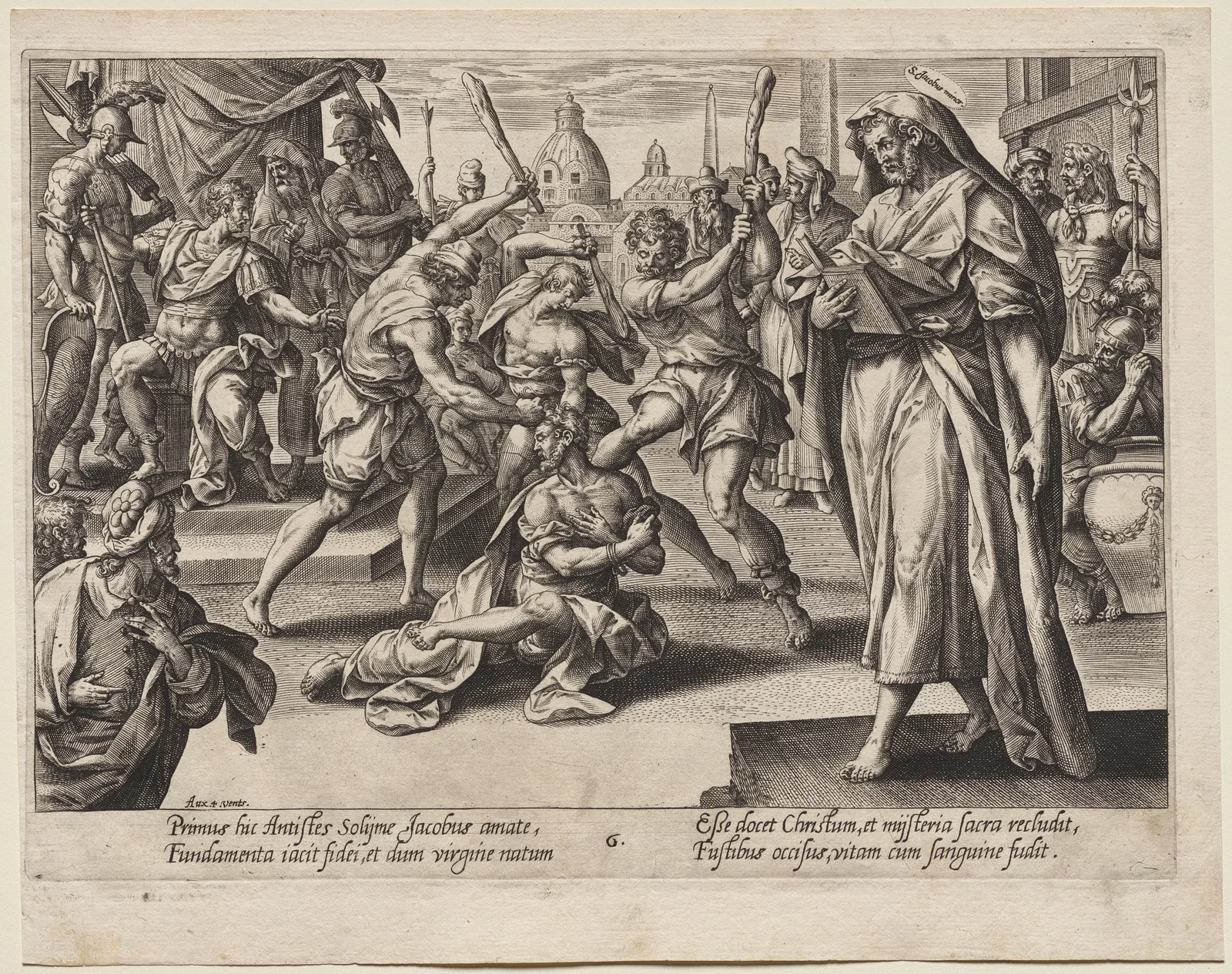
Artwork 1 · Saint ThomasA fuller’s club recalls a tradition of his martyrdom. Its heavy end helps distinguish it from the pilgrim’s staff of James the Greater.
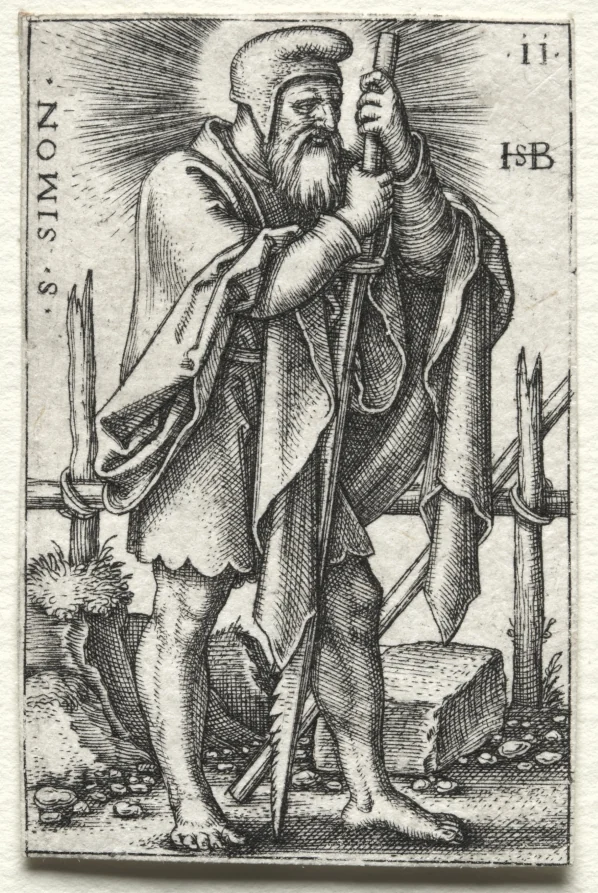
Artwork 1 · Saint James the LessLook for the toothed edge of a saw. It identifies Simon the Zealot in many Western apostle series, especially alongside Jude.
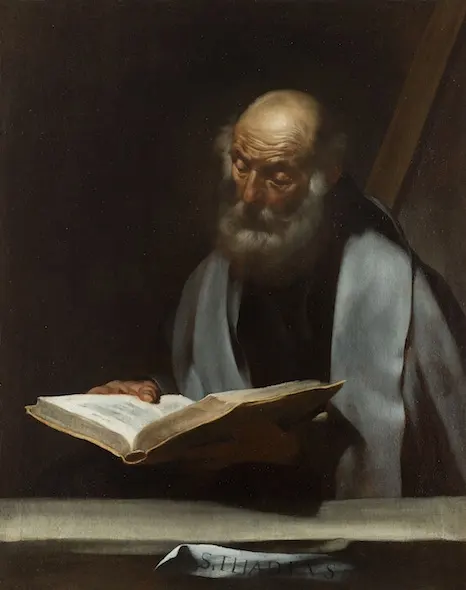
Artwork 1 · Saint SimonA club or an inscription can identify Jude Thaddeus. A shared feast explains why artists often pair him with Simon the Zealot.
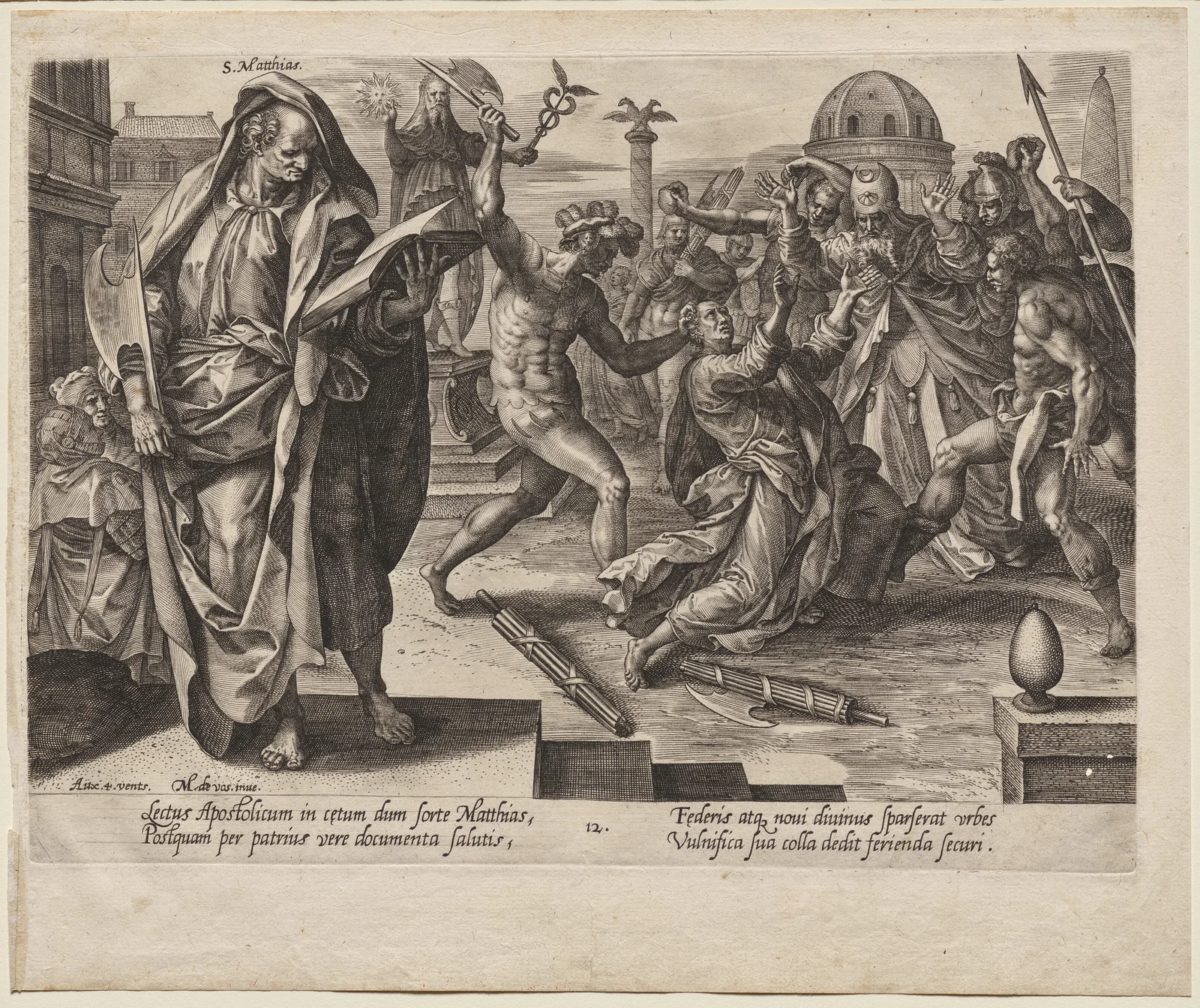
Artwork 1 · Saint Jude ThaddeusAn axe often identifies Matthias in apostle portraits. He joined the Twelve after the Ascension, in the episode recounted in Acts.
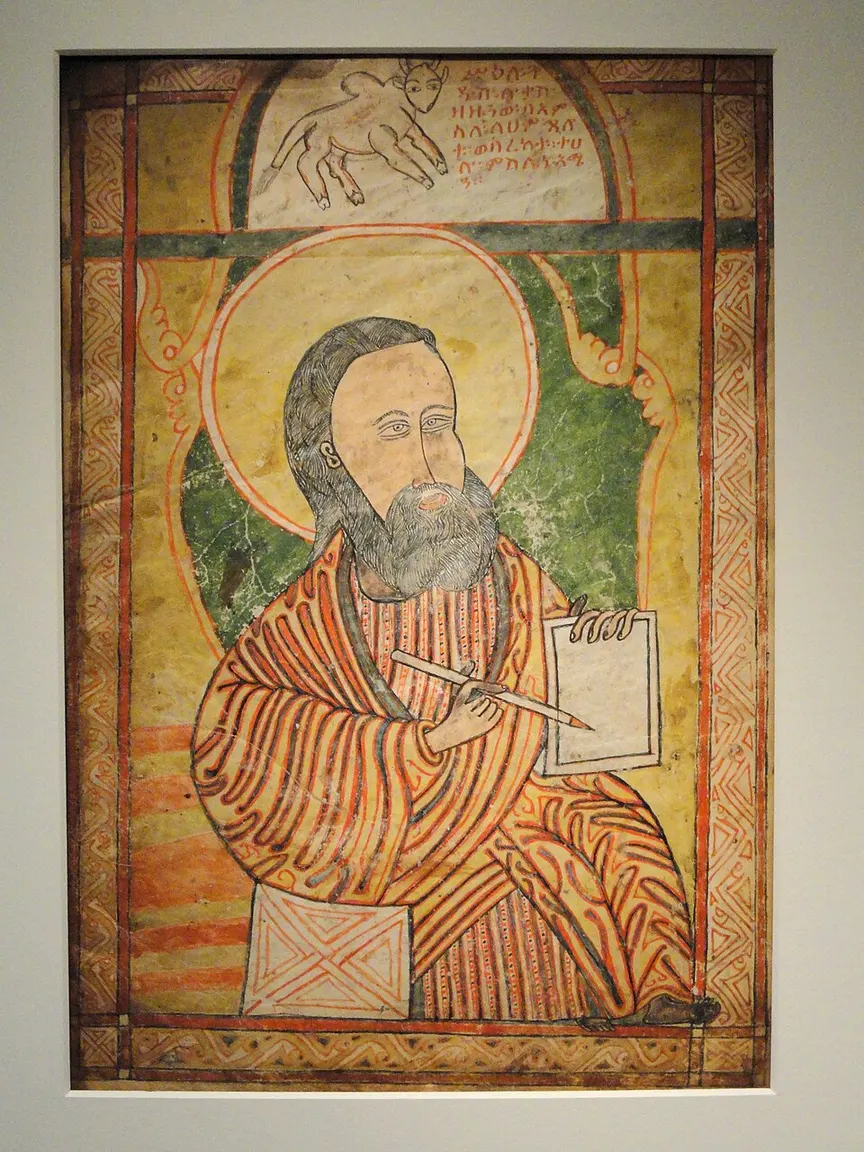
Artwork 1 · Saint MatthiasA winged ox beside the book identifies Luke the Evangelist. In another tradition he appears at an easel, painting the Virgin.
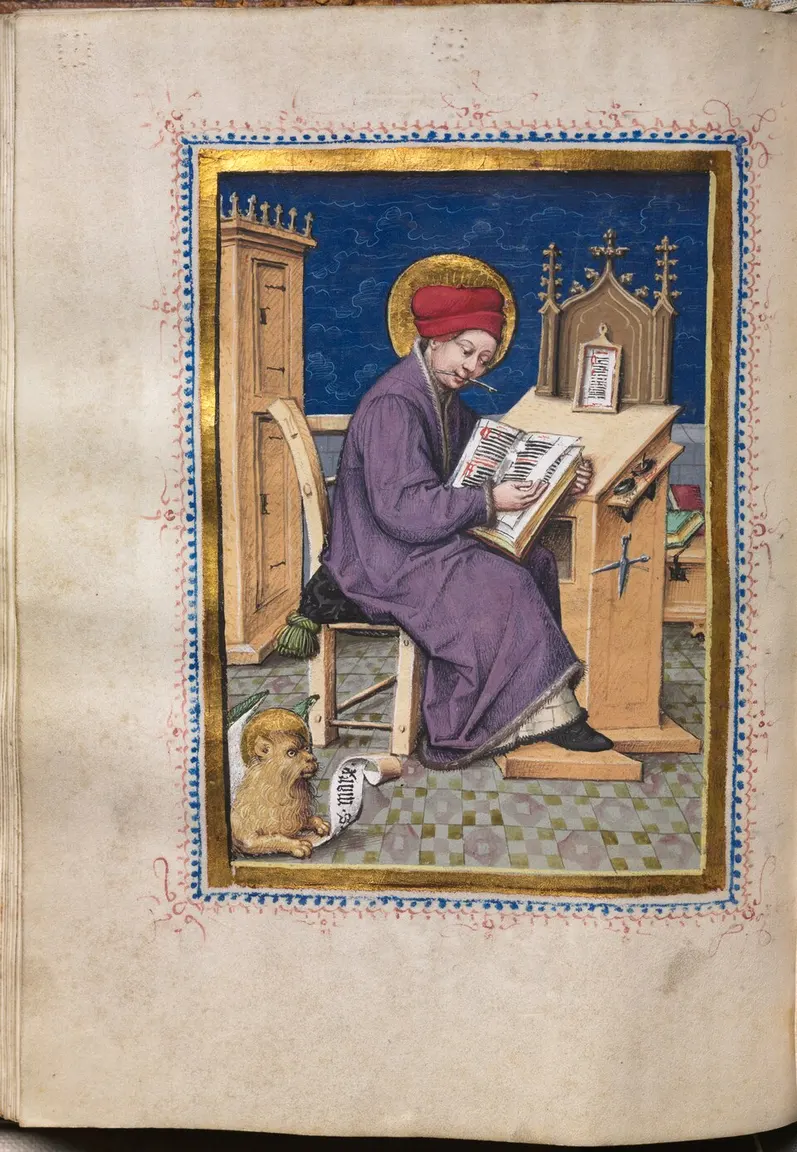
Artwork 1 · Saint Luke the EvangelistLook for the winged lion beside the Gospel book. This emblem of Mark also appears on buildings and banners in Venice.
Artwork 1 · Saint Mark the EvangelistAt the sacrifice of Isaac, follow the raised knife to the angel who stops Abraham. The ram is another clue to the episode.
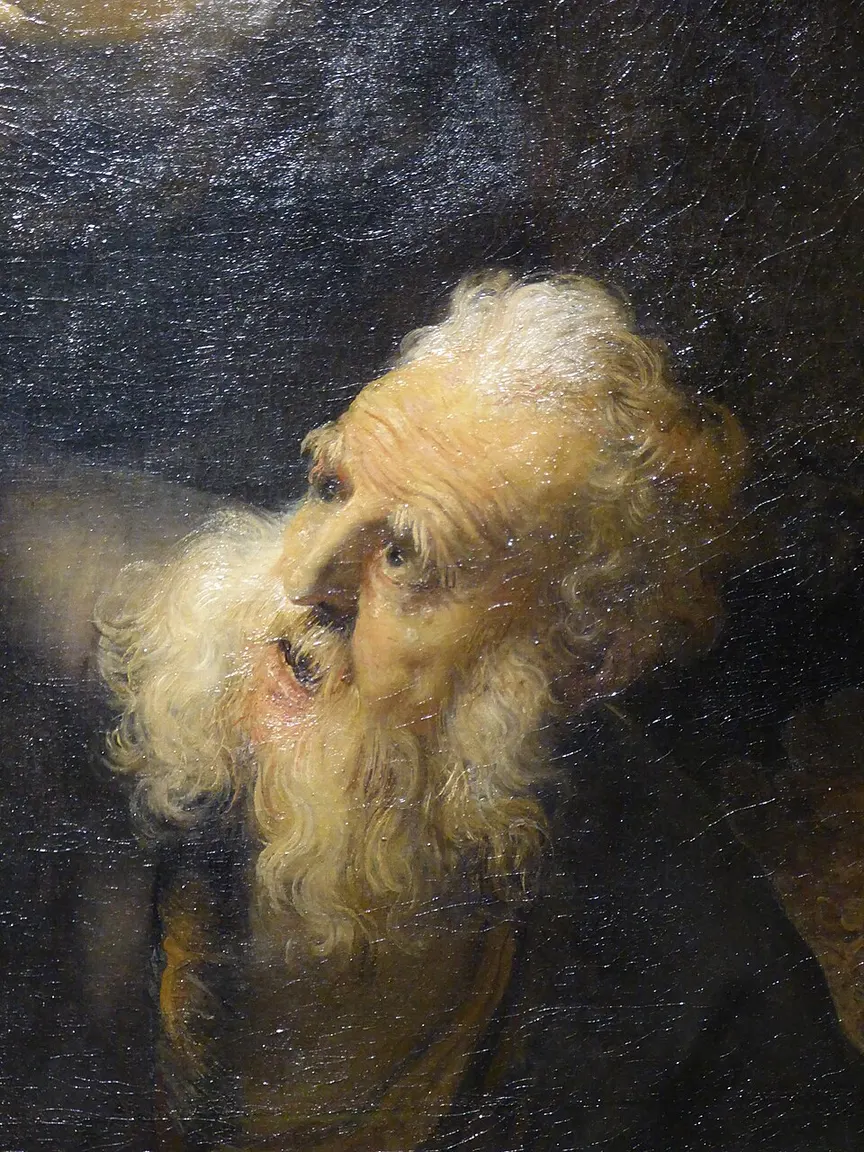
Artwork 1 · The sacrifice of Isaac (detail of Abraham)