Lion
Jerome’s companion, Mark’s emblem or the lions in Daniel’s den
Saints
Jerome of Stridon
Saint Jerome (c. 347–420) was a scholar of Scripture. His revision of the Latin Gospels and his translations helped to shape the Latin Bible called the Vulgate.
Jerome studied in Rome and spent time in the eastern Mediterranean, where he took up biblical languages. He settled in Bethlehem towards the end of the fourth century and continued work on translations and commentaries that circulated widely in the Western Church.
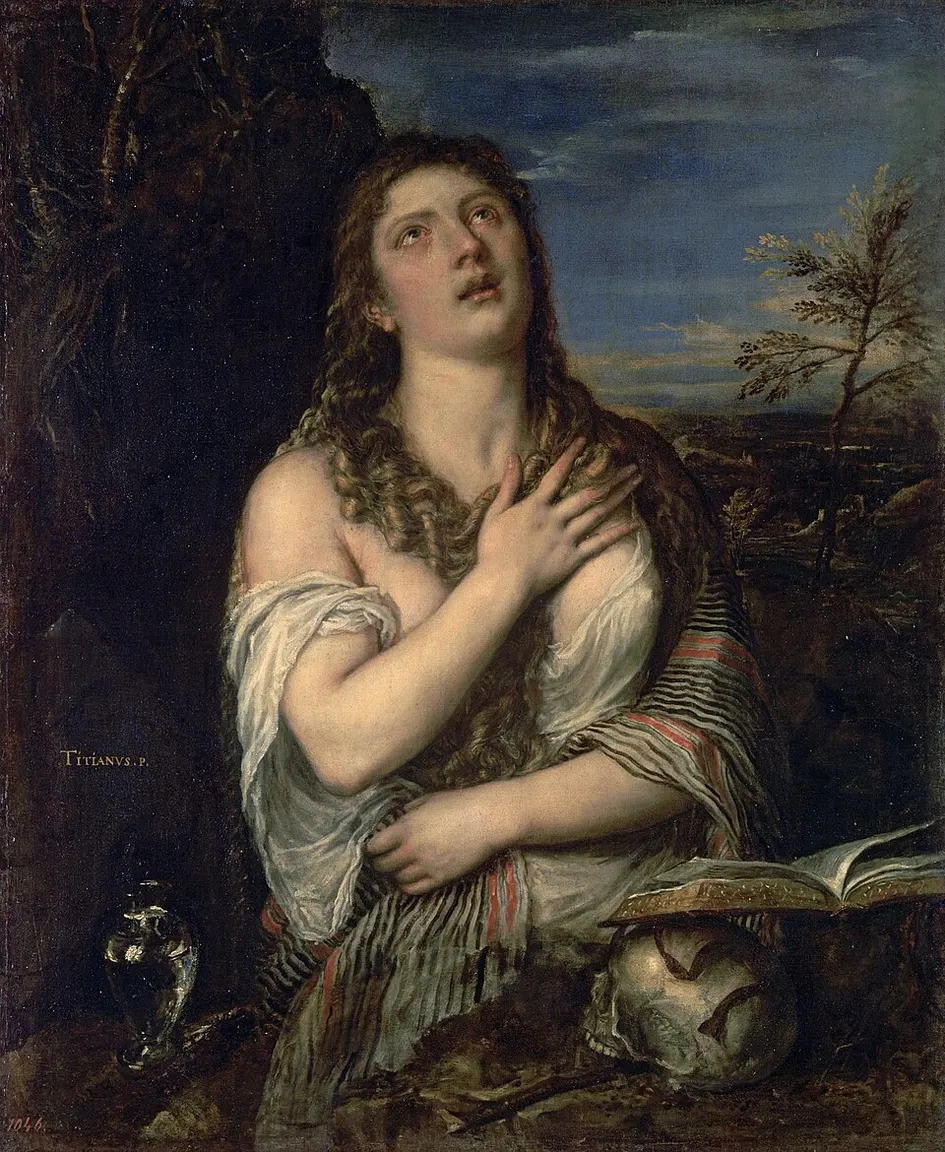
Art shows Jerome as a scholar, a penitent, or a figure from legend. A cardinal’s hat in medieval art is a later convention. The tamed lion evokes the story of the thorn, while a skull can suggest that the image represents a penitent reflecting on mortality.
What is Jerome doing with the lion’s paw in Riemenschneider’s sculpture?
He holds it between his hands to remove a thorn. The lion is small enough to sit close to him, which makes the encounter appear calm. The scene belongs to a legend associated with Jerome.
Jerome’s companion, Mark’s emblem or the lions in Daniel’s den
Gospels, doctrine, or wisdom
Memento mori, meditation on death
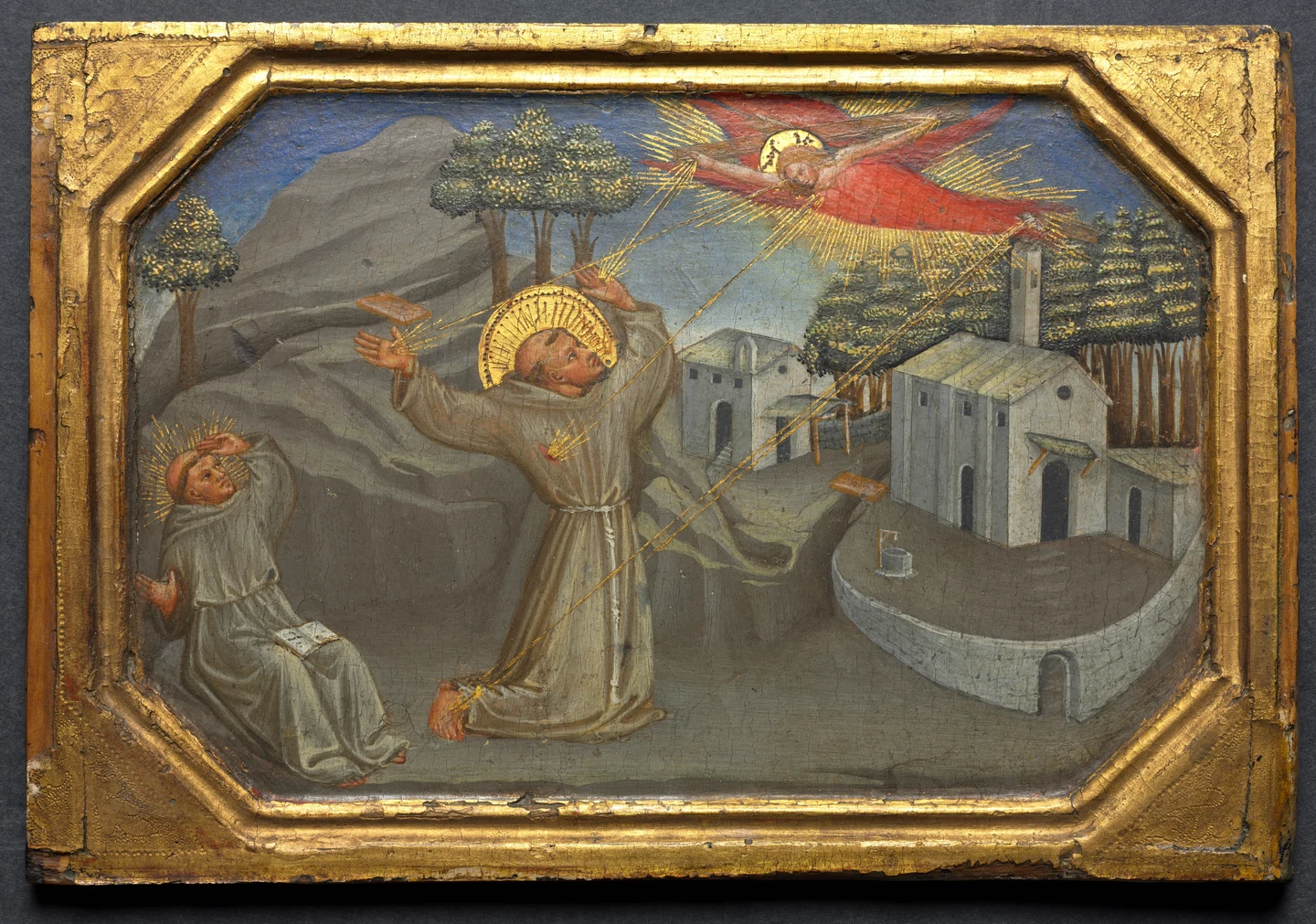
San Damiano cross and passion devotion
5 of 5 works
His work was central, but the Vulgate contains translations from several sources. Jerome revised the Latin Gospels and translated much of the Old Testament from Hebrew.
The skull serves both figures. A lion, a quill, or the stone the penitent uses to strike his chest supports an identification as Jerome. An ointment jar favours Mary Magdalene.
Reviewed on