Carmelite habit
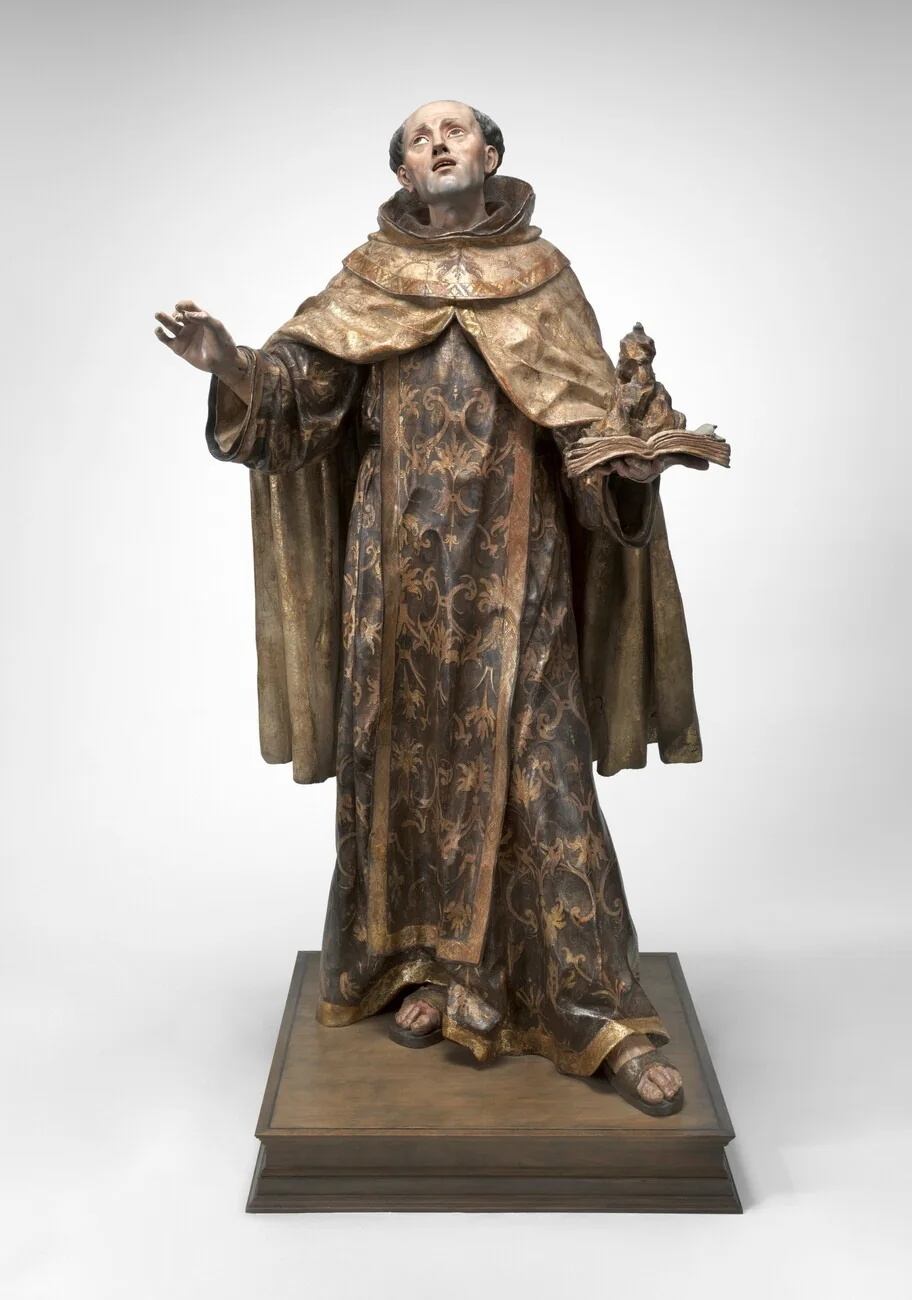
The brown habit and white mantle can indicate the Carmelite order. A scene or attribute distinguishes Teresa from John of the Cross.
Saints
Teresa of Jesus
Saint Teresa of Ávila was a sixteenth-century nun, writer and religious reformer. Teresa of Jesus was her name in religion, and it still appears on many editions of her books.
Iconographic Attributes
Teresa founded the convent of Saint Joseph in Ávila in 1562. It became the starting point for a reform that gave prayer and life in community a central place. John of the Cross helped develop the reform among the friars. Teresa drew on her lived experience to explain prayer in her writings.
In The Book of Her Life she describes a vision in which an angel’s dart reached her heart. The passage inspired many images of the transverberation. This eighteenth-century oil on copper in Denver shows how the subject also circulated in the art of Spanish America.
Find the dart, then follow Teresa’s gaze. What distinguishes this scene from a portrait of the saint at prayer?
Teresa clasps her hands and looks towards the angel emerging at the left with a dart. The exchange identifies the particular episode. The veil, mantle and rosary establish her religious role without telling us which event is taking place.
The brown habit and white mantle can indicate the Carmelite order. A scene or attribute distinguishes Teresa from John of the Cross.
Gospels, doctrine, or wisdom
San Damiano cross and passion devotion
5 of 5 works
Yes. Ávila was her home city and Teresa of Jesus was her name in religion. She lived from 1515 to 1582, centuries before Thérèse of Lisieux, another Carmelite known for her writing.
It is the name given to the mystical experience in which Teresa describes an angel piercing her heart with a dart. Images give visible form to an interior experience.
Reviewed on