Flaying Knife
Flaying knife—instrument of martyrdom.
Apostles
Nathanael
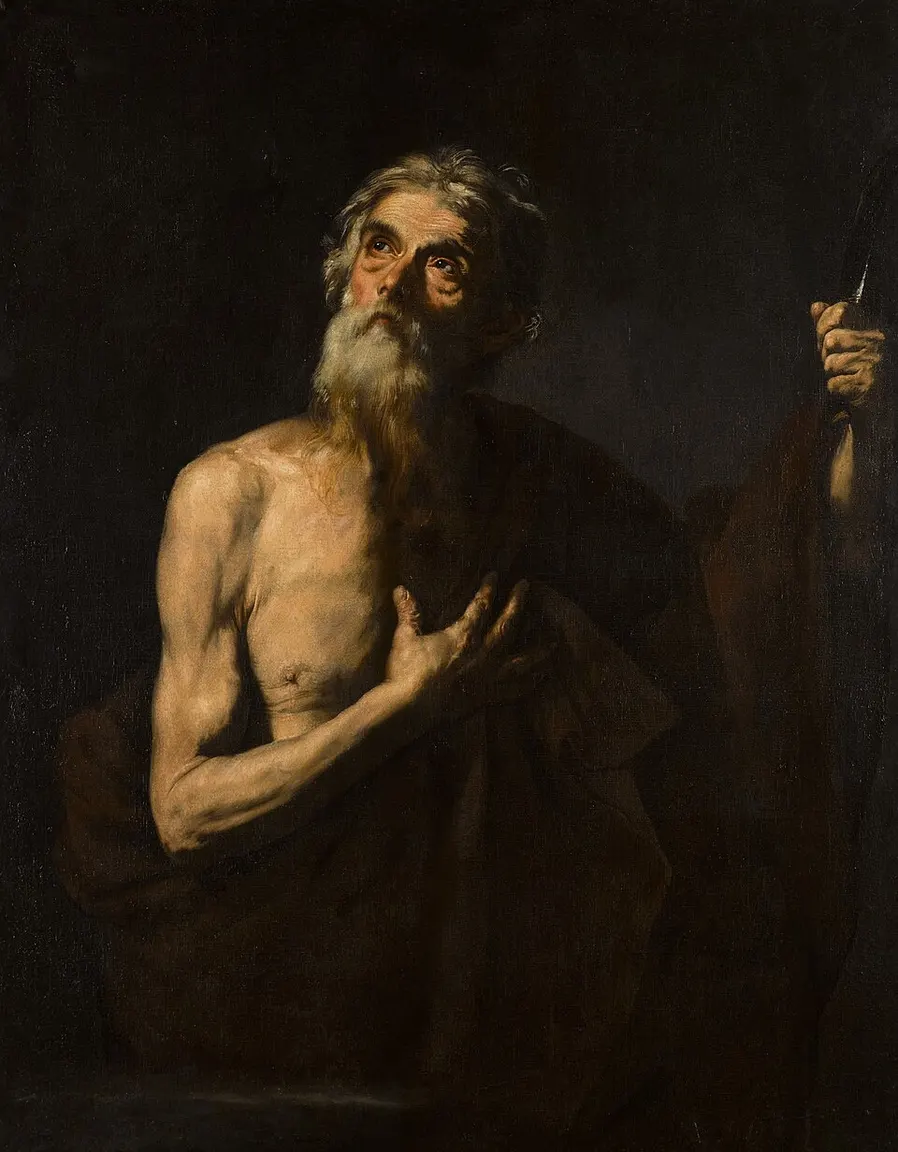
A knife points to the tradition of Bartholomew’s flaying. Some artists give him the blade alone, others also show the flayed skin.
Iconographic Attributes
Iconographic field guide
Knife is the portable attribute; skin draped on arm is the narrative climax. Ribera and Michelangelo made this identity unforgettable. Do not confuse with Lawrence (gridiron) or generic butcher saints without apostolic context.
Flaying knife—instrument of martyrdom.
Apostolic witness when knife is absent.
Garments of the Twelve or evangelists
Venerable age of prophets and Baptist
Biography
Mark includes Bartholomew among the Twelve. A longstanding tradition identifies him with Nathanael in John’s Gospel, although the texts do not make that identification. The knife and flayed skin in his images come from later accounts of his martyrdom.
John 1:45–51; Synoptic lists; flaying martyrdom tradition; Michelangelo Last Judgment.
Instrument of martyrdom—almost diagnostic
Michelangelo and Ribera tradition—unforgettable
Often shown stripped or with anatomical frankness
Apostolic Gospel witness
Quick checklist
Knife or skin attribute; gaunt face in Baroque martyrdom panels.
Often confused with Saint Jude Thaddeus: Both appear in apostolic lists; knife vs club
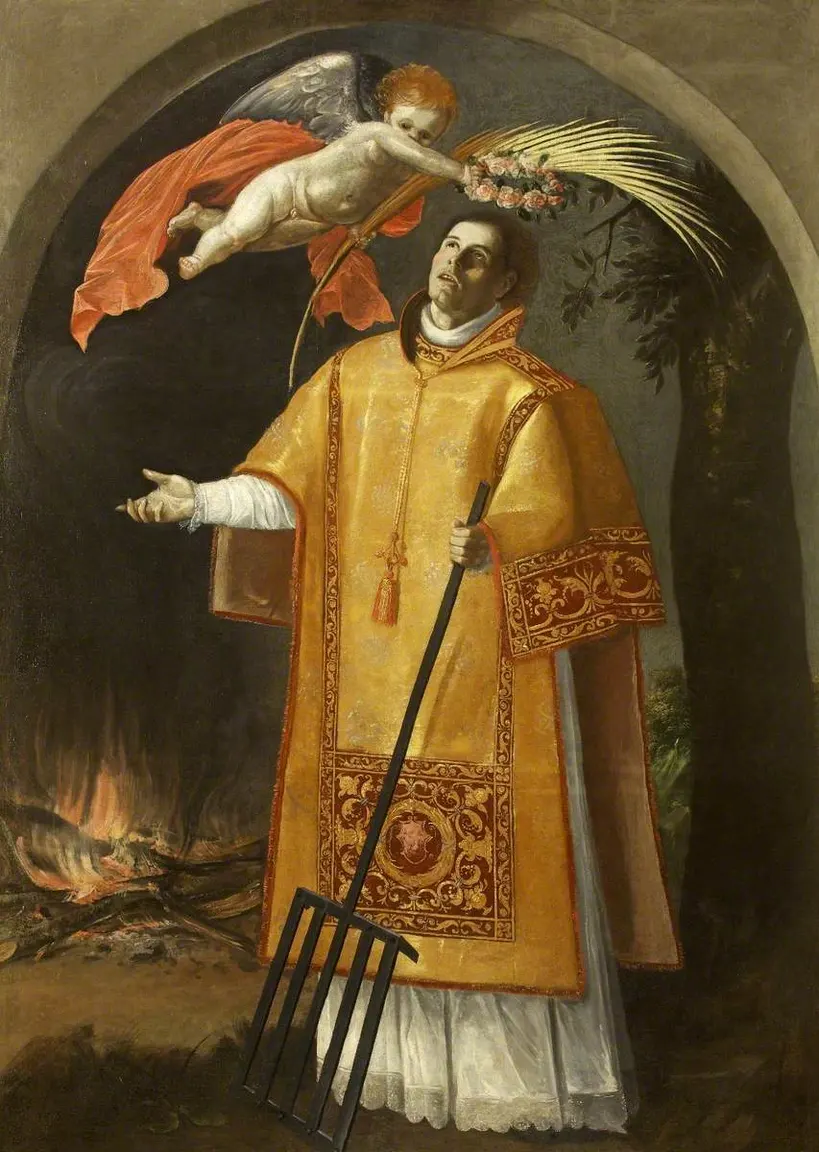
Often confused with Saint Lawrence: Both martyrdom attributes are gruesome; Lawrence has gridiron
The Twelve Apostles course
Distinguish the attributes of Bartholomew from the account of his name in scripture.
Study this lesson 8 min · FreePractice