Loaves of bread
Loaves can recall Philip at the feeding of the multitude or Mary of Egypt in the desert. Read the setting and the other figures.
Saints
Mary of Egypt
Saint Mary of Egypt is a penitent in early Christian tradition. The traditional account places her conversion in Jerusalem and tells how she lived out the rest of her life in the desert.
Iconographic Attributes
The account attributed to Sophronius of Jerusalem says that Mary bought three loaves before heading for the Jordan. Years later she met the monk Zosimas and asked him to return and bring her Communion. The bread and the encounter belong to separate moments in the story and give rise to different kinds of image.
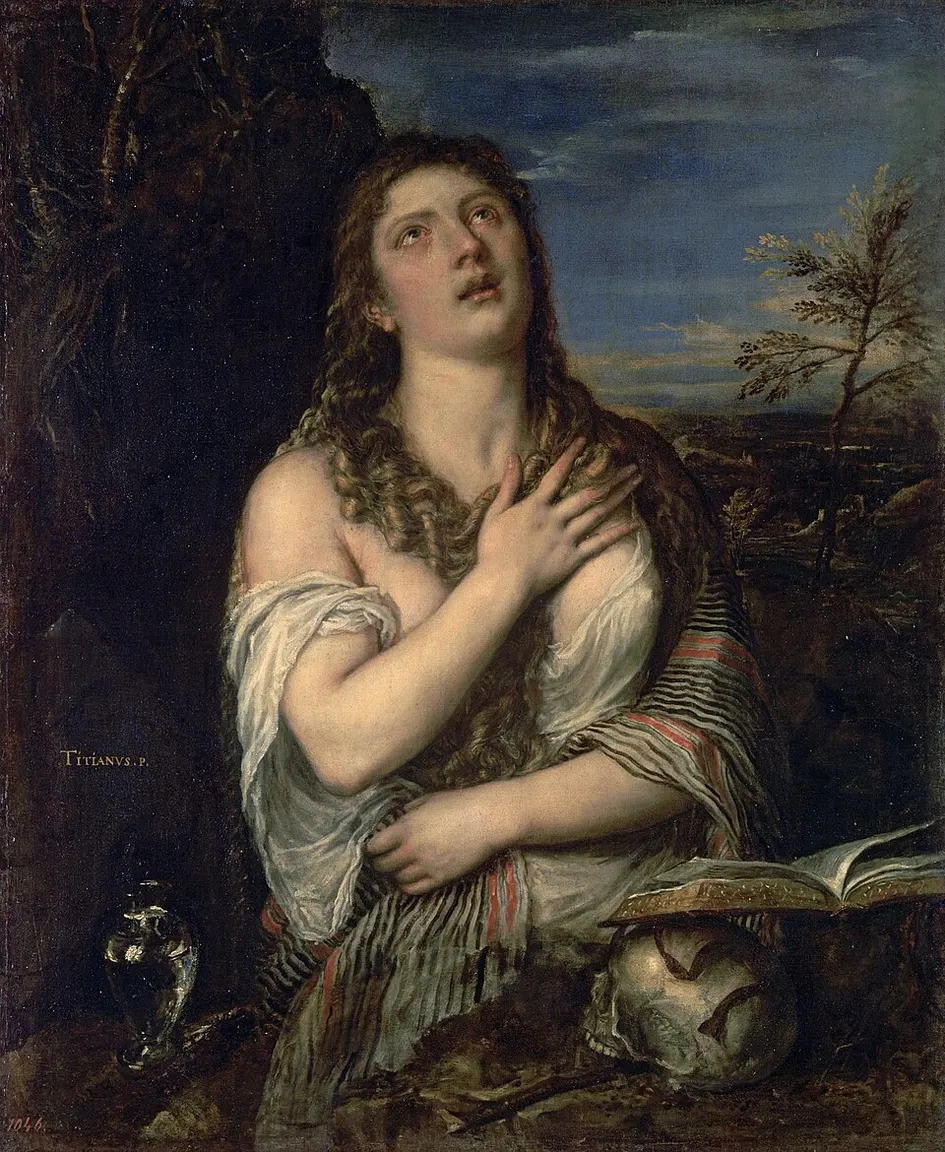
Ribera painted her in 1641 with her hands folded in a rocky landscape. A partly eaten loaf and a skull evoke withdrawal and penance. The museum discusses this work as an example of chiaroscuro, with light modelling the figure against the dark surroundings. Byzantine Christians remember her especially during Lent.
Look at the loaf beside the skull. If the loaf were missing, which part of the visual interpretation would still hold?
Her joined hands, the rocks and the skull would still suggest prayer and penance. The loaf adds a clue from the life of Mary of Egypt and narrows the identification, which the museum’s record helps confirm.
Loaves can recall Philip at the feeding of the multitude or Mary of Egypt in the desert. Read the setting and the other figures.
San Damiano cross and passion devotion
4 of 4 works
They are distinct. The Gospels name Mary Magdalene as a witness to the Resurrection. Mary of Egypt’s traditional life centres on the desert and her meeting with Zosimas.
In the Byzantine tradition she is commemorated on April 1. Her life is also remembered on the fifth Sunday of Great Lent, when it is read in the light of repentance.
Reviewed on