Crozier
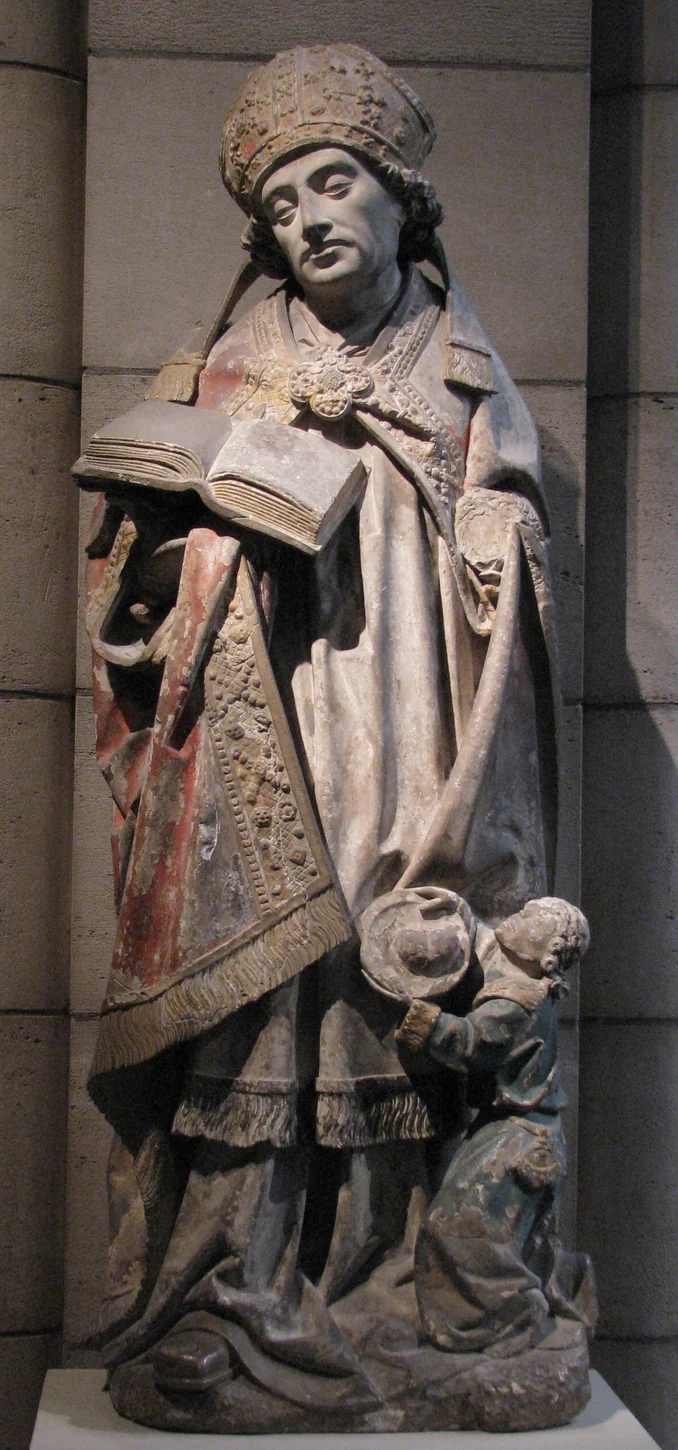
A crook carried by a bishop or abbot. Read it alongside the vestments and any personal attribute.
Saints
Benedict of Norcia
Saint Benedict of Nursia was a sixth-century Italian abbot. The Rule that bears his name became a guide for monastic life across Western Europe.
Book II of Gregory the Great’s Dialogues relates that Benedict withdrew to Subiaco before guiding several communities. Tradition places the foundation of his later monastery at Monte Cassino. Writing decades after Benedict, Gregory includes miracle stories to present a model of religious life.
The Rule sets out a rhythm of prayer, work and reading. It asks the abbot to adapt the community’s discipline to the people in his care. A book in Benedict’s portraits may refer to the Rule, while the crozier signals his office as abbot.
What is the difference between the object that crosses Benedict’s habit and the figure emerging from his cup?
The staff with the curled top is an abbot’s crozier. A small winding shape above the cup evokes the poison in the story. The mitre on the ground adds another visual sign of ecclesiastical rank.
A crook carried by a bishop or abbot. Read it alongside the vestments and any personal attribute.
Chalice legend of John at Ephesus
Gospels, doctrine, or wisdom
A pointed liturgical headdress. It indicates rank and can be shared by several saints.
5 of 5 works
It evokes the poison that some monks put in his drink in Gregory’s Dialogues. The vessel breaks when Benedict blesses it. The serpent makes that invisible poison visible in art.
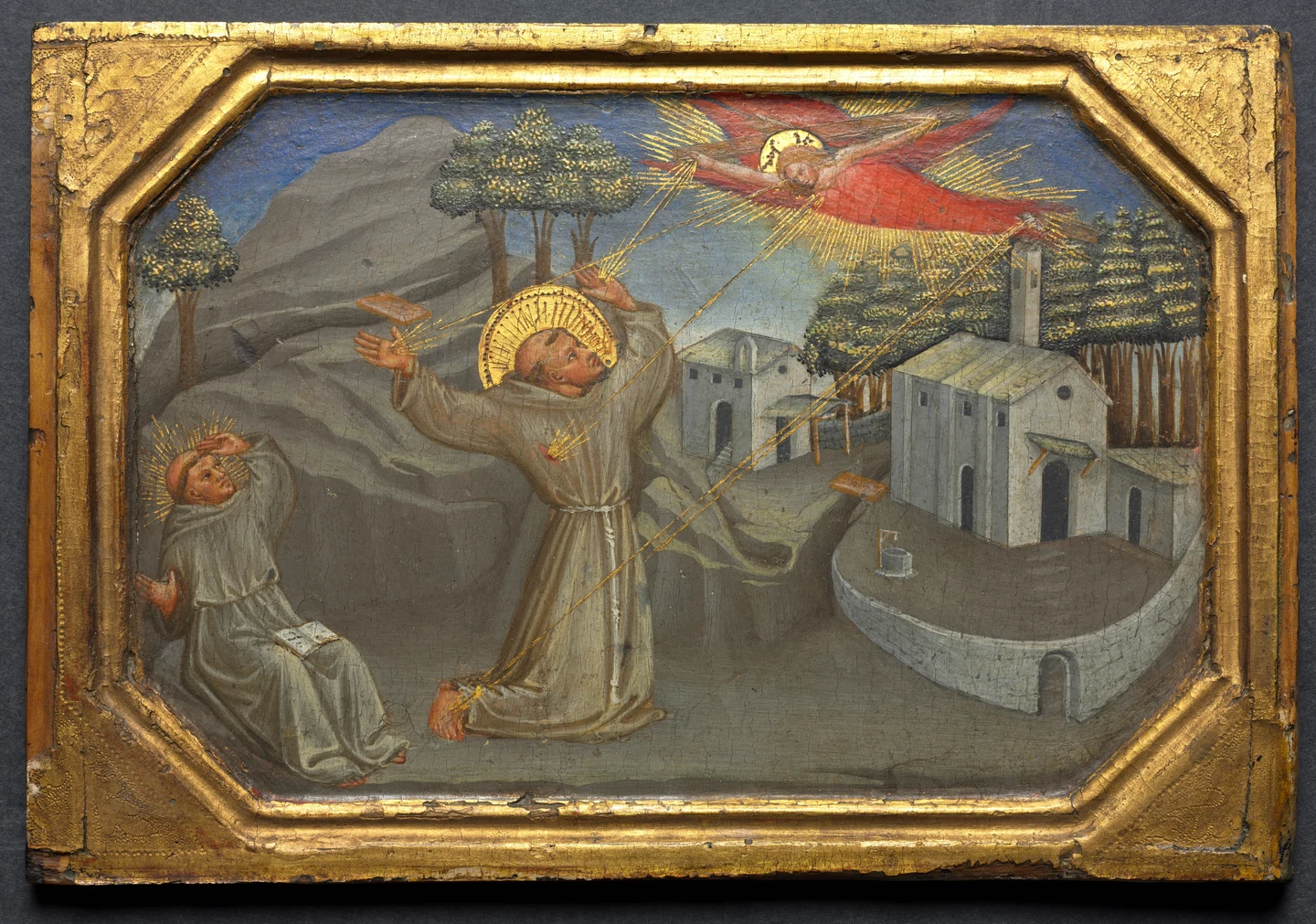
An abbot’s crozier and a cup with a serpent suggest Benedict. For Francis, look for a Franciscan cord and the wounds of the stigmata when they are shown.
Reviewed on