Symbols and Attributes of Saints in Art
Identify saints in paintings and sculptures through their objects, animals and gestures. Try the method on works by Perugino, Caravaggio and Raphael.
Go to the four-step method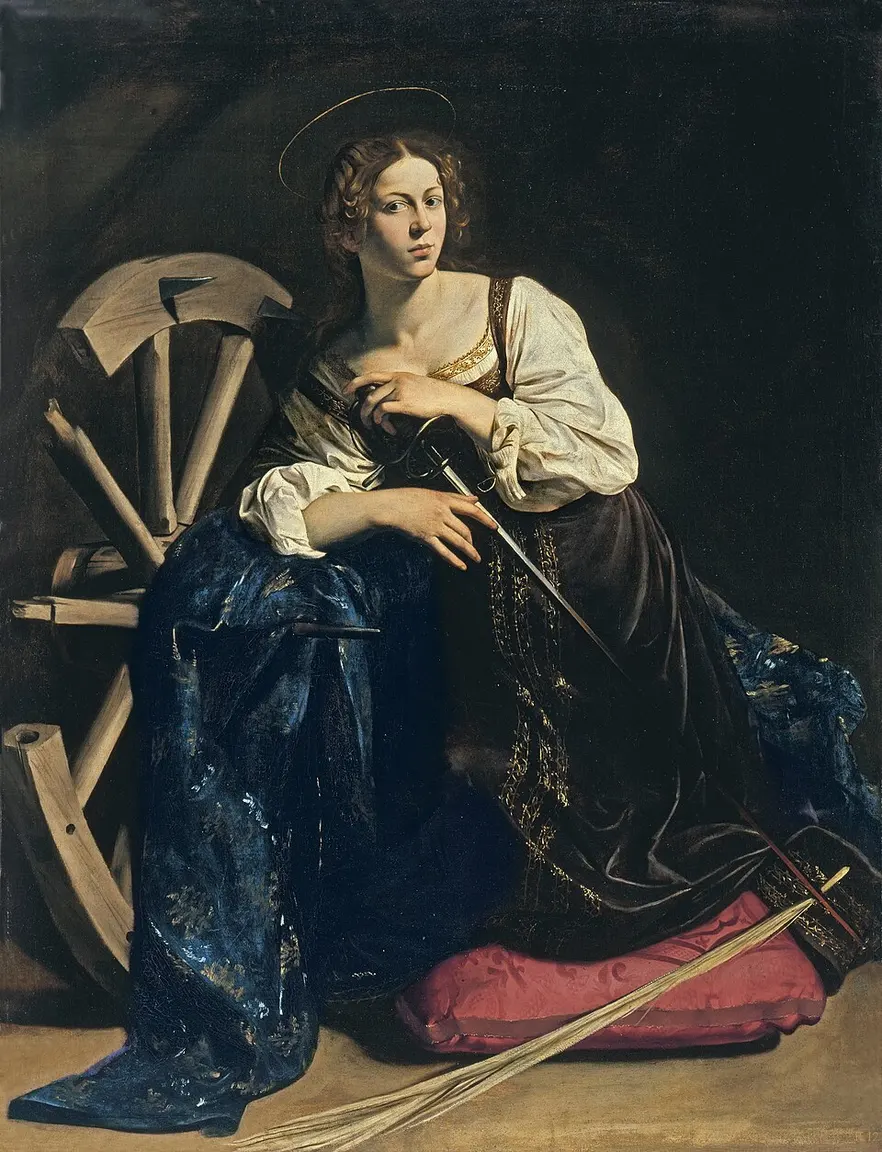
What is an iconographic attribute?
An attribute is an object, animal or other element that helps identify a figure. It may refer to the person’s life, a tradition about their martyrdom or their religious role. In a painting of saints, a wheel, keys or an animal can give more precise information than the face. National Gallery definition.
To identify a saint, combine the attribute with the action, companions and context of the work. A list of symbols helps suggest candidates; verification comes next. This method focuses on conventions of Western Christian art: different periods and traditions do not always depict a figure in the same way.
A four-step observation method
Inventory what is visible
Look at the hands, feet and edges of the picture. Note objects, animals, wounds, lettering and clothing. Write “long object with teeth” before “Simon’s saw”. This keeps your first hunch from deciding what you think you can see.
Give specific clues more weight
A book appears with many figures; a distinctive implement narrows the possibilities further. Yet even the most striking object should not be isolated from everything else. Check whether the saint holds it, another figure carries it or it belongs to the background.
Read actions and relationships
Distinguish a devotional portrait from a narrative scene. Ask who acts and who receives the action: handing over, writing, wounding, healing or receiving something can explain an object. A figure beside the protagonist does not necessarily share their identity.
Test your hypothesis
Check the title, inscriptions and catalogue of the institution that holds the work. Also establish whether you are looking at a copy or a fragment. Keep terms such as “attributed to”, “workshop of” or “possibly”: they mark real limits to what is known.
Four examples to put it into practice
01 · Peter: an object within an action
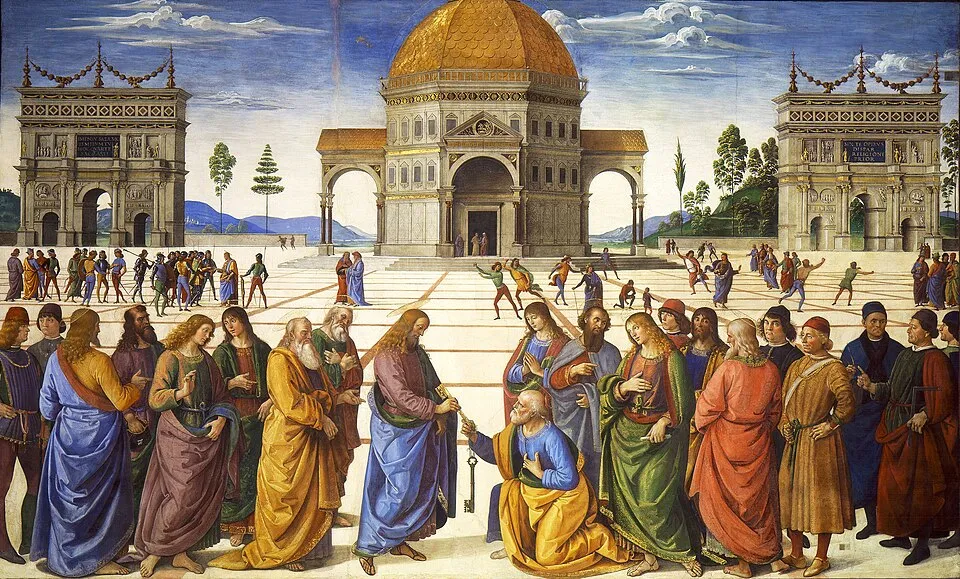
Locate the keys and follow the hands: Christ gives them to the kneeling Peter. The action reinforces the attribute. Then compare this scene with a portrait of Saint Peter. Source: Vatican Museums.
02 · Catherine of Alexandria: bringing clues together
Return to the cover image. In Caravaggio’s painting, Catherine appears beside a broken wheel and holds a sword; the palm is another reference to martyrdom. The combination tells you more than the sword alone. Examine the wheel before naming the figure. Source: Museo Nacional Thyssen-Bornemisza.
The useful question is which detail distinguishes this figure from other martyrs. You can keep looking for the wheel in our gallery of Saint Catherine of Alexandria.
03 · George: the whole picture tells a story
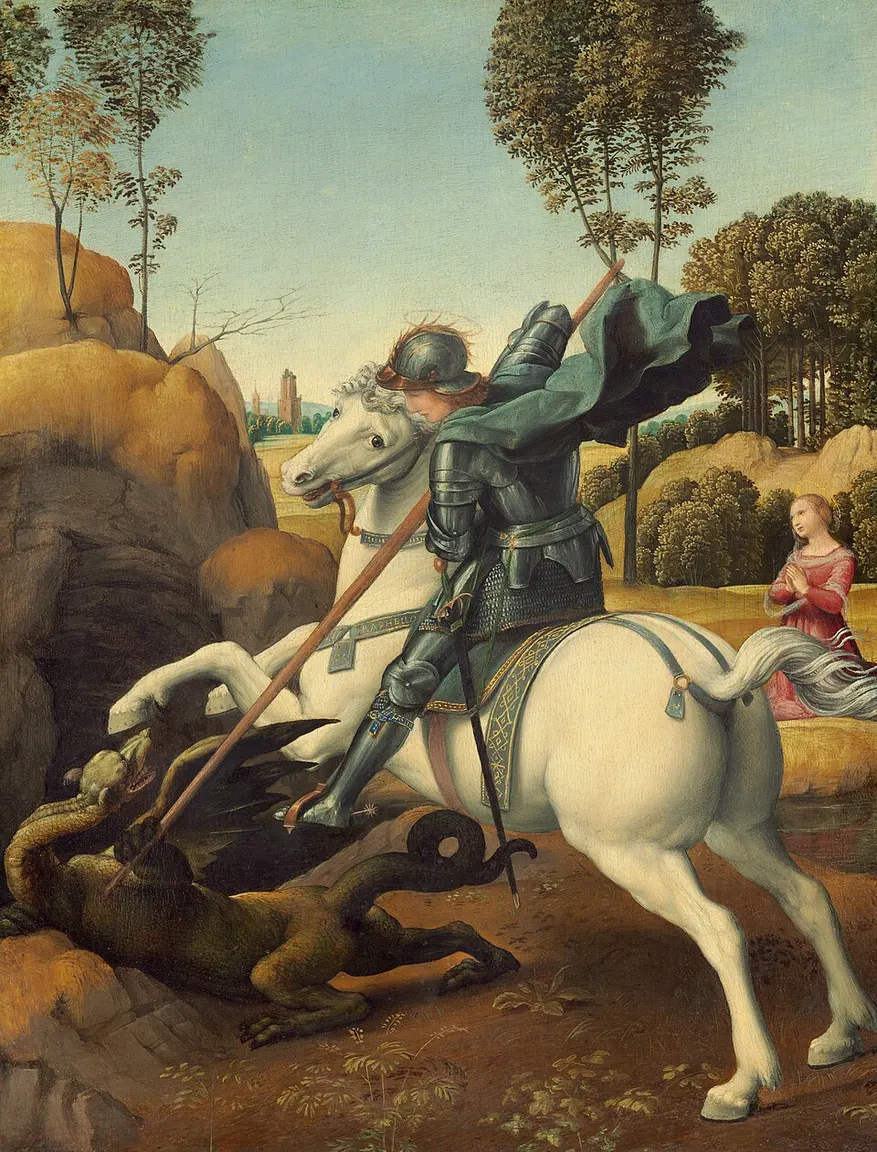
In Raphael’s work, notice the rider, the lance aimed at the dragon and the princess in the background. Together they establish the scene of Saint George and the dragon. Looking only for a monster or armour would tell you less than reading the relationship between the figures. Source: National Gallery of Art.
When comparing other depictions of Saint George, separate elements of the story from the painter’s choices, such as the horse’s colour or the arrangement of the landscape.
04 · Matthew: the companion and the inscription
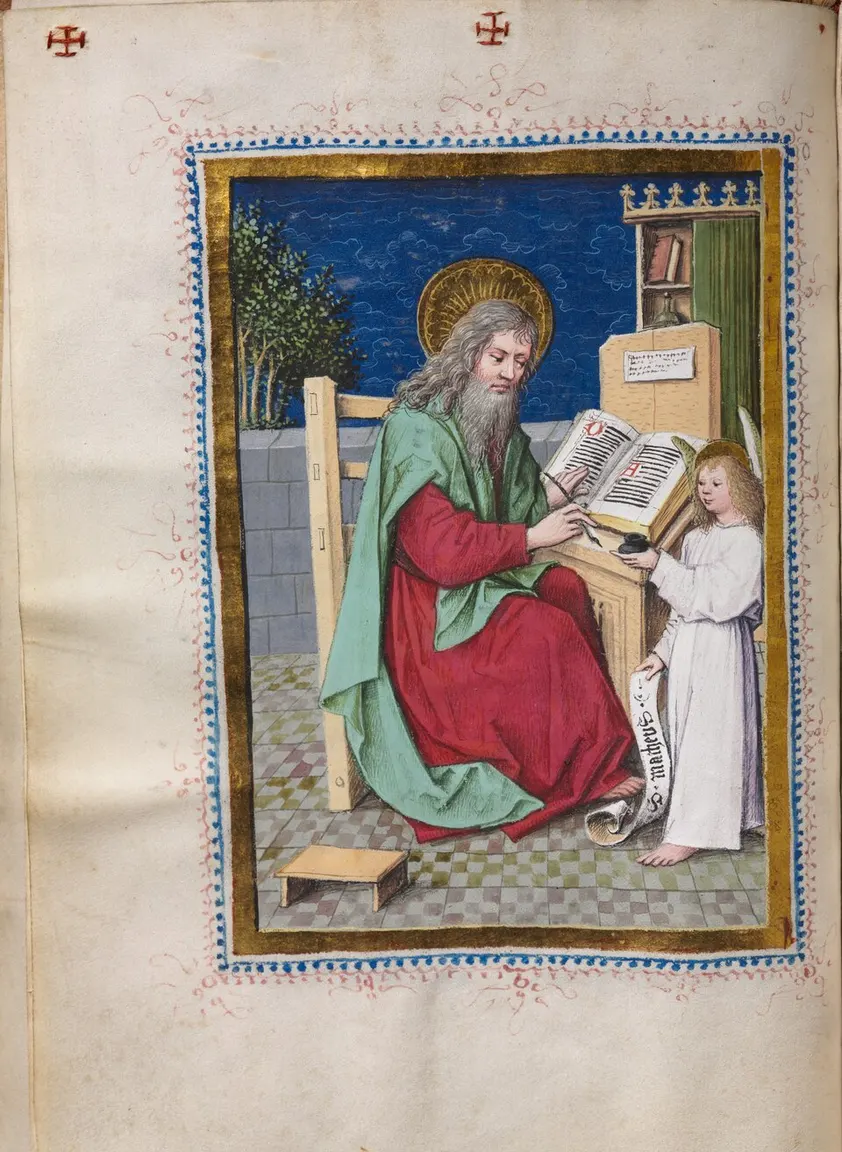
In this miniature, Matthew writes with a winged human companion beside him. The inscription “Matheus” adds direct evidence. It helps distinguish a book, shared by many saints, from a companion and a name that make the identification more precise. Source: Cleveland Museum of Art.
See other images of Saint Matthew to check whether he appears as an evangelist writing or as an apostle within another scene.
Common symbols used to identify saints
If you have already spotted a detail, choose the closest match to what you can see. Each page shows which other clues are worth checking.
- Saint Peter’s keys. Look for the person receiving or holding them.
- Saint Andrew’s X-shaped cross. Check the angle of the two timbers.
- Saint James’s scallop shell. It may appear on a hat or beside a pilgrim’s staff.
- Saint Paul’s sword and other saints with swords. Check whether the figure also has a book, a wheel or another attribute.
- Dragons with Saint George and Saint Michael. A horse, wings or scales help distinguish them.
- Skulls in paintings of saints. It can signal meditation and appears with several saints.
What the angel, lion, ox and eagle signify
In Christian art, these four figures may represent the Evangelists. The winged human figure stands for Matthew, the lion for Mark, the ox for Luke and the eagle for John. The symbols can appear by themselves, without the Gospel writers. National Gallery glossary.
Compare the clues in two pairs of works: Matthew and John the Evangelist and Luke and Mark.
When to leave the identification open
Objects are not always exclusive. The National Gallery, for example, retains the title An Apostle for a Ribera painting whose spear could indicate Thomas or Matthias. Recognising that ambiguity is part of learning iconography. Ribera collection record.
If hands, attributes or parts of the composition are missing, record what is missing. Avoid treating a facial resemblance, beard or clothing colour as definitive evidence. “An apostle who cannot be securely identified” may describe the evidence better than a confident name.
Your next museum visit
Choose a work and spend a minute describing it before reading the label. Write down three visible things, one hypothesis and one question. Then read the record: check what you got right and what changed your interpretation. That small habit is more useful than trying to memorise every symbol at once.
At home, you can search for clues in the saint explorer, compare works in the library or continue with our guide to the twelve apostles in art.