Franciscan Habit
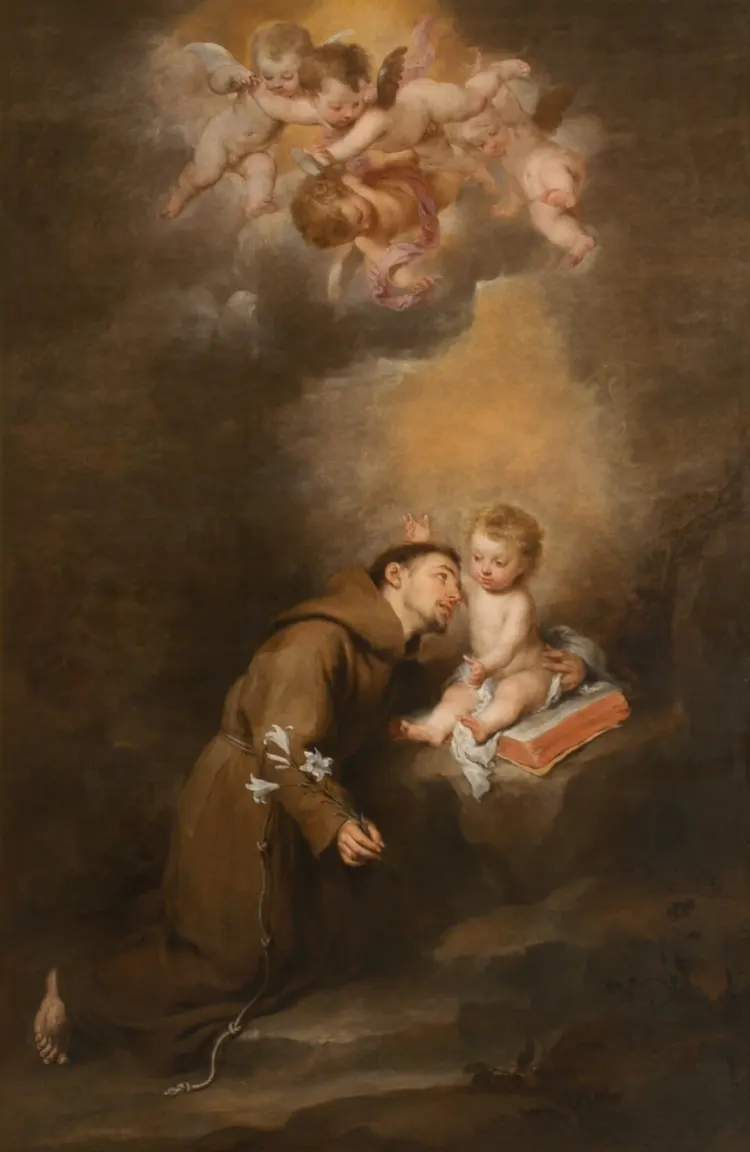
Brown tunic and cord; without stigmata or animals, verify against Anthony.
Saints
Francesco di Bernardone
A patched habit and a knotted cord suggest a Franciscan. Look for the wounds on the hands, feet or side to recognise Francis himself.
Iconographic Attributes
Iconographic field guide
Franciscan habit with three knots is shared with Anthony, but Francis alone receives stigmata visibly in art. Birds, wolf of Gubbio, and San Damiano crucifix anchor narrative identity. Skull appears in contemplative portraits linking him to memento mori tradition without making him a hermit only.
Brown tunic and cord; without stigmata or animals, verify against Anthony.
Visible wounds on hands, feet, side—received at La Verna.
Preached to birds and tamed the wolf of Gubbio
Preached to birds and tamed the wolf of Gubbio
Symbol of meditation on death
The San Damiano crucifix spoke to him
Traditional iconographic attribute associated with this figure in Christian art.
Biography
Francis renounced his family’s wealth in Assisi and gathered companions committed to poverty and preaching. Early Franciscan accounts describe him receiving the stigmata at La Verna. Artists represent these marks on his hands, feet and side.
Thomas of Celano; Bonaventure; Canticle of the Creatures; stigmatization accounts 1224.
Franciscan vestment; knots represent poverty, chastity, and obedience
Received Christ's wounds on Mount La Verna
Preached to birds and tamed the wolf of Gubbio
Symbol of meditation on death
The San Damiano crucifix spoke to him
Often confused with Saint Anthony of Padua: Both are Franciscans in brown habits
Practice