Tau cross
The T-shaped cross can point to Anthony Abbot, especially next to a bell or pig.
Saints
Anthony the Great
Anthony the Great was an Egyptian hermit whose life helped shape Christian monasticism. In Western art his name is often given as Anthony Abbot.
Athanasius’s Life of Anthony made the desert hermit known beyond Egypt. Its episodes of solitude, prayer and temptation supplied artists with scenes they could interpret centuries after Anthony’s death.
The hospital order later called the Antonines took his name and cared for people with illness. Bells and pigs became associated with the order and appear together in works such as Piero di Cosimo’s Visitation.
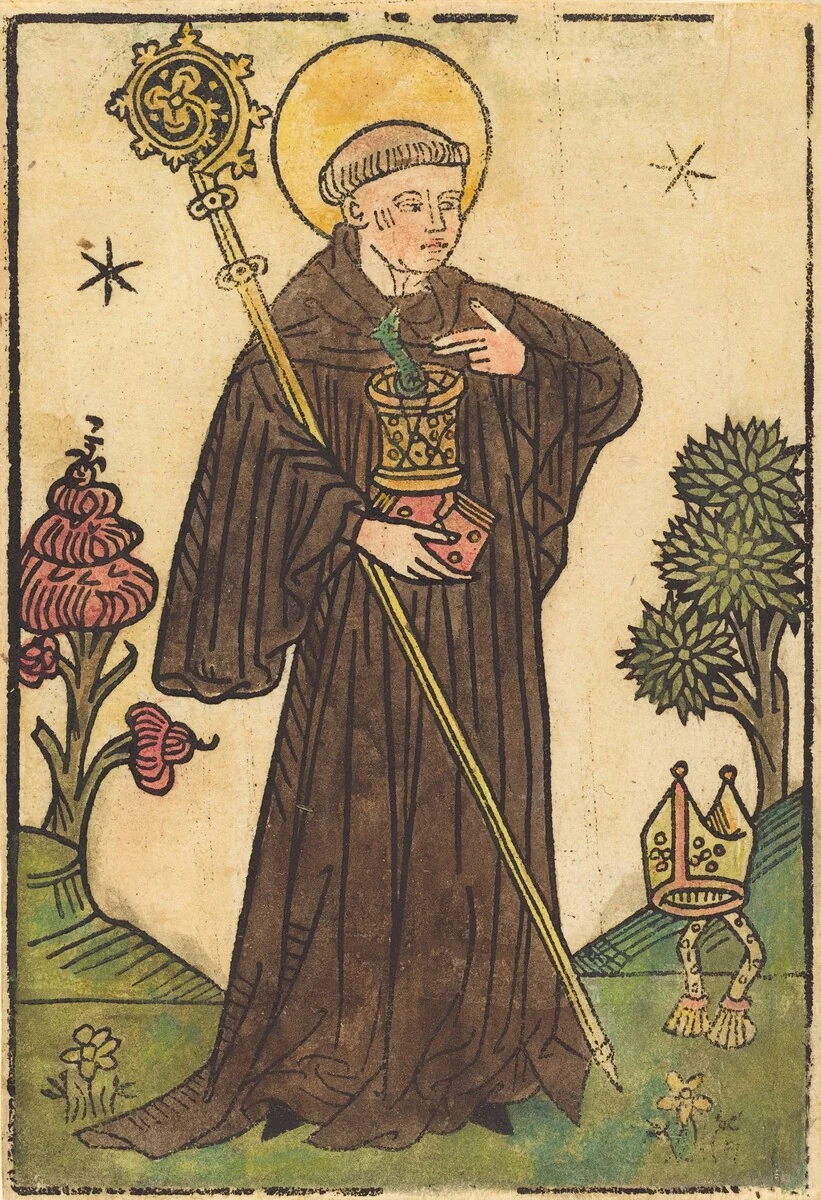
Which detail beneath Anthony’s feet makes this portrait a scene of triumph?
A creature pulls at the robe while Anthony holds it underfoot. The museum notes that his now-incomplete staff once reached the creature’s mouth.
The T-shaped cross can point to Anthony Abbot, especially next to a bell or pig.
A small bell is one of the attributes of Anthony Abbot and the order that bore his name.
Lily staff or prophet's rod
4 of 4 works
The pig became associated with the Antonines and their hospital work. It is an iconographic sign and is still linked to animal blessings on his feast.
An elderly desert hermit with a tau staff or pig points to Anthony Abbot. The Franciscan holding the Christ Child usually represents Anthony of Padua.
Reviewed on