Sharing a cloak
A rider cuts or gives away part of his cloak in the legend of Martin of Tours.
Saints
Martin of Tours
Saint Martin served in the Roman cavalry before becoming a monk and bishop of Tours. The cloak he divided with a man in need became his strongest clue in art.
Iconographic Attributes
Martin lived in the fourth century. Sulpicius Severus recounts an incident in which the soldier meets a man exposed to the cold at Amiens and cuts his cloak to share it. In the next part of the account, Martin sees Christ wearing the part he had given away.
Artists represent different stages in his life. El Greco paints him as a mounted soldier for the Chapel of Saint Joseph in Toledo. A much earlier ivory diptych from Cologne puts the act of charity opposite his consecration, where he appears in episcopal dress.
Follow the green cloth in El Greco’s canvas. Which two figures hold it, and what does the sword tell you about the action?
One figure is mounted and armoured, while the other stands on the ground and grips the same cloth. The sword and the exchanged fabric together suggest the division of a cloak. The rider’s military equipment by itself would fit several saints.
A rider cuts or gives away part of his cloak in the legend of Martin of Tours.
Mounted knight in combat scenes
Martyrdom by beheading or the Word of God
Military or celestial warrior garb
A crook carried by a bishop or abbot. Read it alongside the vestments and any personal attribute.
A pointed liturgical headdress. It indicates rank and can be shared by several saints.
4 of 4 works
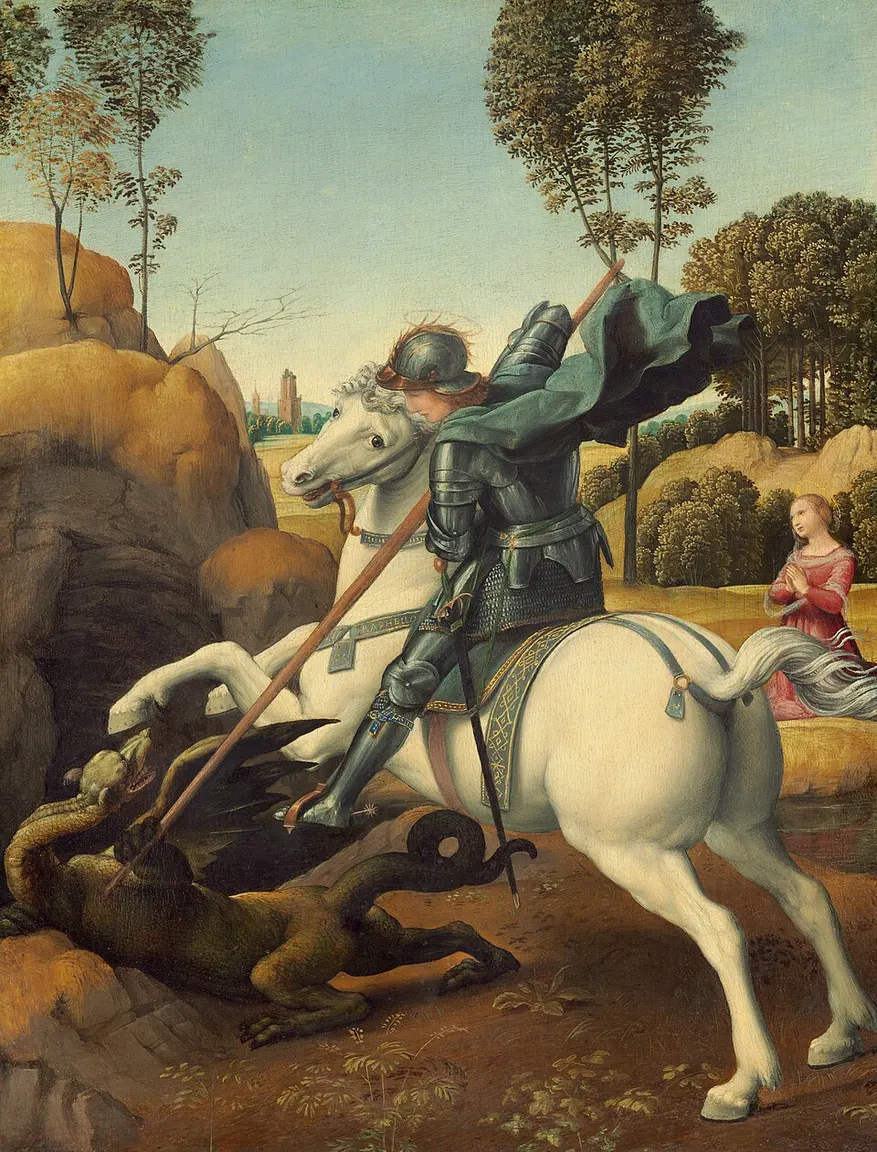
Look where the weapon points and what the other figures are doing. Martin divides or offers a cloak to a person. George is often shown using a lance against a dragon.
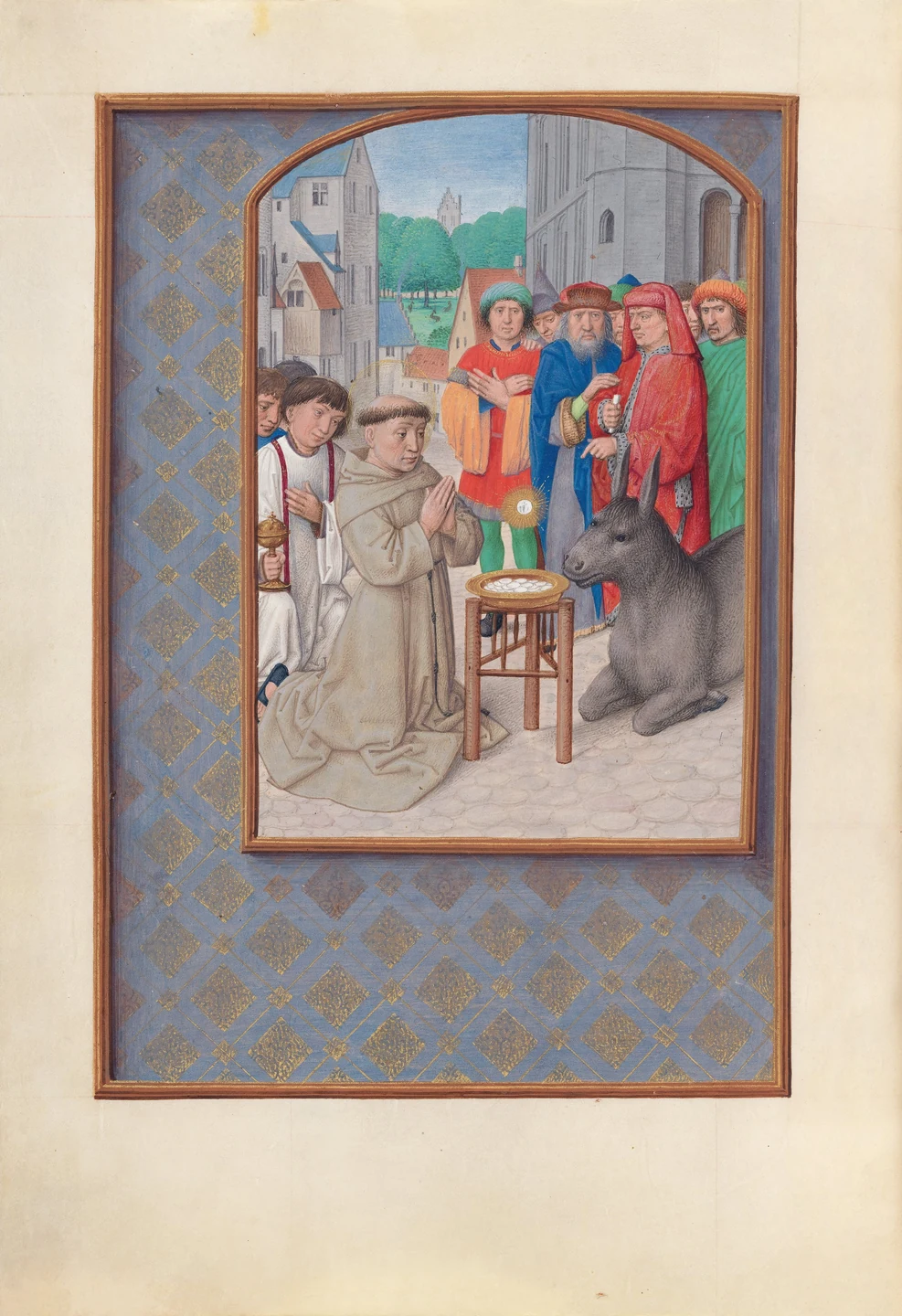
Those images show the later part of his life in Tours. A mitre and crozier signal his office, and the cloak or related narrative panels can confirm his individual identity.
Reviewed on