Eyes on Plate
Held on a plate or in a dish—unique among major saints; verify it is Lucy not Agatha (breasts) or Lucy not ophthalmic allegory alone.
Martyrs
Lucy of Syracuse
Look at what lies on the dish. A pair of eyes is Lucy’s most distinctive attribute in later portraits.
Iconographic Attributes
Iconographic field guide
The eyes on a plate are legendary but dominate recognition. The lamp ties to lux/lucis wordplay used in sermons. December 13 feast once coincided with winter solstice calendars, strengthening light symbolism in Nordic countries.
Held on a plate or in a dish—unique among major saints; verify it is Lucy not Agatha (breasts) or Lucy not ophthalmic allegory alone.
Though legendary, it is her most recognizable attribute
Symbol of her condition as martyr
Oil lamp or torch for “bearer of light.”
Martyrdom by beheading or the Word of God
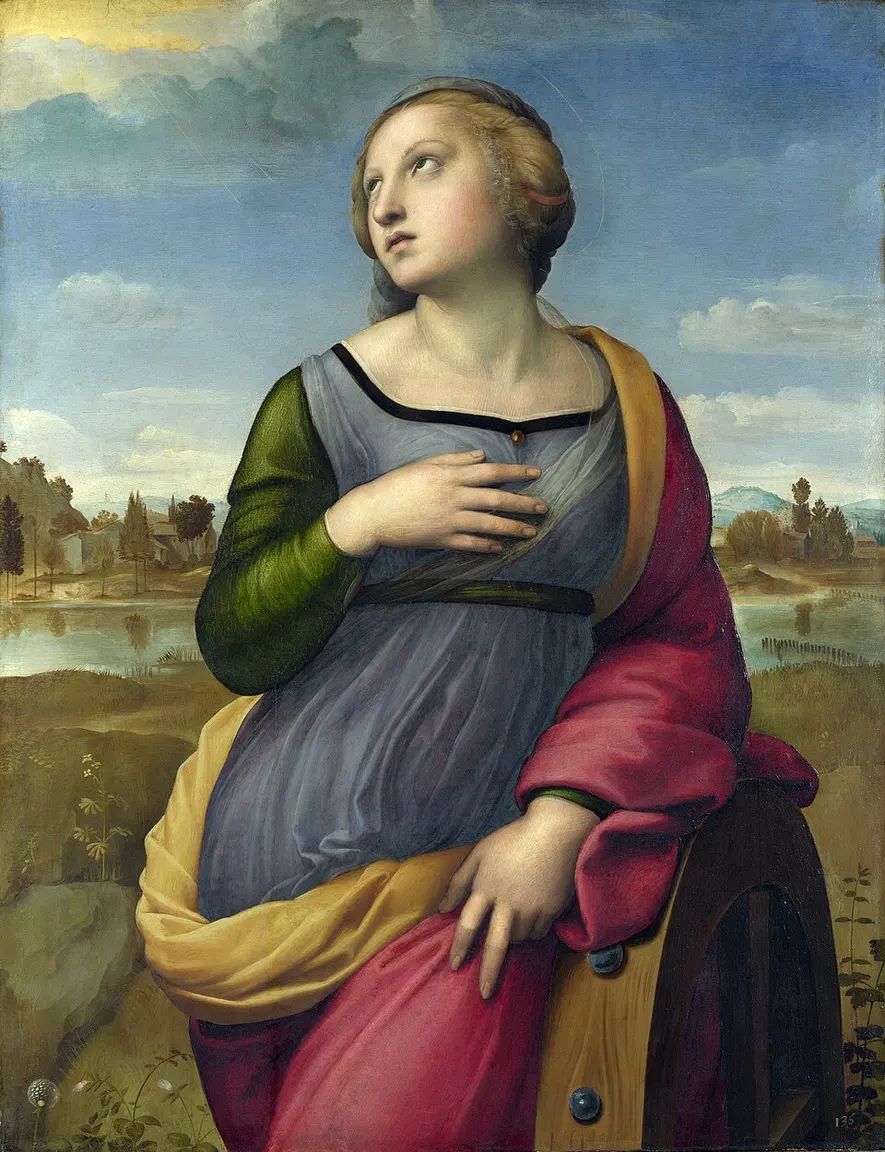
Traditional iconographic attribute associated with this figure in Christian art.
Biography
Lucy was venerated as a virgin martyr in Syracuse. Accounts of her trial and death belong to her legend and vary in their details. The eyes on a dish in later art reflect her devotion as a protector of sight.
Passio Sanctae Luciae; widespread Sicilian cult; Scandinavian Lucia traditions.
Martyred in the Diocletianic persecution after refusing marriage; legends tell of immovable body and gouged eyes, though her Passio emphasizes steadfast virginity.
Virgin consecrated to Christ; resisted imperial marriage politics.
Sword to the throat in historical core; eye legend dominates later art.
Crown or diadem of virgin, palm, plate with eyes, lamp, white robes.
Though legendary, it is her most recognizable attribute
Symbol of her condition as martyr
Her name means "light" (lux, lucis)
Some accounts of her martyrdom describe a wound to the throat
Quick checklist
Eyes on dish are unique; lamp confirms when plate is absent.
Patron of Syracuse, the blind, and winter light festivals in Scandinavia.
Often confused with saint agatha: Both are virgin martyrs with body part attributes
Practice