Saint Jude Thaddeus
1 / 5
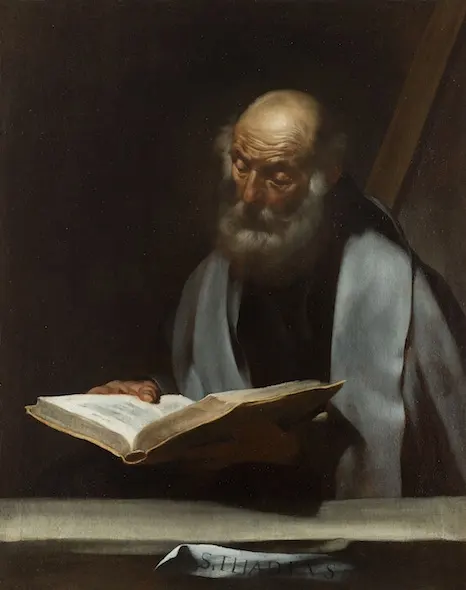
A club or an inscription can identify Jude Thaddeus. A shared feast explains why artists often pair him with Simon the Zealot.
Read profile
Artwork 1 · Saint Jude ThaddeusExplore the lives of the saints and the clues artists left in their work.
Profiles 10–18 of 18
A club or an inscription can identify Jude Thaddeus. A shared feast explains why artists often pair him with Simon the Zealot.
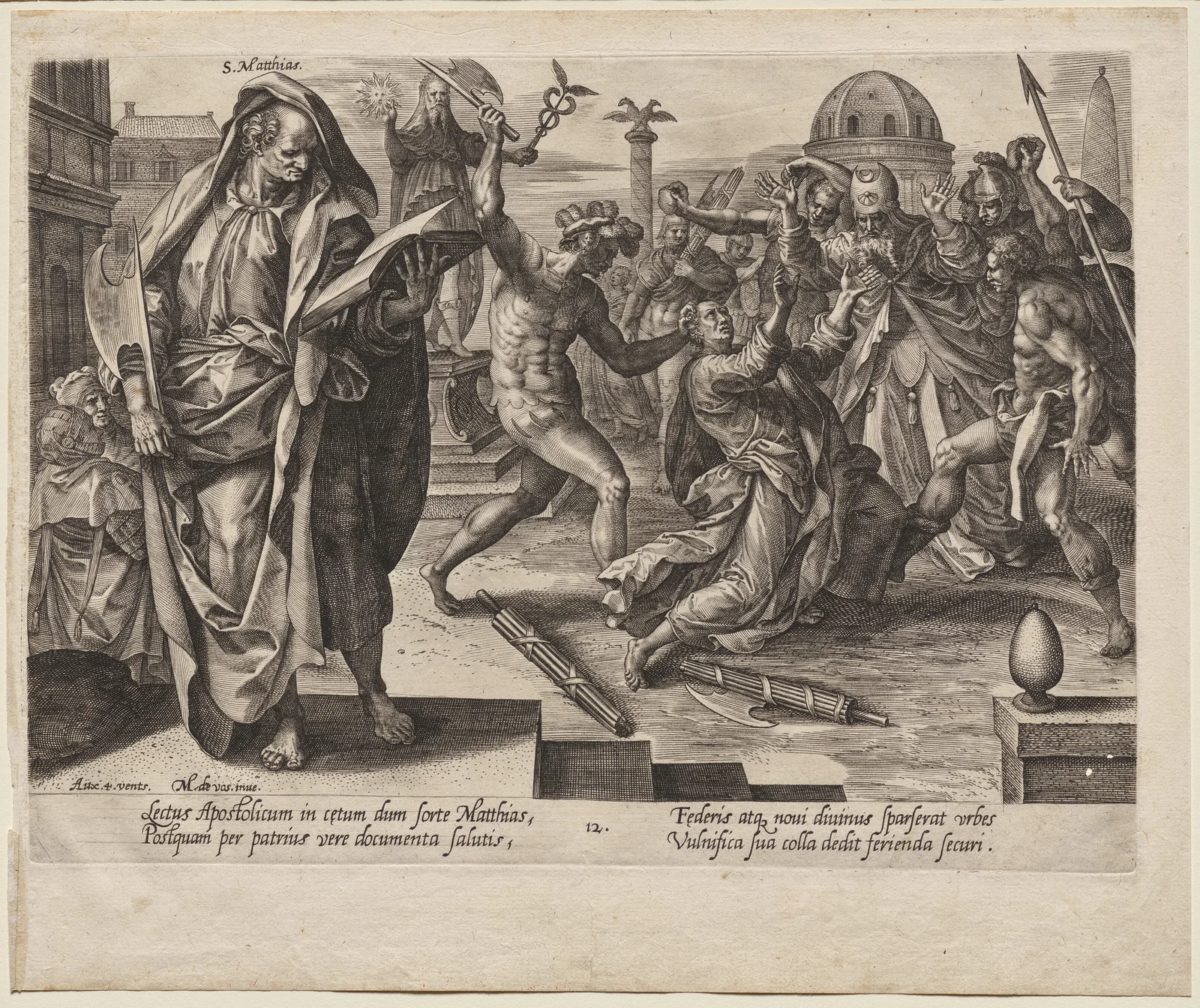
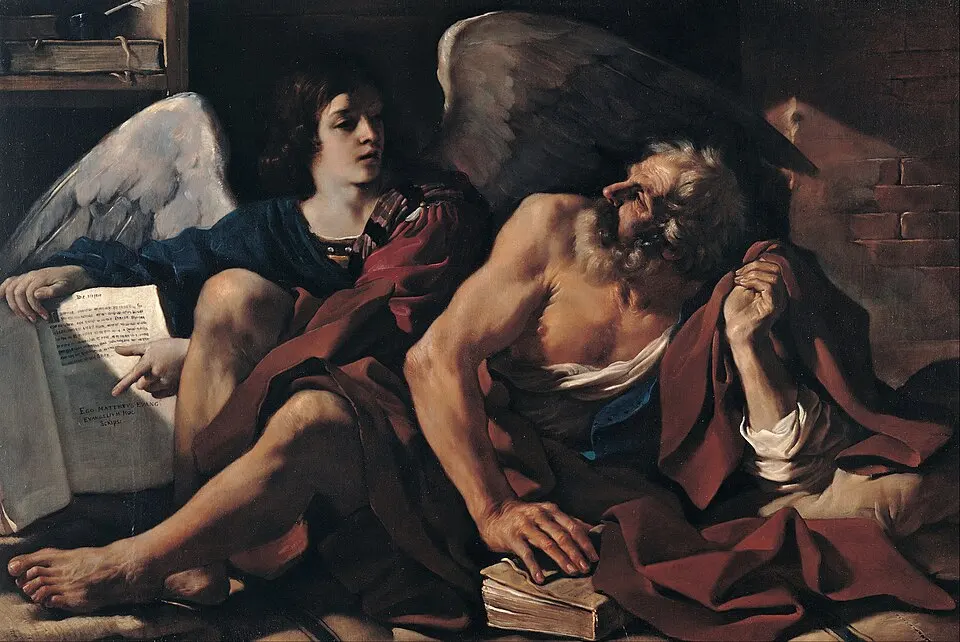
An axe often identifies Matthias in apostle portraits. He joined the Twelve after the Ascension, in the episode recounted in Acts.
A hooded Matthias holds a book open beside the long handle of an axe. The second figure of the saint kneels on the right, surrounded by his attackers.
At the sacrifice of Isaac, follow the raised knife to the angel who stops Abraham. The ram is another clue to the episode.
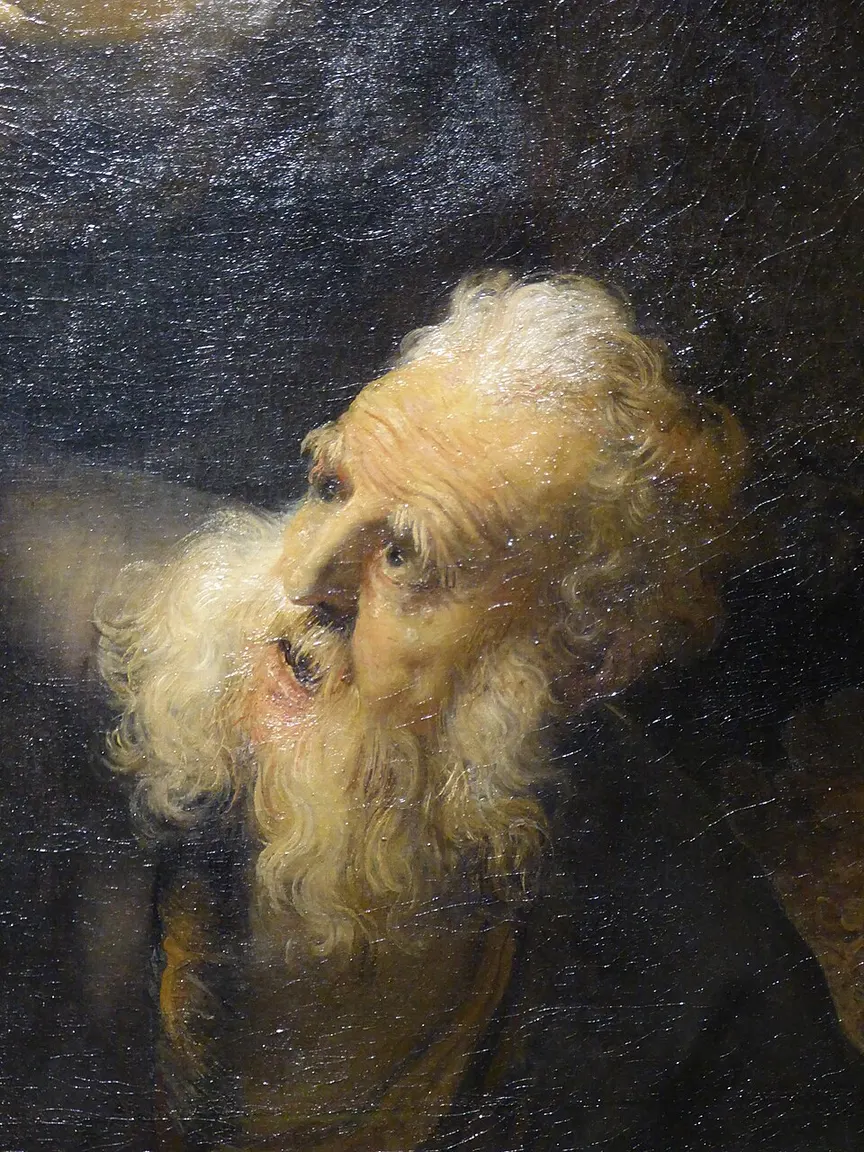
This detail shows Abraham looking up as the sacrifice is interrupted. It comes from the Munich version, painted a year after the version in Saint Petersburg.
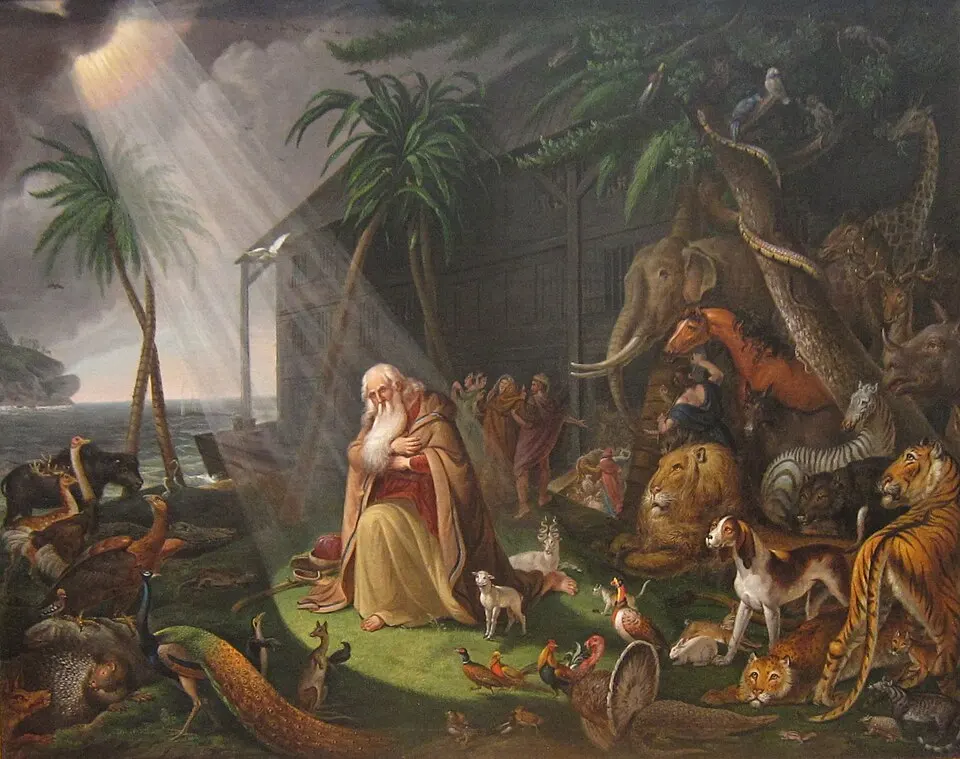
An ark filled with animals identifies the flood narrative. A dove can mark the later moment when Noah tests whether the waters have receded.
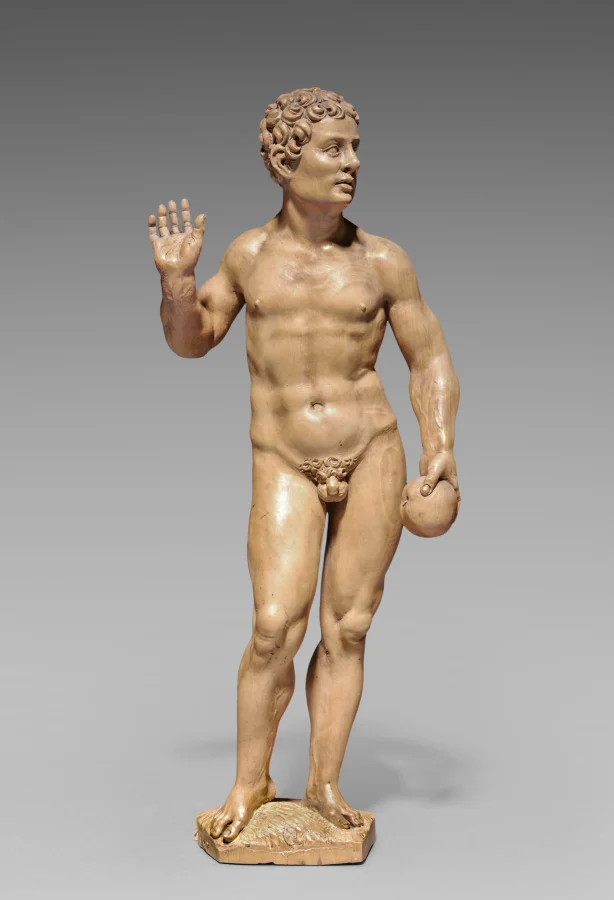
In Eden, Adam is identified by his place in the story: receiving life, taking the fruit, or leaving the garden with Eve.
Adam turns his head and raises an open hand. A small round fruit rests in his lowered hand.
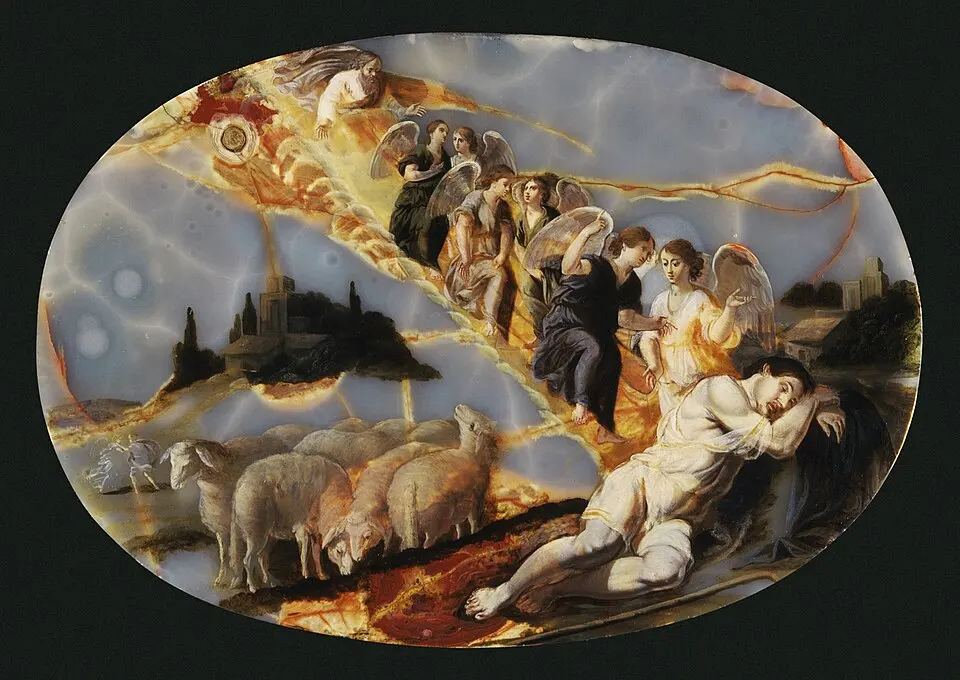
A ladder linking earth and heaven marks Jacob’s dream. A lone wrestling match at night belongs to a different episode in his story.
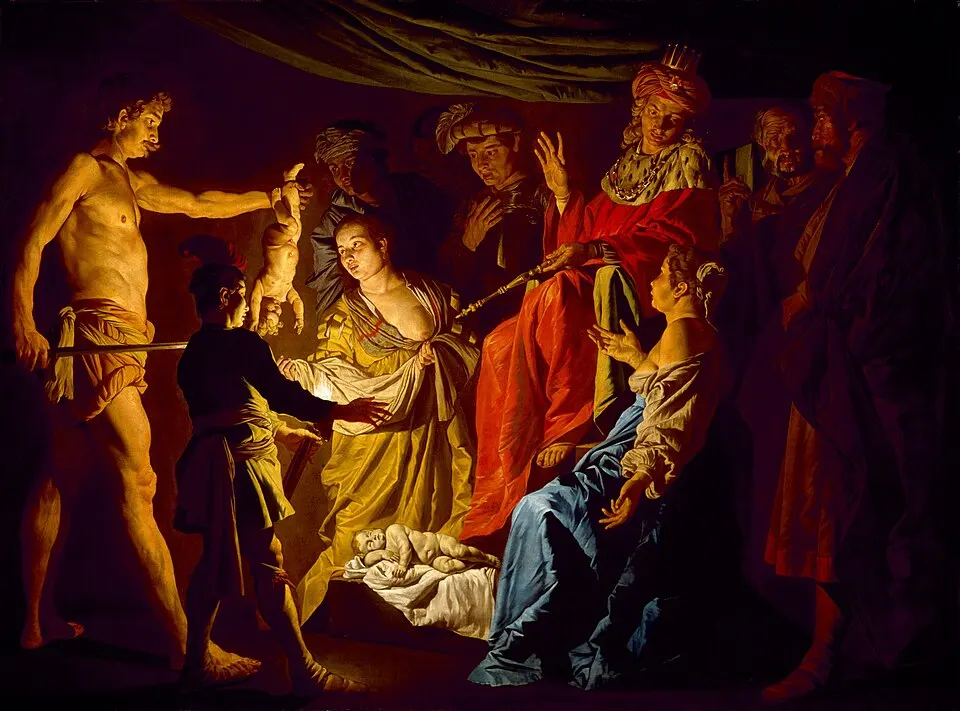
A king, two women and a disputed child form the scene of Solomon’s judgement. The figures’ gestures help explain his decision.
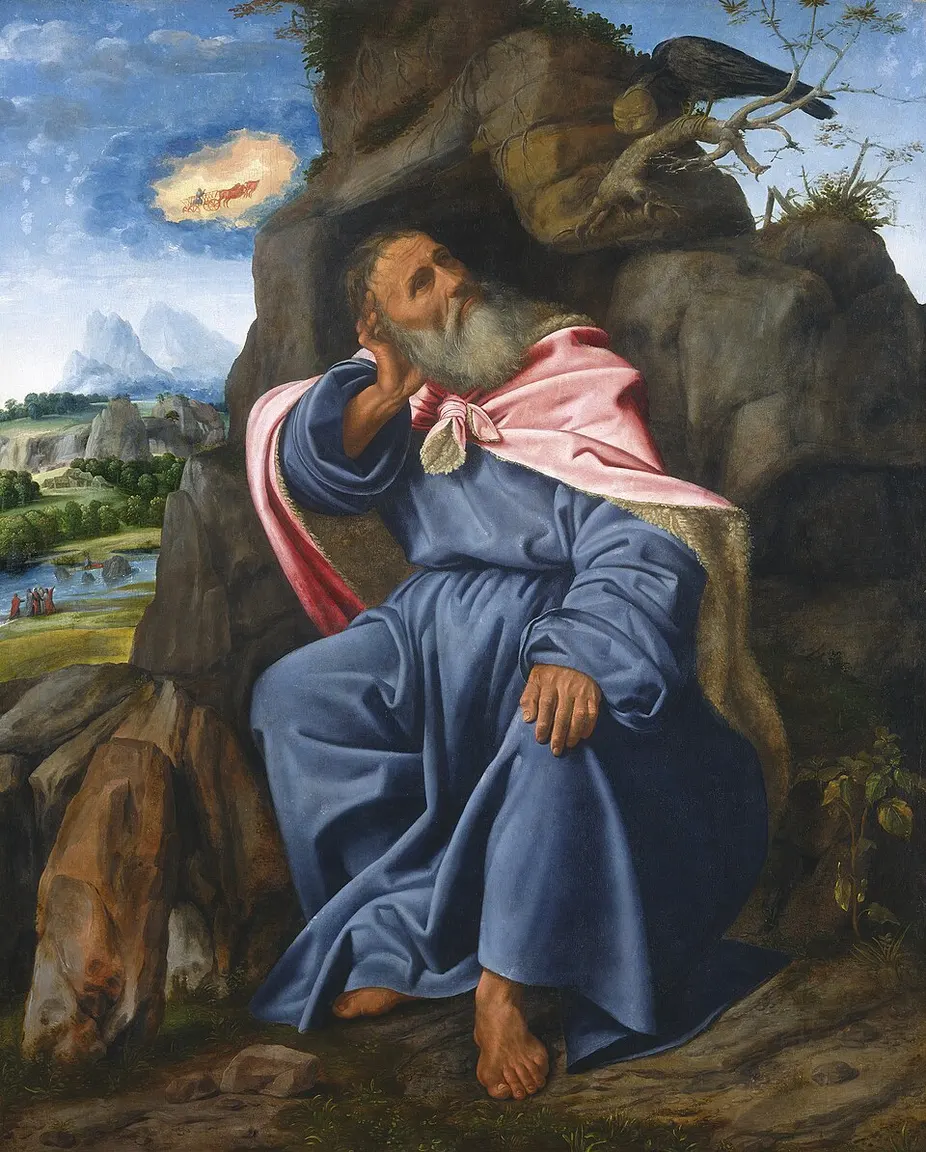
Ravens bringing food identify Elijah in the wilderness. A fiery chariot appears in the account of his departure before Elisha.
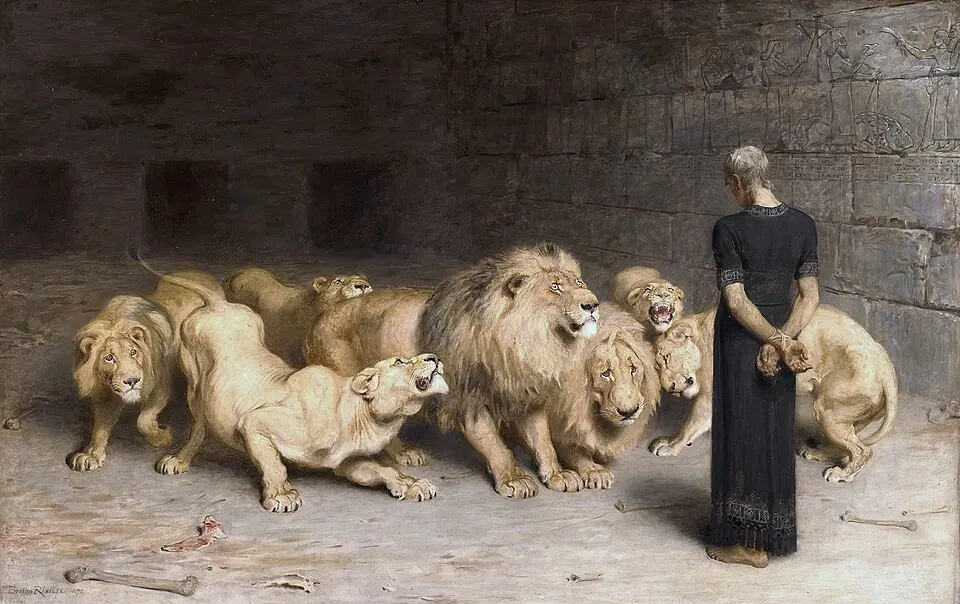
Lions gathered around a living man point to Daniel in the den. Their stillness or restless movement can shape the mood of the scene.