Dragon
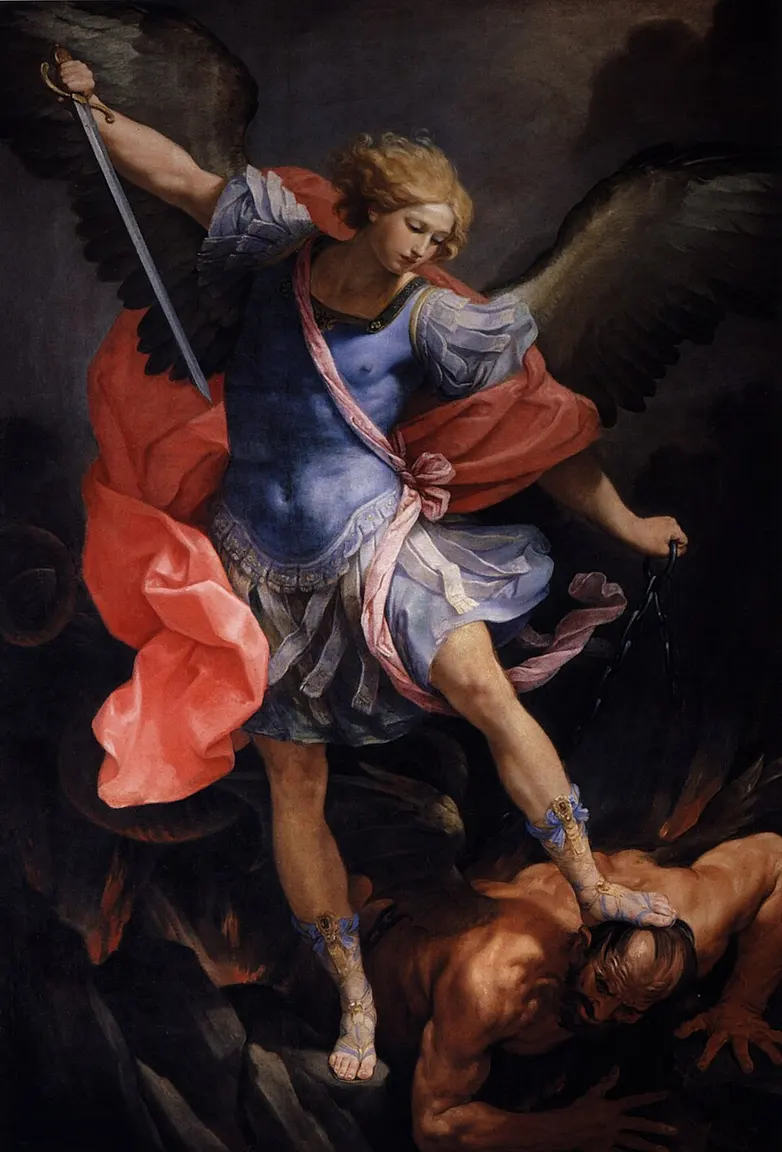
Chaos and evil subdued; size varies from comic to monstrous depending on era.
Martyrs
George of Cappadocia
Saint George is venerated as a martyr and usually represented as a soldier or knight. His fight with the dragon is a legend that became enormously popular in the Middle Ages, not a scene from the Gospels.
Iconographic Attributes
The Golden Legend tells how George reached a city threatened by a dragon just as the king’s daughter was about to be surrendered to it. Some Catalan versions add that a rose bush sprang from the dragon’s blood. Catalonia celebrates Sant Jordi’s Day with roses and books on 23 April.
Raphael turns the narrative into a compact arrangement of horse, rider and lance. The armour also evokes the chivalric culture of his own period. In this small Washington panel, a blue garter connects the saint with the Order of the Garter: medieval devotion acquired fresh meanings for Renaissance patrons.
Follow George’s lance to the dragon, then find the princess. Where does Raphael place each figure?
The lance runs diagonally down to the dragon beneath the white horse’s front legs. The princess kneels farther away, to our right, with her hands together. Her presence connects the battle with the rescue in the legend; the knight has no wings.
Chaos and evil subdued; size varies from comic to monstrous depending on era.
Primary weapon in the legend; may be broken in narrative moment before final blow.
Signals knightly status; distinguishes him from semi-nude Sebastian.
Saint George’s Cross—national and military, not merely decorative.
Equestrian type derives from Roman triumph imagery and knightly culture.
Martyrdom by beheading or the Word of God
7 of 7 works
No. It belongs to the saint’s legend, popularised in the Middle Ages. It should be distinguished from the dragon Michael fights in Revelation. A monster alone, separated from the rest of the scene, cannot determine which figure is present.
In this painting it is the garter of the Order of the Garter, whose patron is George. The inscription “HONI” begins its motto. It is a particular feature of Raphael’s painting and its courtly context, not an attribute required in every image of the saint.
Reviewed on