Carmelite habit
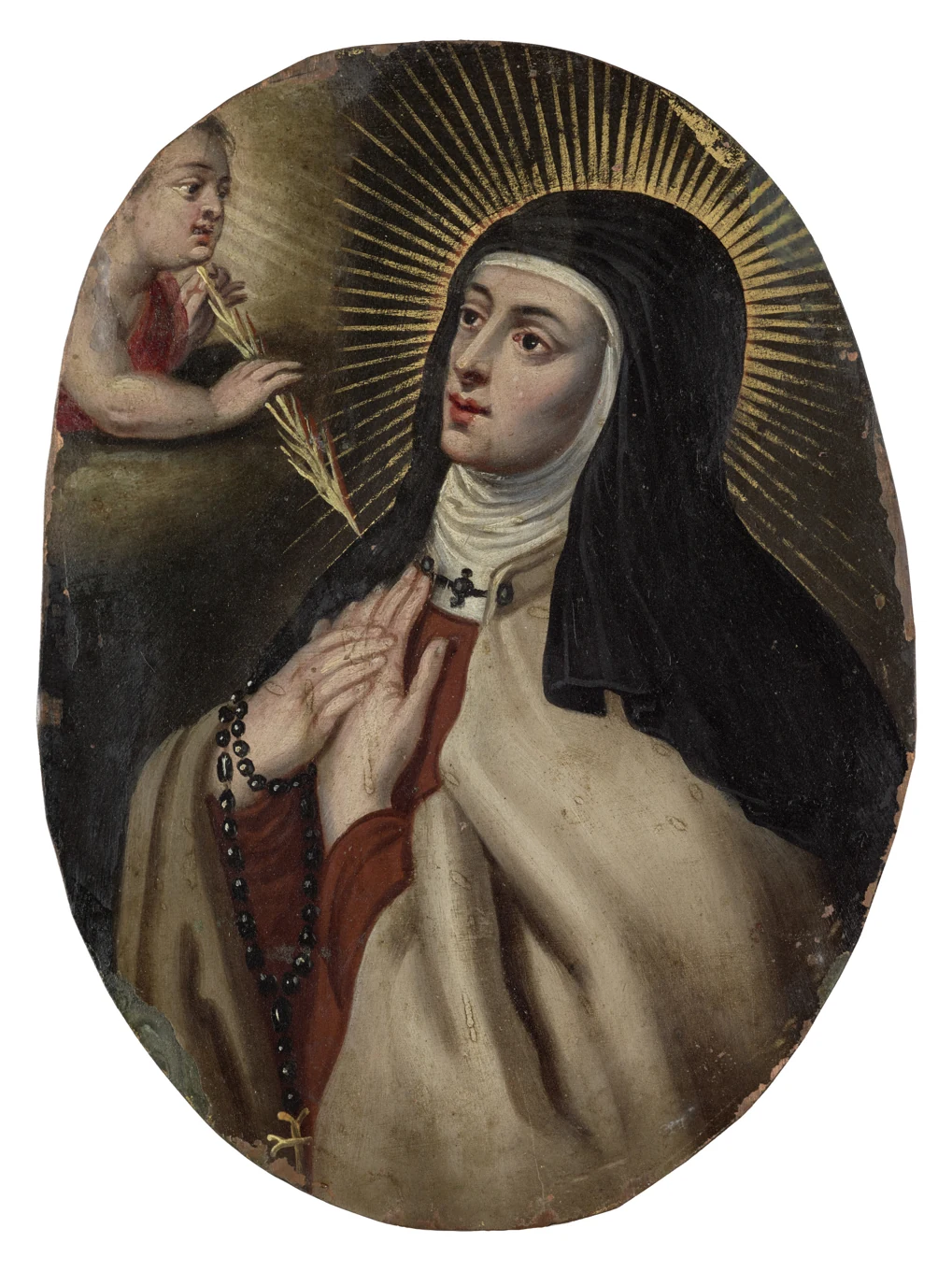
The brown habit and white mantle can indicate the Carmelite order. A scene or attribute distinguishes Teresa from John of the Cross.
Saints
Juan de Yepes
John of the Cross was a Spanish Carmelite who worked with Teresa of Ávila in the sixteenth century. His poetry and commentary became landmarks of Spanish mysticism.
Iconographic Attributes
Born in Fontiveros in 1542, John joined the Carmelite order and helped establish the first reformed house of friars at Duruelo in 1568. Opposition to the reform led to his imprisonment in Toledo, where he composed part of the Spiritual Canticle.
Francisco Antonio Gijón carved this image in 1675 for a Carmelite setting in Seville. The upwards glance, lifted hand and open book present an author absorbed in a devotional act within the Spanish Baroque tradition.
How do the posture and book work together in Gijón’s carving?
The open book identifies a reader or writer. The hand and lifted gaze draw attention away from the page, giving the figure the intensity of a person in prayer.
The brown habit and white mantle can indicate the Carmelite order. A scene or attribute distinguishes Teresa from John of the Cross.
Gospels, doctrine, or wisdom
4 of 4 works
His best-known writings include the Spiritual Canticle, the Dark Night and the Living Flame of Love, along with prose commentaries on his poetry.
They collaborated in reforming Carmelite life. Their shared order explains why a brown habit and white mantle may appear in images of both writers.
Reviewed on