Lamb
Agnus Dei pun—small white lamb beside or in her arms.
Martyrs
Agnes of Rome
Saint Agnes is a young Roman martyr venerated as a virgin, whose memory was celebrated by Christian writers in antiquity. The lamb is her most familiar attribute and expresses innocence and faithfulness to Christ.
Ambrose praised her witness, and Pope Damasus composed an epitaph in her honour. Tradition remembers her as an adolescent who would not abandon her faith. Later accounts incorporated suitors, threats and miracles; these details should not all be treated as an equally precise, documented biography.
The page from the Hours of Charles the Noble shows how a saint could be recognised in a tiny space. Around 1405, the Master of the Brussels Initials and associates worked on this prayer book. The lamb beside Agnes identifies her without depicting an execution or an extended scene from her legend.
Find Agnes inside the decorated initial, rather than among the creatures in the margins. What detail distinguishes her?
The haloed figure holds a white lamb against her blue dress. She sits within the initial beside the prayer text; the animals and hybrid beings around the edges belong to the marginal decoration. The lamb’s close physical association with the saint makes it a clue to her identity.
Agnus Dei pun—small white lamb beside or in her arms.
Virgin martyr victory branch; almost always present in solo portraits.
Martyrdom by beheading or the Word of God
4 of 4 works
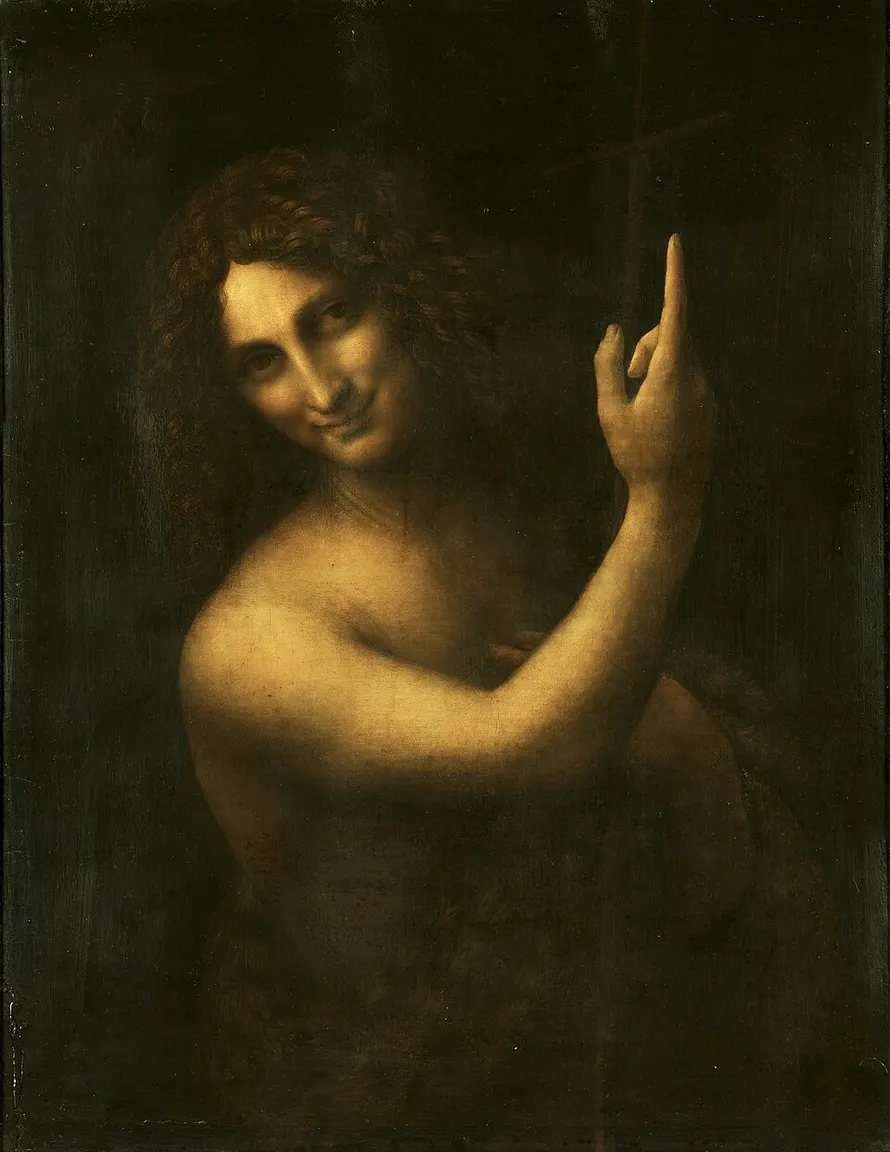
No. In her imagery it symbolises innocence and Christian devotion. Read it alongside the figure and context: a lamb can also accompany John the Baptist, where it refers to his proclamation of Jesus as the Lamb of God.
Her Roman commemoration falls on 21 January. An ancient custom connects that day with the blessing of lambs whose wool is used for the palliums of metropolitan archbishops. This is a liturgical tradition associated with her cult, not an episode from her childhood.
Reviewed on