Reading
A name passed from one person to another
John 1 singles out Andrew as the disciple who tells Simon that he has found the Messiah and brings him to Jesus. In a calling scene, consider who looks at whom and which figure seems to introduce another. The two brothers do not require keys or crosses to take part in the narrative.
Whose loaves are they?
Before the feeding of the crowd in John 6, Jesus asks Philip about buying bread. Andrew points out a boy with five barley loaves and two fish. The food belongs to the boy in the story. A basket in a crowd would be poor evidence for naming a particular apostle.
Key takeaway
Follow the dialogue and the person who introduces someone else.
Visual study
Two men kneel before Christ in the foreground. The lake behind them joins several moments of the fishermen’s story.
Domenico Ghirlandaio · Sistine Chapel, VaticanOther depictions of these apostles
Study gallery
Saint Andrew
Study notesTwo beams crossing diagonally form Andrew’s saltire. In scenes of his calling, he may instead appear with Peter and the fishing nets.
Key attributes
Cross
Saint Andrew
Study notesTwo beams crossing diagonally form Andrew’s saltire. In scenes of his calling, he may instead appear with Peter and the fishing nets.
Key attributes
Cross
Saint Andrew
Study notesTwo beams crossing diagonally form Andrew’s saltire. In scenes of his calling, he may instead appear with Peter and the fishing nets.
Apostle study cards
Apostle profile
Saint Andrew
Peter’s brother, often represented with a diagonal cross.
Memory hook: Two crossing diagonals
Visual examples
Saint Andrew
Study notesPeter’s brother, often represented with a diagonal cross.
Key attributes
Cross
Saint Andrew
Study notesPeter’s brother, often represented with a diagonal cross.
Practice
Answer notebook
0 / 1 answeredMore practice
Who is this apostle?
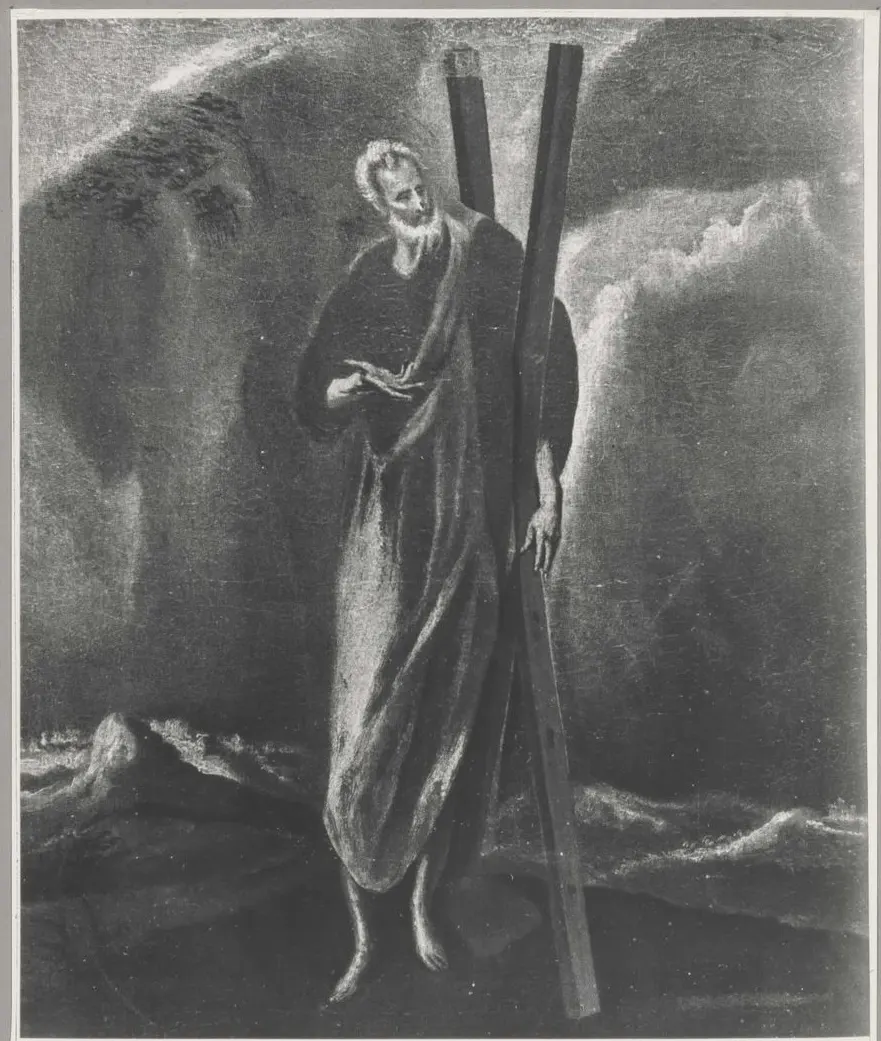
Scan attributes first — then choose a name.
Quick check
Attribute checklist
Tap each attribute once you can picture it in art for this lesson.