Saint Andrew’s cross: why is it X-shaped?
The X-shaped cross, or saltire, is a familiar attribute of Saint Andrew. It comes from the tradition of the apostle’s martyrdom and became a visual clue to his identity.
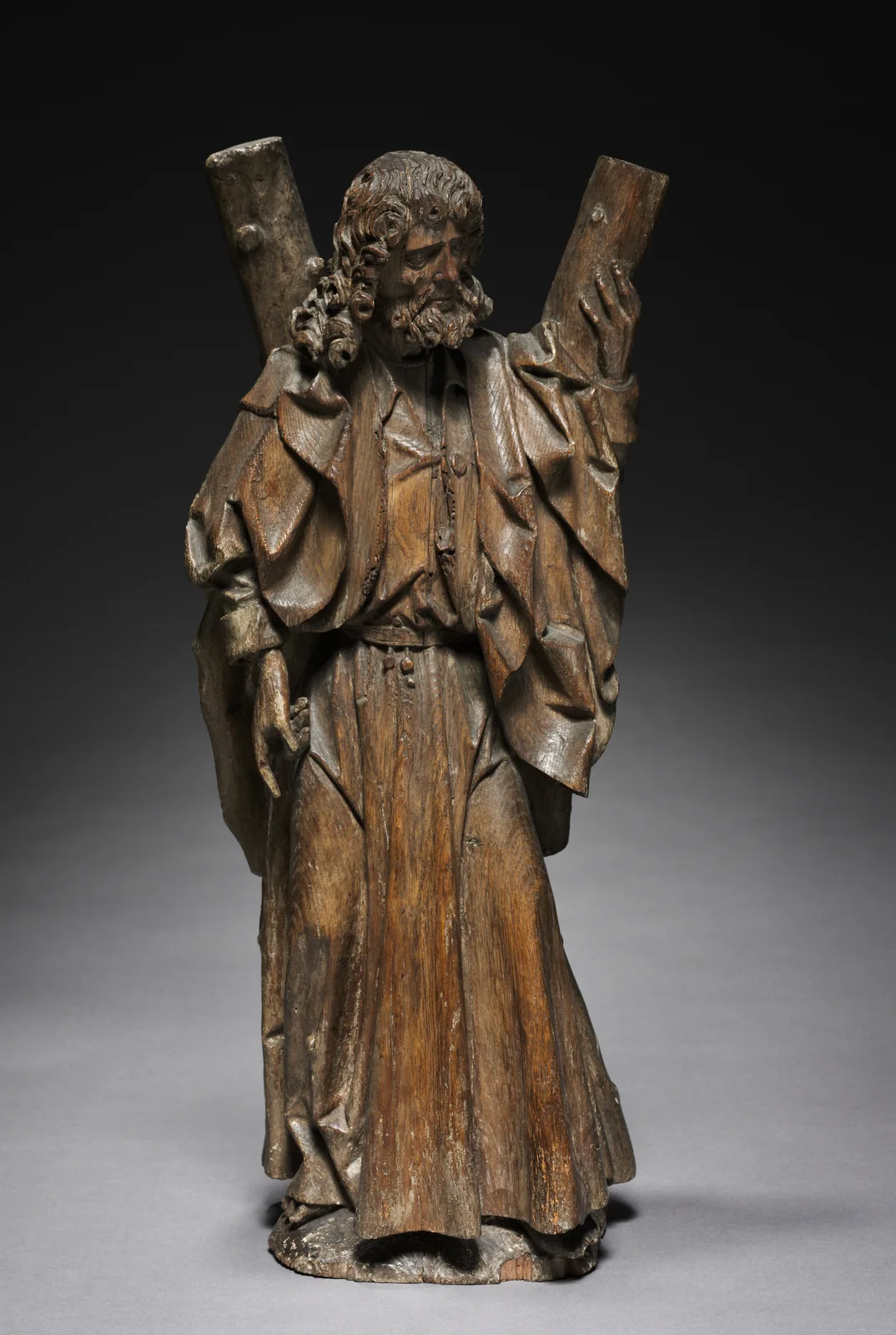
From the end of the timber to the left of the face, follow the diagonal towards the apostle’s body.
The beam on the other side slopes the opposite way. Return to the whole sculpture to trace the X behind the figure.
Where the saltire comes from
The Gospels describe Andrew’s calling without recounting his death. The saltire spread as an attribute through later traditions of his crucifixion. When it appears next to the standing apostle, the cross usually identifies him by recalling his martyrdom rather than portraying the execution.
How to trace the cross in a sculpture
Start with the timbers above the shoulders and follow their angle. In the Cleveland sculpture, the body obscures part of the cross and the wood grain can make it blend into the clothing. The angle of the beams matters more than how many separate fragments you can see.