Dragon
Symbol of evil defeated
Martyrs
Saint Marina
Margaret of Antioch is known as Marina in Eastern Christianity. In medieval Western imagery her most memorable attribute is a dragon, often near her feet.
The martyr’s story circulated in several forms. In the version often illustrated in the West, a dragon swallows Margaret during imprisonment and she emerges alive. Artists used that episode of the legend as a sign of deliverance.
The Western cult linked her with protection during childbirth. Some medieval sculptors reduced the dragon to a small figure under her feet, while others made the creature and the moment of emergence central to the image.
Where should you look to find the identifying animal in this sculpture from Burgos?
Follow the heavy folds of the robe down to the base. Margaret stands over the dragon. The carving gives her stature and makes the creature a smaller attribute.
4 of 4 works
The Eastern name Marina and the Western Margaret refer to the same martyr in these traditions. The dates of her commemoration can differ by calendar.
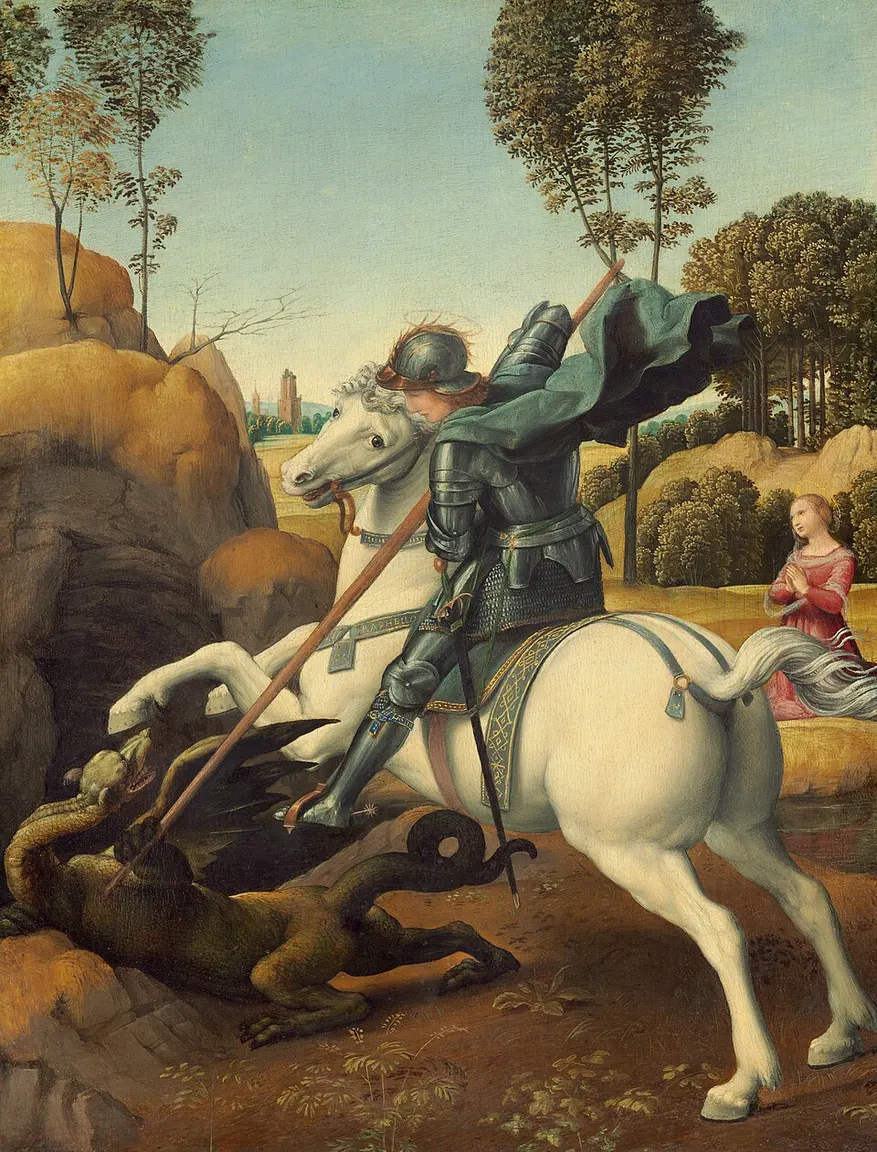
In Margaret’s images the dragon usually belongs to the prison legend. A mounted knight using a lance is much more characteristic of Saint George.
Reviewed on