Eyes on Plate
Held on a plate or in a dish—unique among major saints; verify it is Lucy not Agatha (breasts) or Lucy not ophthalmic allegory alone.
Martyrs
Lucy of Syracuse
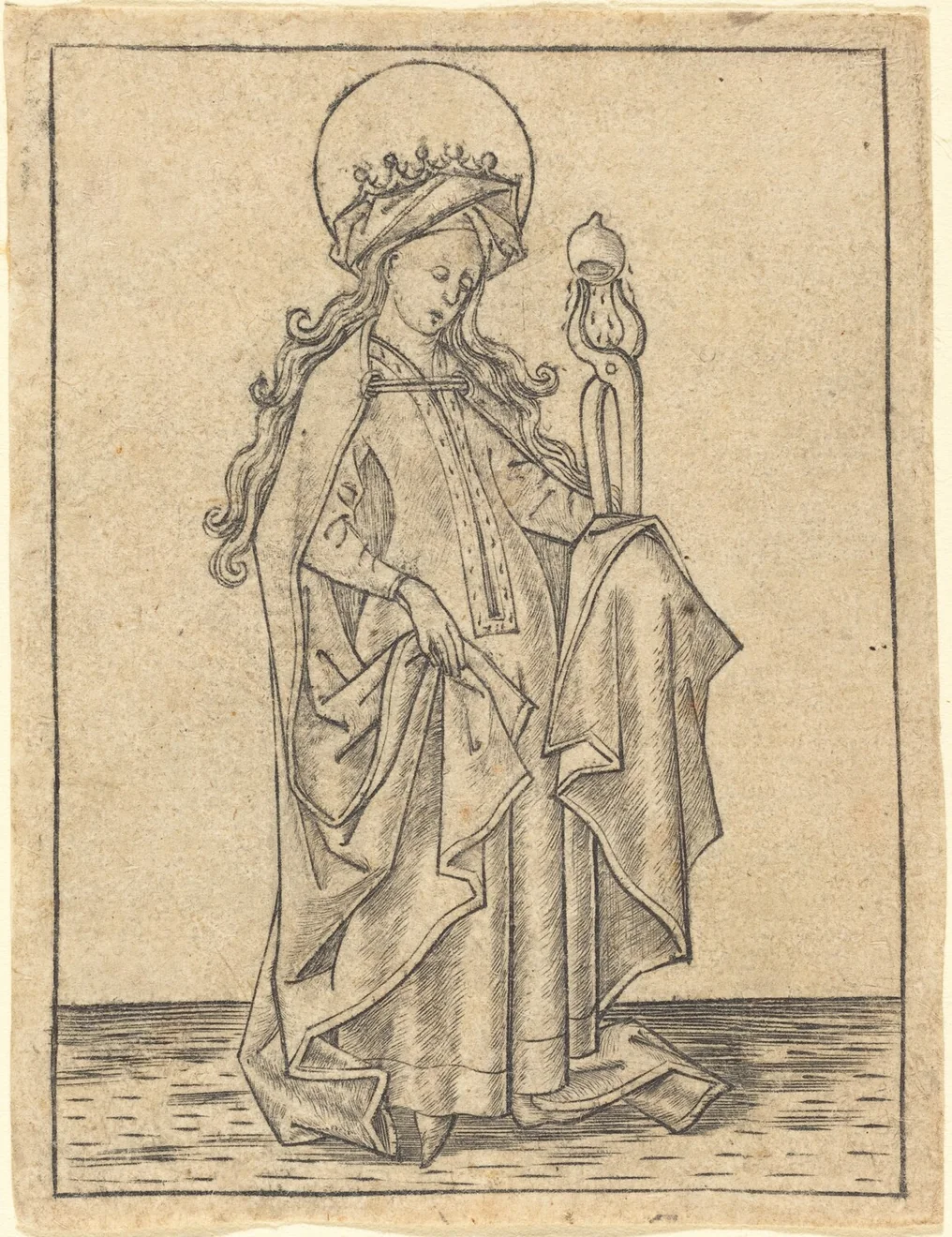
Lucy is a Christian martyr of Syracuse in Sicily, traditionally placed in the early fourth century. In art, eyes presented on a dish are her most recognisable attribute.
Iconographic Attributes
Her death is usually dated to about 304, during Diocletian’s persecutions. Details of her life come from later hagiographic accounts; individual episodes in those accounts should not all be presented as documented events.
Stories about the loss and restoration of her eyes explain many of her images. The association between her name and light also encouraged her patronage of sight. A palm signifies martyrdom but appears with many saints.
In Zurbarán’s Lucy, what identifies her more clearly than the dress or palm?
Examine the dish she holds: it contains two eyes. The inscription S. LVCIA strengthens the identification. Her sumptuous clothing belongs to the painter’s interpretation; this is not a documentary portrait of a fourth-century Sicilian woman.
Held on a plate or in a dish—unique among major saints; verify it is Lucy not Agatha (breasts) or Lucy not ophthalmic allegory alone.
Dish bearing eyes in Lucy's legend
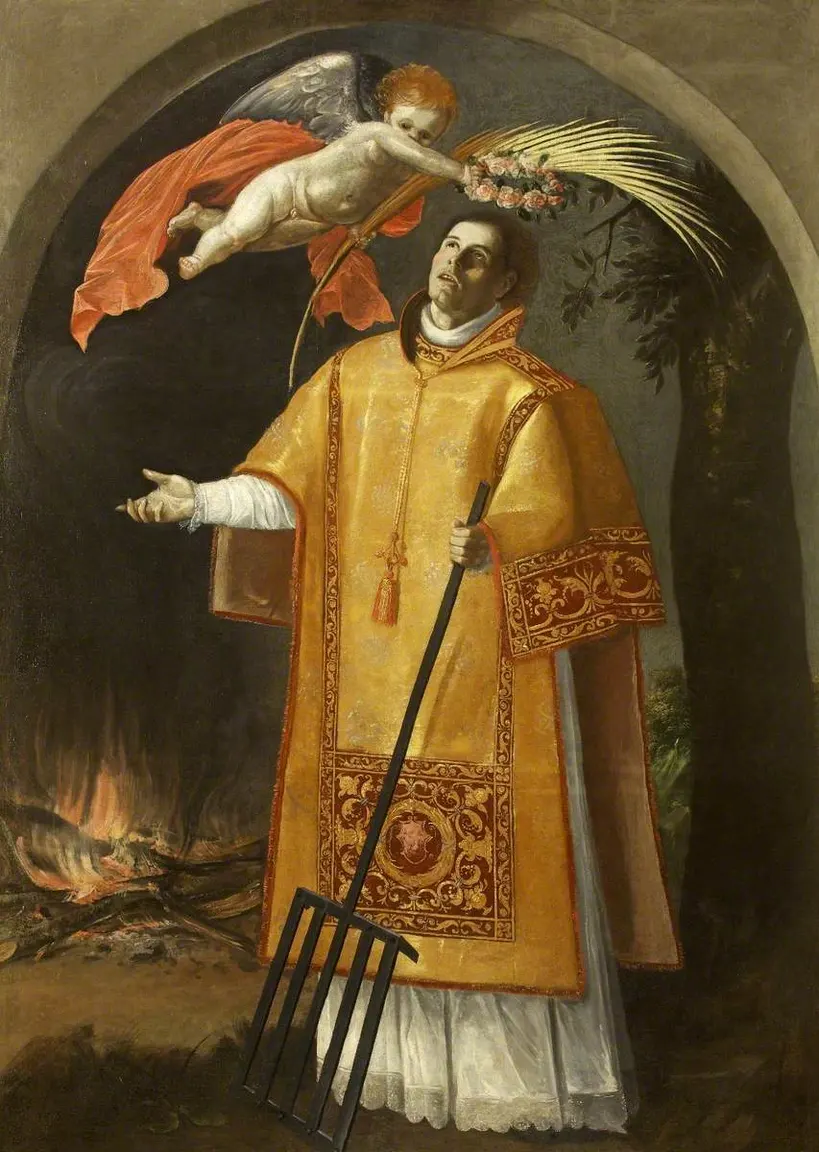
Universal symbol of martyrdom
Oil lamp or torch for “bearer of light.”
Martyrdom by beheading or the Word of God
5 of 5 works
They represent a hagiographic tradition with different versions. The image records how Lucy was venerated; it does not by itself establish how her martyrdom happened.
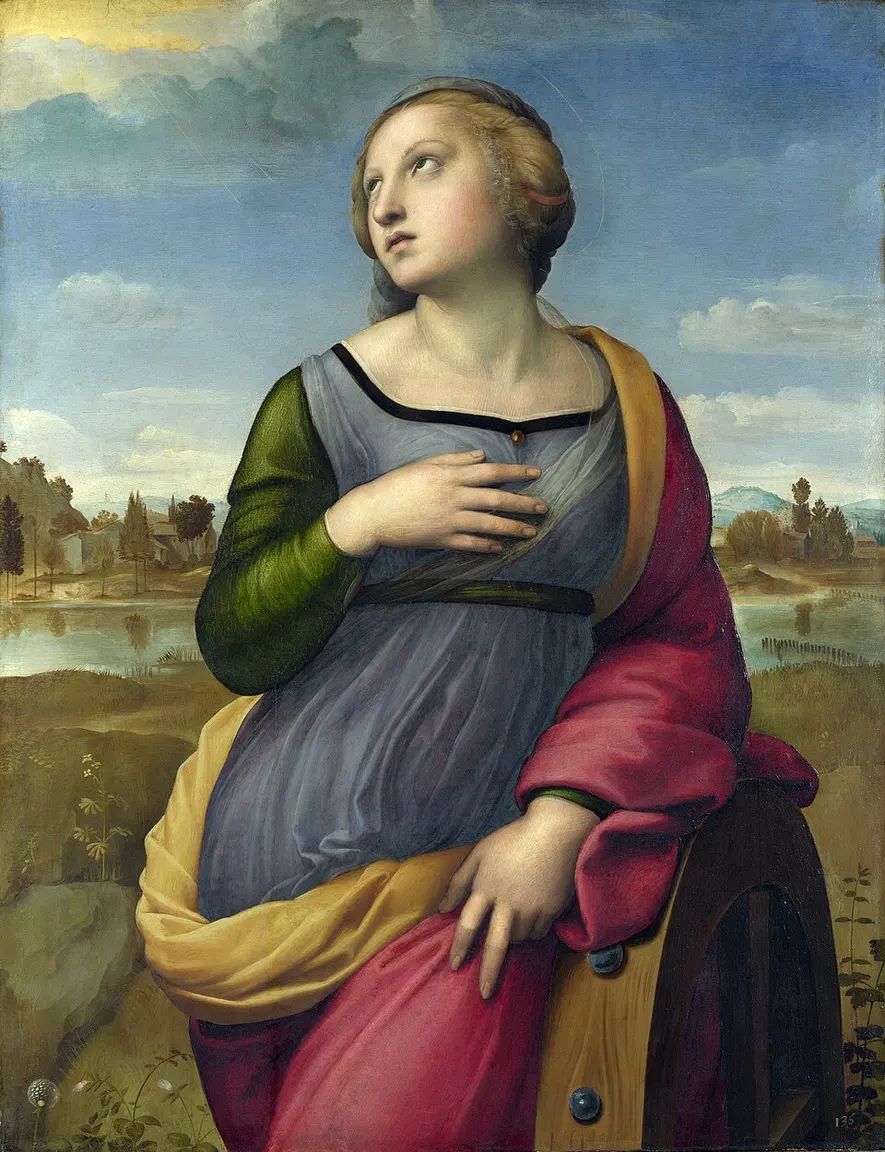
Examine what the dish contains and look for a written name. A palm, crown or elegant dress indicates a type of representation but cannot identify Lucy on its own.
Reviewed on