Scallop Shell
Scallop of Santiago—sewn to hat or cloak; pilgrims still wear it today.
Apostles
James the Apostle
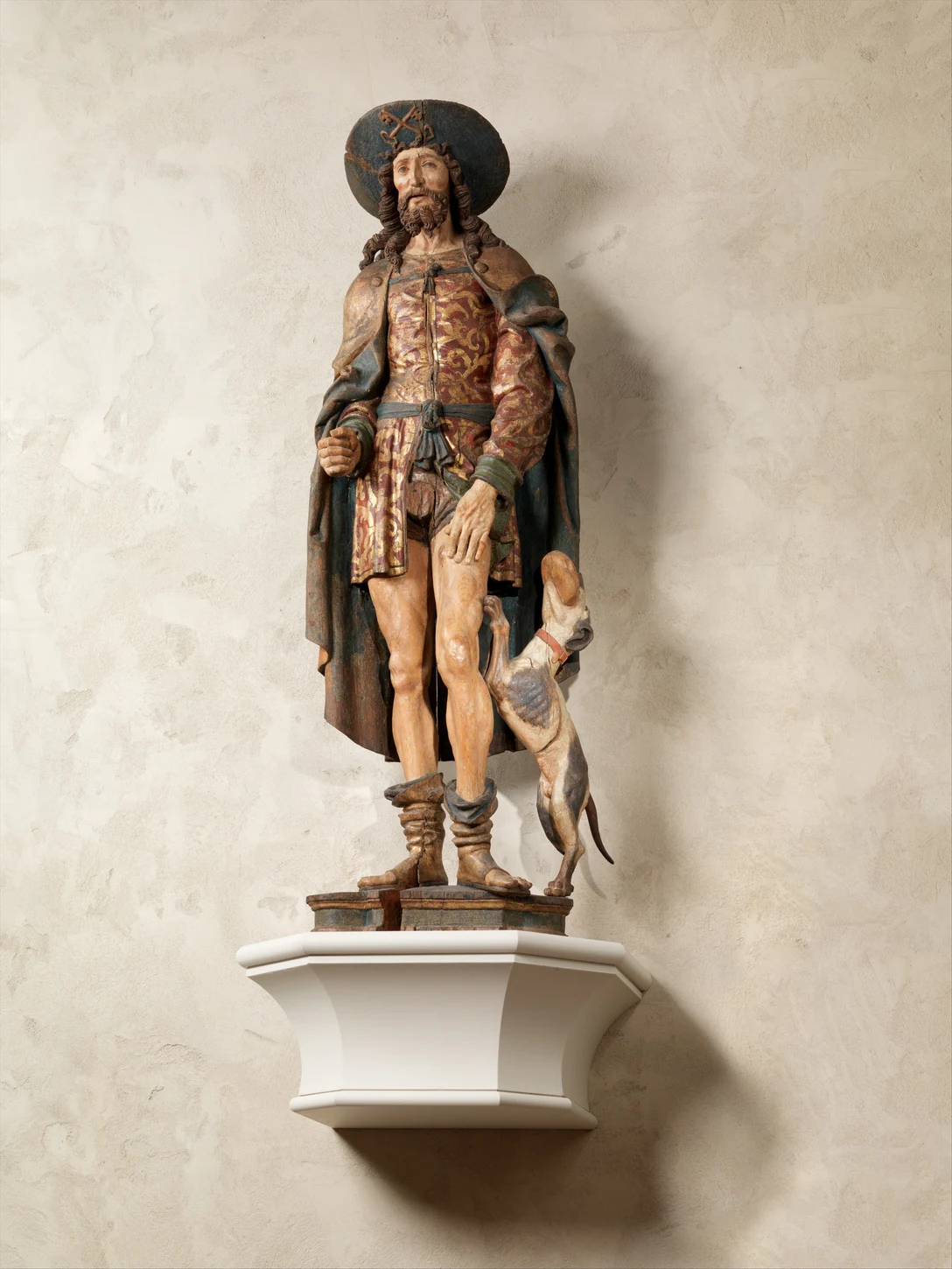
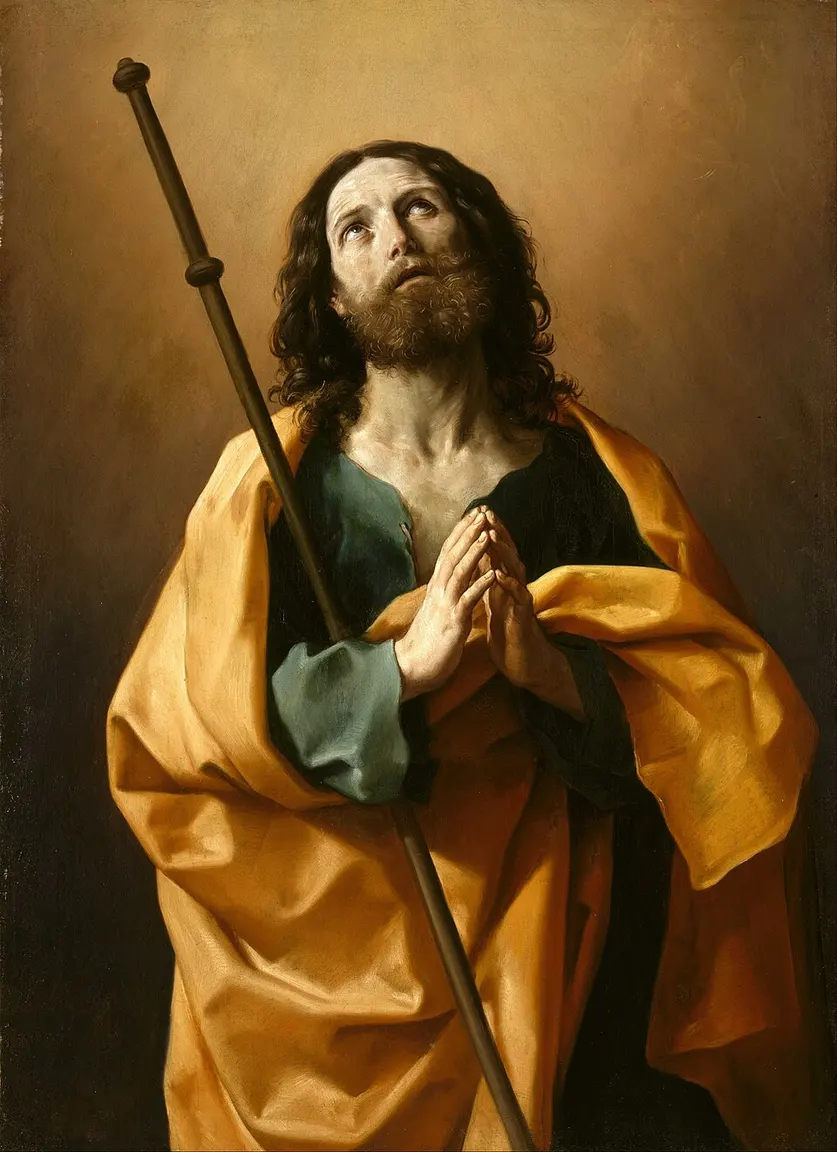
James the Greater was one of the Twelve, the son of Zebedee and the brother of John. His representation as a pilgrim is linked to devotion at Santiago de Compostela.
Iconographic Attributes
James accompanies Jesus at events including the Transfiguration and the prayer in Gethsemane. Acts 12 records that Herod had him killed by the sword. This evidence is distinct from later accounts of his presence in Spain.
His preaching in Spain and the transfer of his remains belong to traditions that shaped the cult at Compostela. Artists came to dress the apostle like the pilgrims who travelled to his shrine, with a hat and a staff.
What makes this apostle look like someone on a journey?
The hat and long staff give him a pilgrim’s appearance. Made in Bruges around 1440–1450 by the Master of the Gold Scrolls, the miniature belongs to a book of hours. It evokes medieval devotion rather than documenting his first-century clothing.
Scallop of Santiago—sewn to hat or cloak; pilgrims still wear it today.
Walking stick of the Camino, sometimes with gourd attached.
Wide-brimmed hat of Camino pilgrims
Pilgrim's water vessel
Matamoros iconography only—do not use alone without shell or horse context.
Gospels, doctrine, or wisdom
4 of 4 works
No. His Spanish mission belongs to a later tradition. That tradition should be distinguished from the account of his death preserved in Acts.
No. Acts connects the sword with his death, so it can also refer to martyrdom. Identifying an equestrian battle scene requires looking at the whole action, rather than one isolated object.
The Twelve Apostles course
Distinguish a scallop badge from a staff and record which one is visible.
Study this lesson 8 min · FreeReviewed on