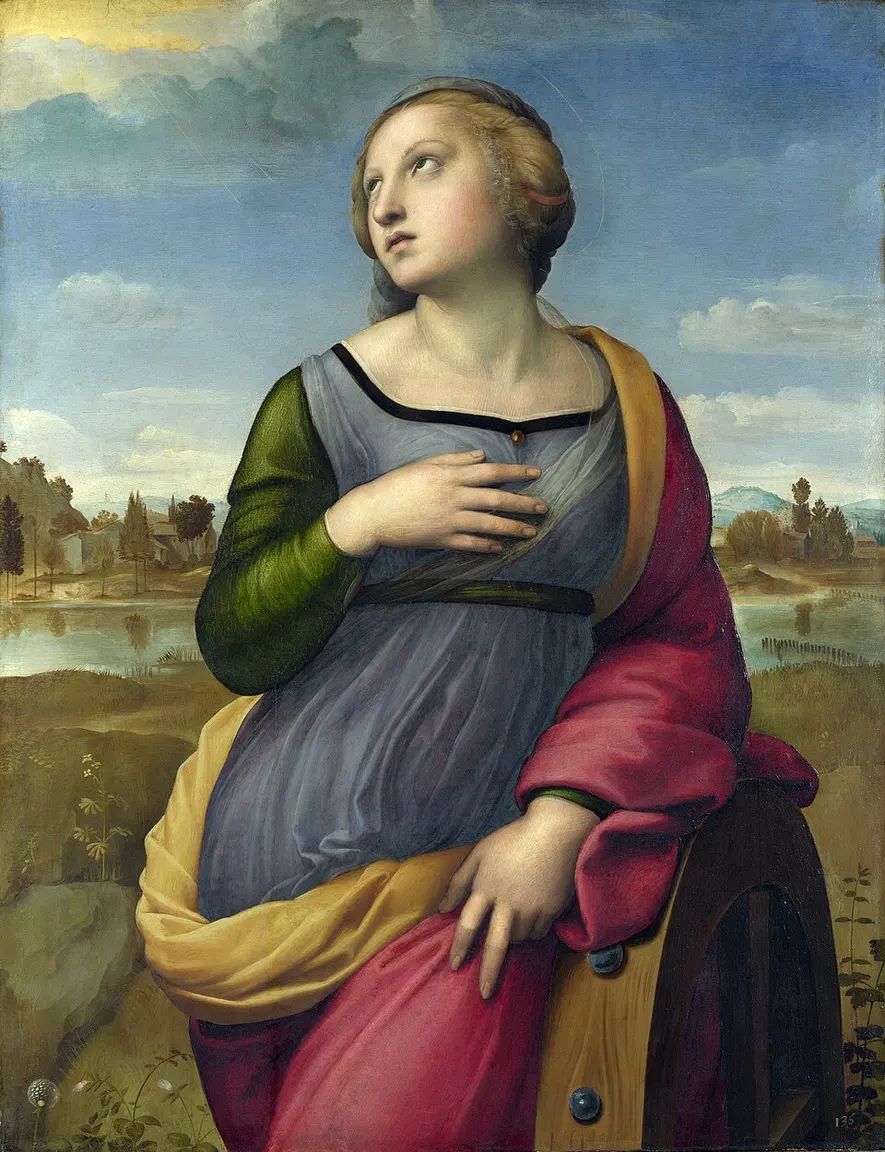
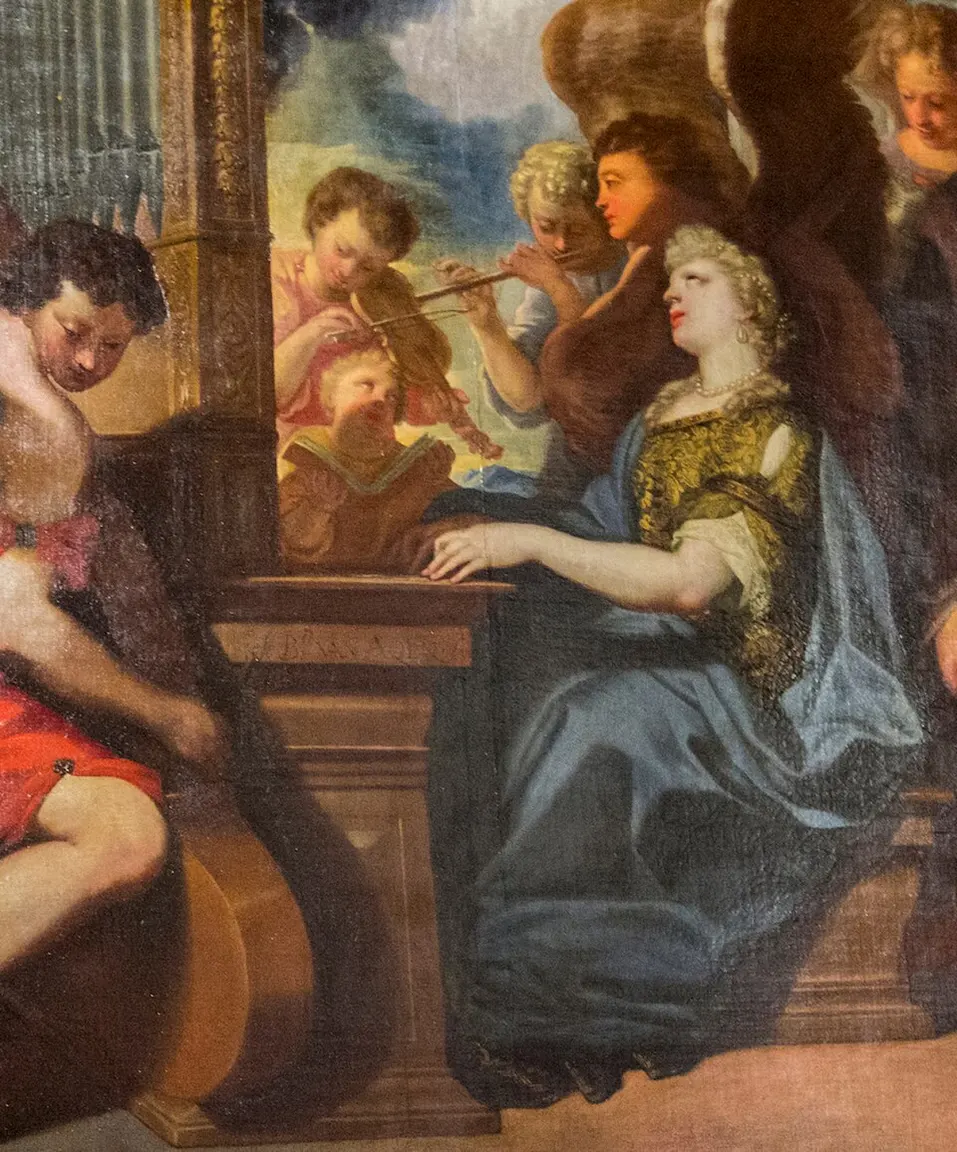
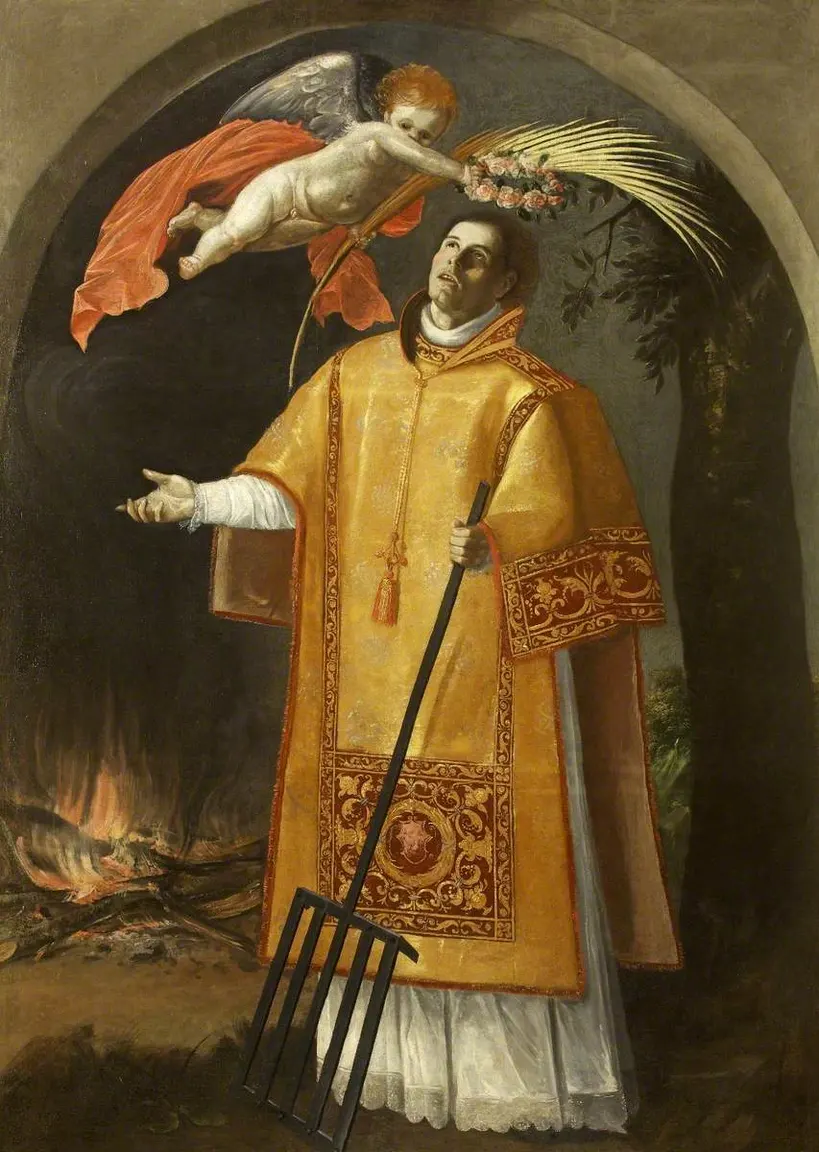
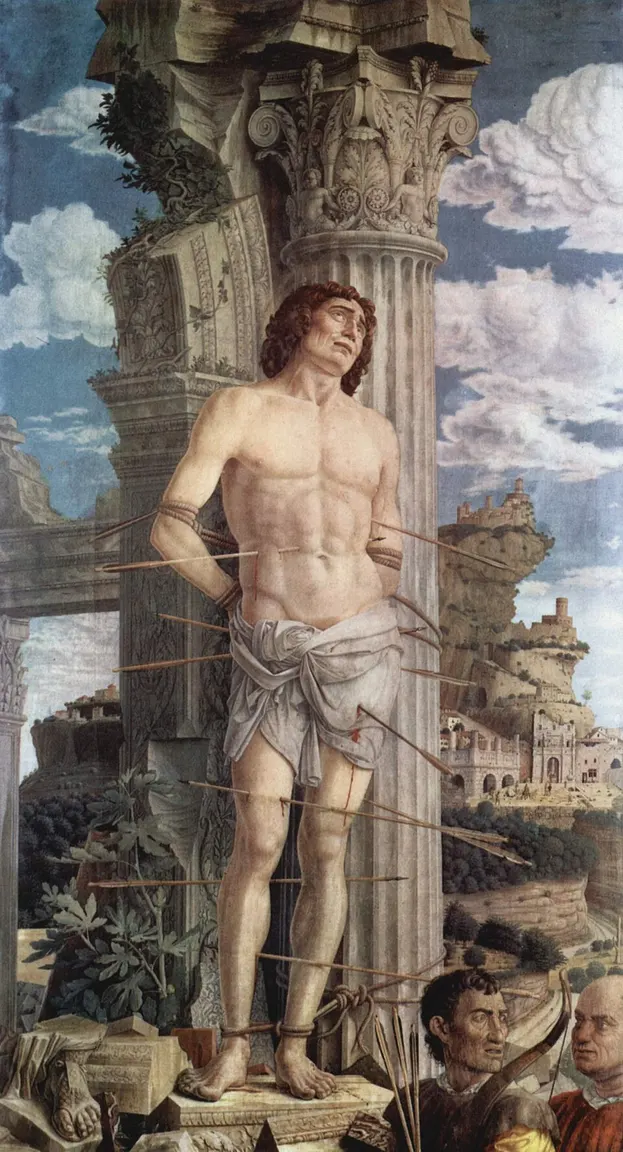
Tower
Prison or fortress from legend—Barbara’s most reliable solo attribute.
Martyrs
Barbara of Nicomedia
Saint Barbara is venerated as a virgin and martyr and is known chiefly through her legend. The tower that often accompanies her refers to her imprisonment by her father and serves as her principal visual attribute.
The account circulated through the Golden Legend presents Barbara imprisoned by her father, converted to Christianity, and eventually denounced and condemned. The story of the three windows expresses her belief in the Trinity. These episodes explain her imagery; they do not by themselves establish a secure historical chronology.
The MNAC altarpiece, attributed to Gonçal Peris Sarrià and dated around 1410–1425, combines a large central figure with narrative side panels. The tower and palm identify Barbara, while the smaller scenes develop her story. Her invocation against lightning and storms belongs to the history of devotion to her.
Look at the central figure in the altarpiece. How does the tower she holds differ from the surrounding scenes?
The tower has been reduced to an object the saint can carry; it functions as an attribute. The palm in her other hand indicates martyrdom. The side compartments, by contrast, show actions and other figures: they narrate episodes. One altarpiece thus combines identification with storytelling.
Prison or fortress from legend—Barbara’s most reliable solo attribute.
Martyr branch; pairs with tower in devotional portraits.
Royalty, nobility, or sanctity
Martyrdom by beheading or the Word of God
5 of 5 works
In her legend, Barbara has three windows opened in honour of the Trinity. This gives them their symbolic meaning. They are not always visible or easy to count in artworks; the absence of three clearly drawn openings does not by itself exclude her identification.
Devotional tradition invokes her for protection against lightning and storms, an association the MNAC records in its account of the altarpiece. To identify her in a painting, the tower is usually more useful than expecting a storm to appear in the landscape.
Reviewed on