Tooth
Extracted or broken tooth displayed in hand.
Martyrs
Apollonia of Alexandria
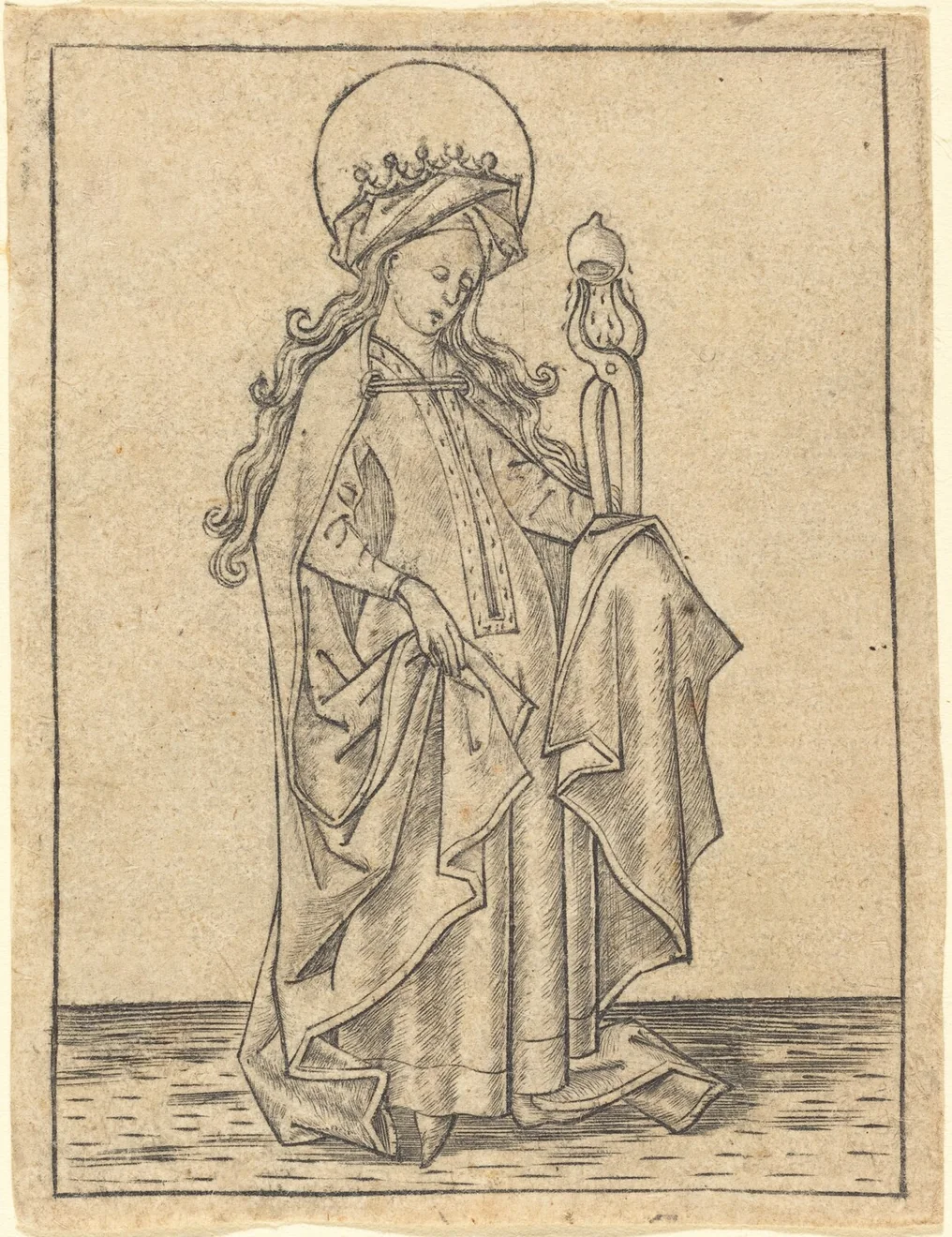
Saint Apollonia was a Christian of Alexandria who died during anti-Christian violence around 249. A letter by Dionysius, preserved by Eusebius, describes her as elderly. Art frequently presents her as a young woman holding pincers.
Iconographic Attributes
In Church History VI.41, Eusebius quotes Dionysius’s letter: Apollonia’s attackers struck her jaws and broke her teeth. They then threatened her with fire unless she complied with their demands. This ancient testimony should be distinguished from later accounts and images showing the extraction of teeth with pincers.
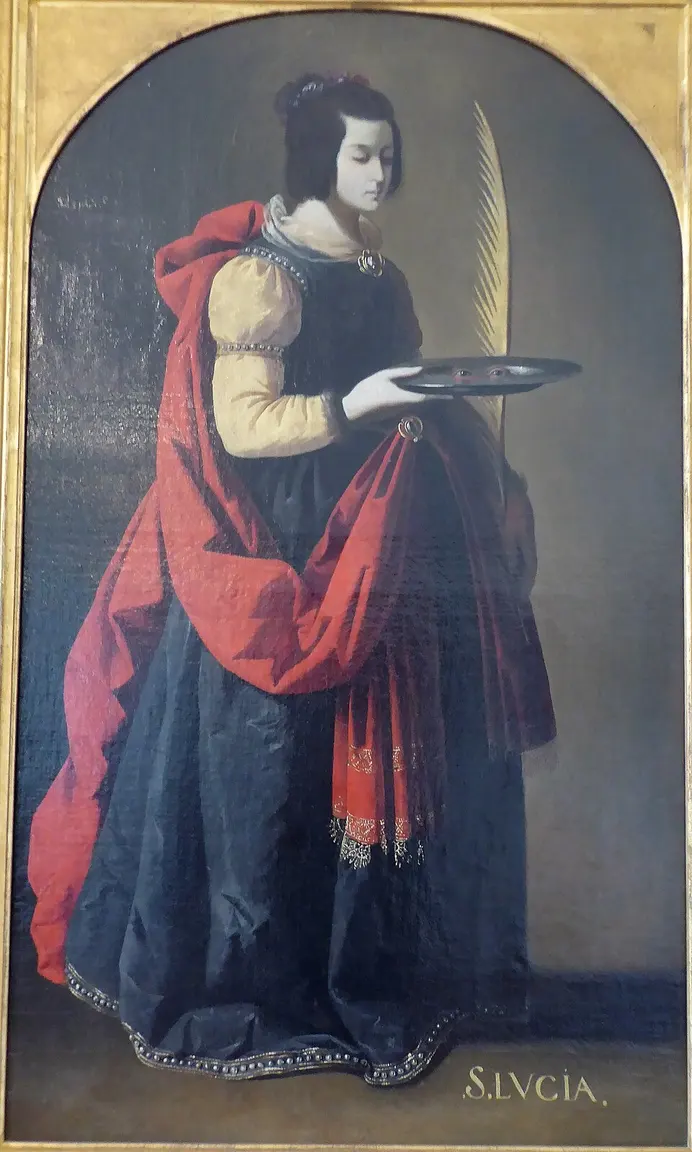
Zurbarán paints her as a young woman in sumptuous clothing, carrying a palm and the dental instrument. The Louvre dates the painting around 1636–1640 and records her name inscribed in the lower corner. This is not a portrait of the historical martyr: her youth and costume belong to a seventeenth-century devotional image.
Find two objects and an inscription in Zurbarán’s Apollonia. Which clue is the most specific, and which is shared by many martyrs?
Pincers appear in her raised hand; a palm crosses her figure diagonally. The pincers are Apollonia’s particular clue, while the palm is a general sign of martyrdom. At the lower left, the inscription “S. POLO/NIA” reinforces the identification without requiring a guess about her age.
Extracted or broken tooth displayed in hand.
Dental forceps used in her torture—pair with tooth.
Confirms martyr status in solo portraits.
4 of 4 works
Her patronage relates to the tortures that damaged her teeth. Artistic tradition turned that episode into pincers, often holding a tooth between their tips. The object recalls her martyrdom; it does not mean she practised dentistry.
Dionysius’s account, preserved by Eusebius, calls her an elderly woman. Many paintings, including this one by Zurbarán, make her young. This difference shows why a saint’s appearance in a devotional artwork should not be treated as evidence of her actual age.
Reviewed on