Cross
Saltire (Saint Andrew’s cross)—diagonal X, not Latin cross.
Apostles
Andrew the Apostle
Andrew was one of the Twelve Apostles and the brother of Simon Peter. The Gospels present him as a fisherman and one of the earliest followers of Jesus.
Iconographic Attributes
In John’s Gospel, Andrew listens to the Baptist, follows Jesus and then brings his brother Simon to meet him. Eastern Christian tradition calls him the Protoclete, meaning “first called”, after this account of the beginnings.
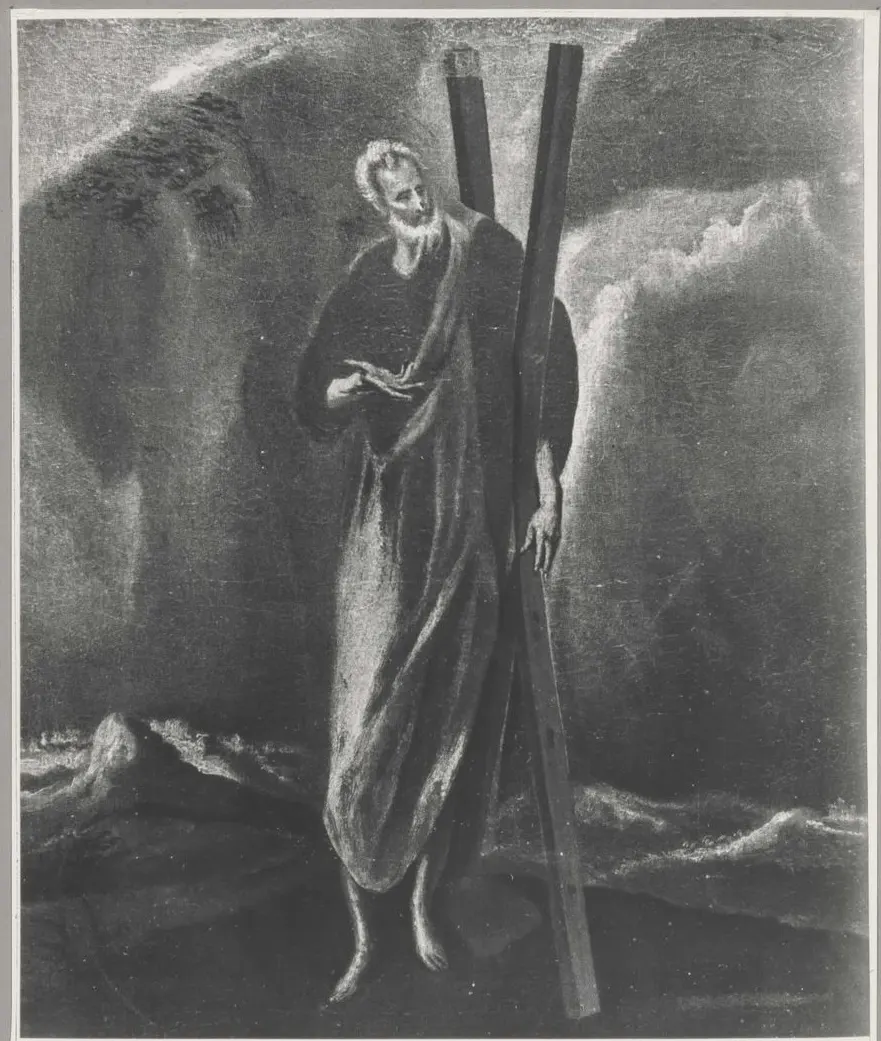
His death at Patras and the X-shaped cross belong to later tradition, rather than a New Testament narrative. The diagonal cross became an attribute by which he can be recognised in many Western images.
Follow the two pieces of wood behind his shoulders. What shape do they make?
They form an X. In this carving from the circle of the Master of Elsloo, the cross and its diagonals distinguish Andrew within an apostolic group. The substantial folds of his cloak may attract the eye, but they do not replace that identifying clue.
Saltire (Saint Andrew’s cross)—diagonal X, not Latin cross.
Galilean fisherman background shared with Peter.
Garments of the Twelve or evangelists
Venerable age of prophets and Baptist
5 of 5 works
Yes. John 1 identifies Andrew as Simon Peter’s brother and relates how he brought Simon to Jesus.
No. This account of his martyrdom comes from later traditions. It helps explain devotional images, but it is not an event documented in the Gospels.
The Twelve Apostles course
Trace the beams before naming a cross.
Study this lesson 8 min · FreeReviewed on