Martyrdom tongs
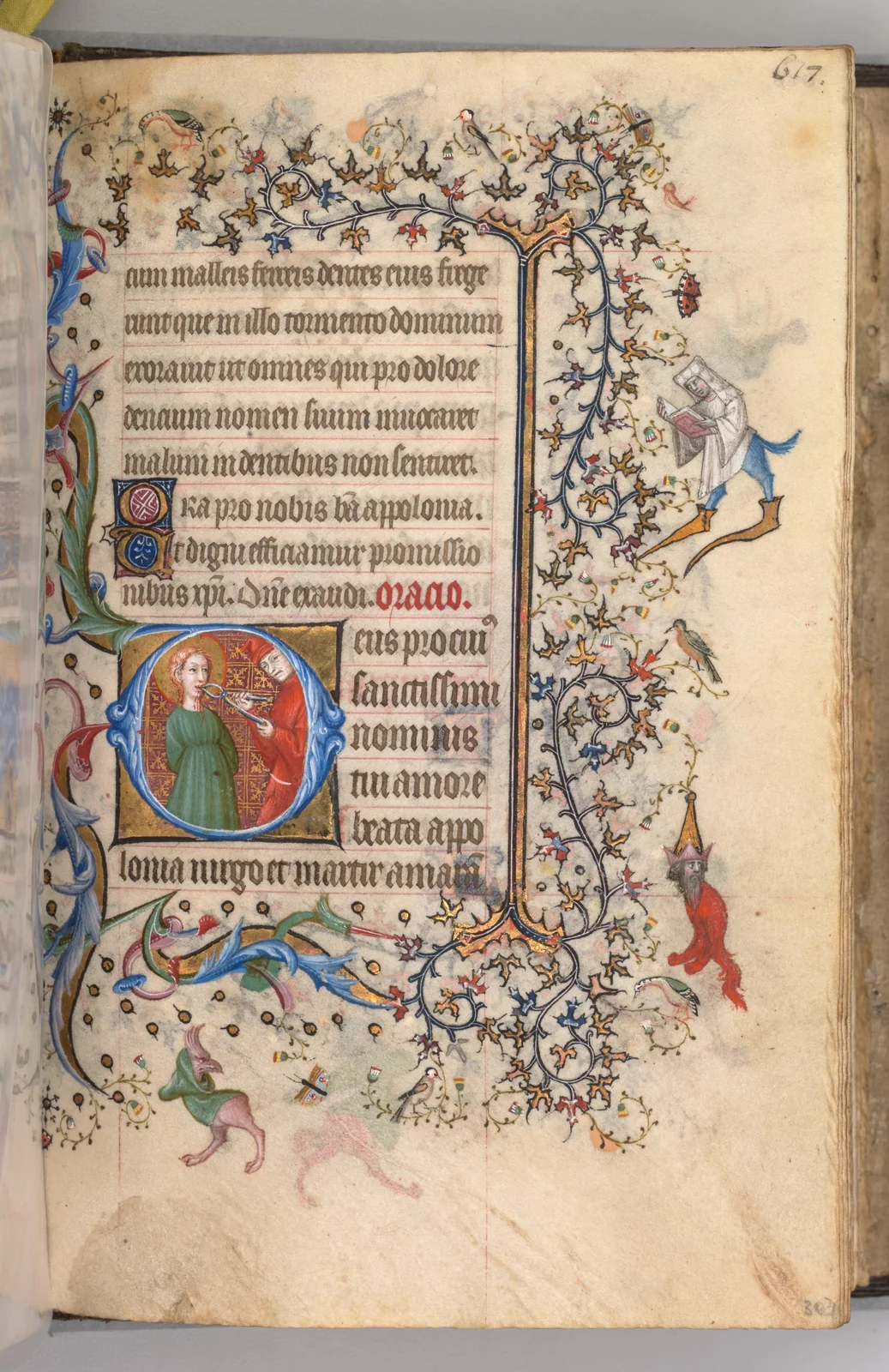
The instrument needs context. A tooth points to Apollonia while Agatha’s tongs recall a different part of her Passion.
Martyrs
Agatha of Sicily
Agatha is a martyr of the early Church and patron saint of Catania. Artists often identify her through details drawn from her later written Passion.
Iconographic Attributes
Agatha’s devotion is associated with third-century Sicily. The written Passion places her death during the persecution under Emperor Decius. The account of her trial and the ordeals it describes belong to the hagiographical tradition.
In Catania, the story of Agatha’s veil stopping a flow of lava from Mount Etna is part of her local cult. A medieval picture of her holding tongs usually refers instead to the Passion and the injuries described in it.
What detail inside the raised tongs distinguishes Agatha from another martyr?
The tongs grip a rounded breast. That detail refers to the traditional account of Agatha’s martyrdom. Apollonia’s pincers usually hold a tooth.
The instrument needs context. A tooth points to Apollonia while Agatha’s tongs recall a different part of her Passion.
4 of 4 works
The Roman calendar commemorates her on February 5, the date given for her death in the traditional account.
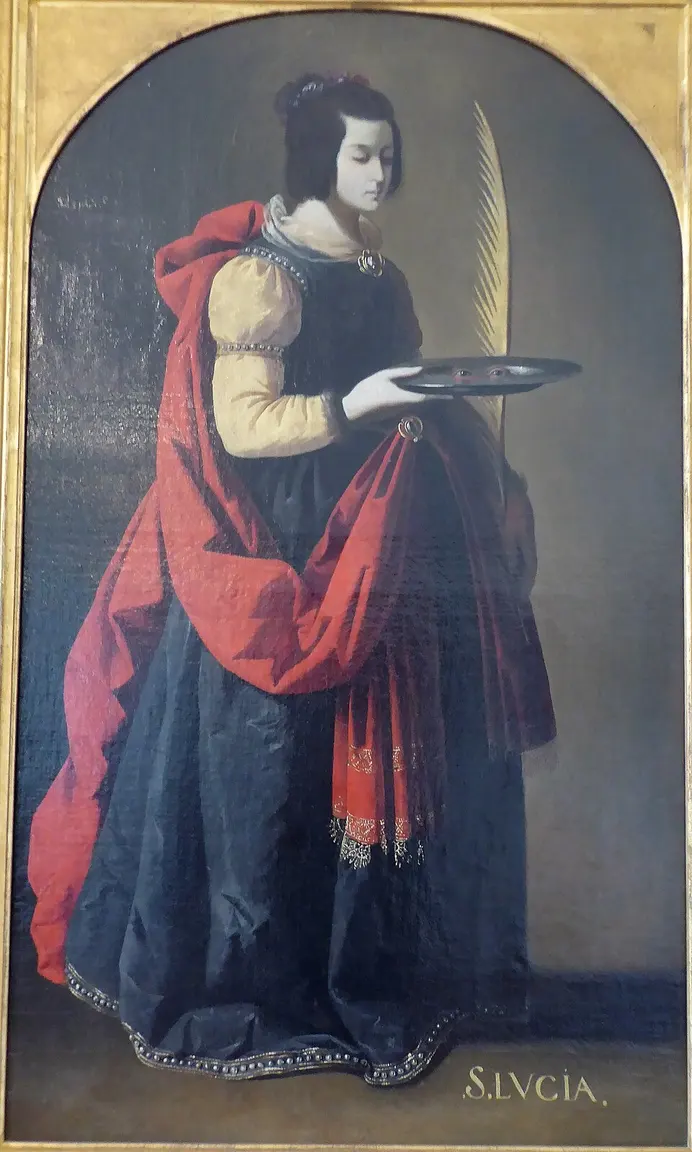
Artists sometimes place her identifying attribute on a dish rather than between the jaws of the tongs. Read the object together with the figure and the title.
Reviewed on