Martyrs · Most commonly confused
Catherine of Siena and Catherine of Alexandria
Tell the two Saint Catherines apart through Siena’s Dominican habit, heart and crucifix and Alexandria’s broken wheel and sword.
ASaint Catherine of Siena
Dominican habit, heart and crucifix in Raimondi’s engraving
- Veil and mantle of a Dominican woman
- Heart held beneath the crucifix
- Book and flowers in the other hand
BSaint Catherine of Alexandria
Broken wheel and sword in Caravaggio’s portrait
- Broken wheel beside the figure
- Long sword across her hands
- Martyr’s palm near her feet
How to tell them apart in art
- Raimondi’s Catherine of Siena is veiled and shows a heart beneath a crucifix while holding a book and flowers.
- Caravaggio’s Catherine of Alexandria kneels by a broken wheel and rests her hands on a sword. The palm lies in front of her.
Why they get confused
Both are commonly called Saint Catherine in short labels. Both are shown in richly symbolic devotional images, and flowers, a book or an upturned gaze alone can be ambiguous.
Similarities
- Both bear the name Catherine
- Both appear in devotional images
- Both may be identified by objects held in their hands
In the museum or church
In a painting partly hidden by a frame, follow the edge of the dress. The broken wheel in Caravaggio extends behind the figure, and a fragment is visible at the lower left.
Quick recognition
- Look beside the figure as well as at her hands. The wheel may sit behind her.
- Check the veil and habit together with the heart or crucifix.
Common mistakes
- Assigning a damaged wheel to Catherine of Siena
- Taking a book alone as proof of either identity
To apply these clues to other artworks, read the guide to saints’ symbols in art.
Related comparisons
All comparisons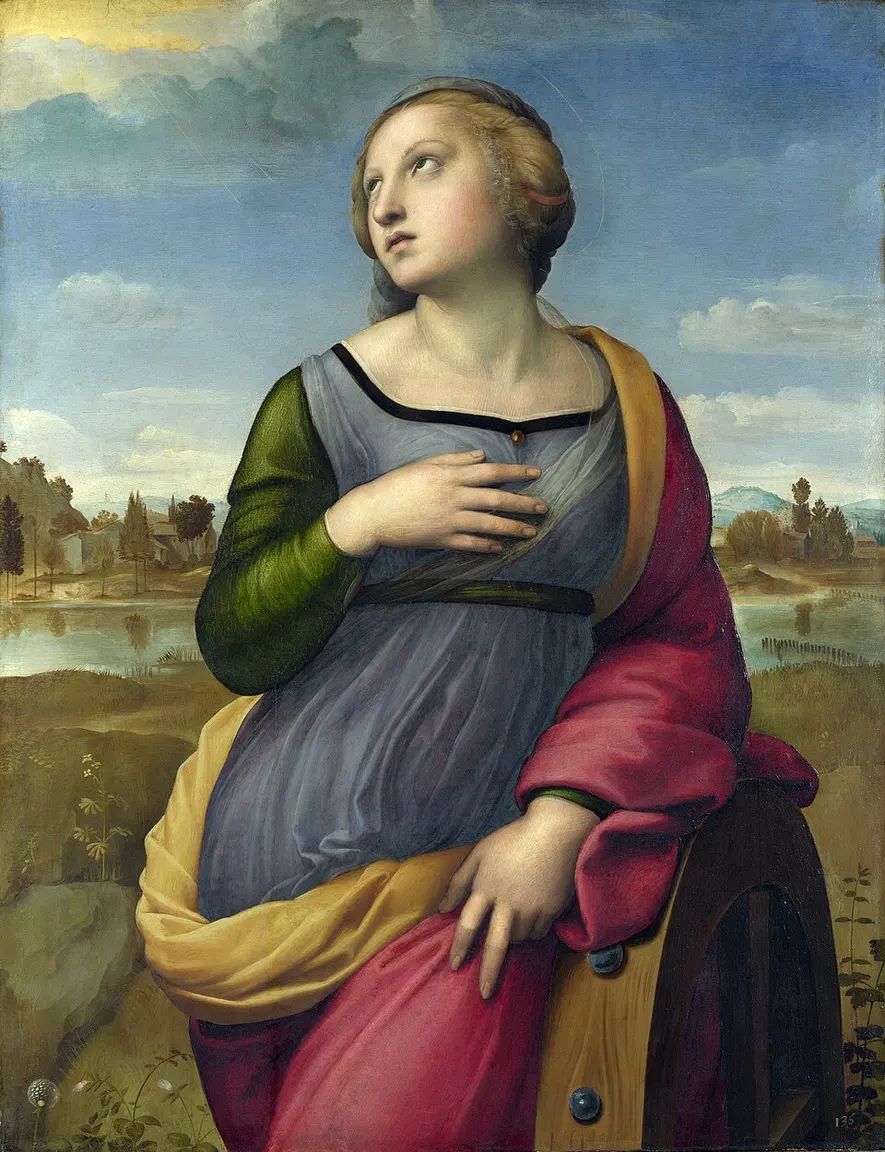
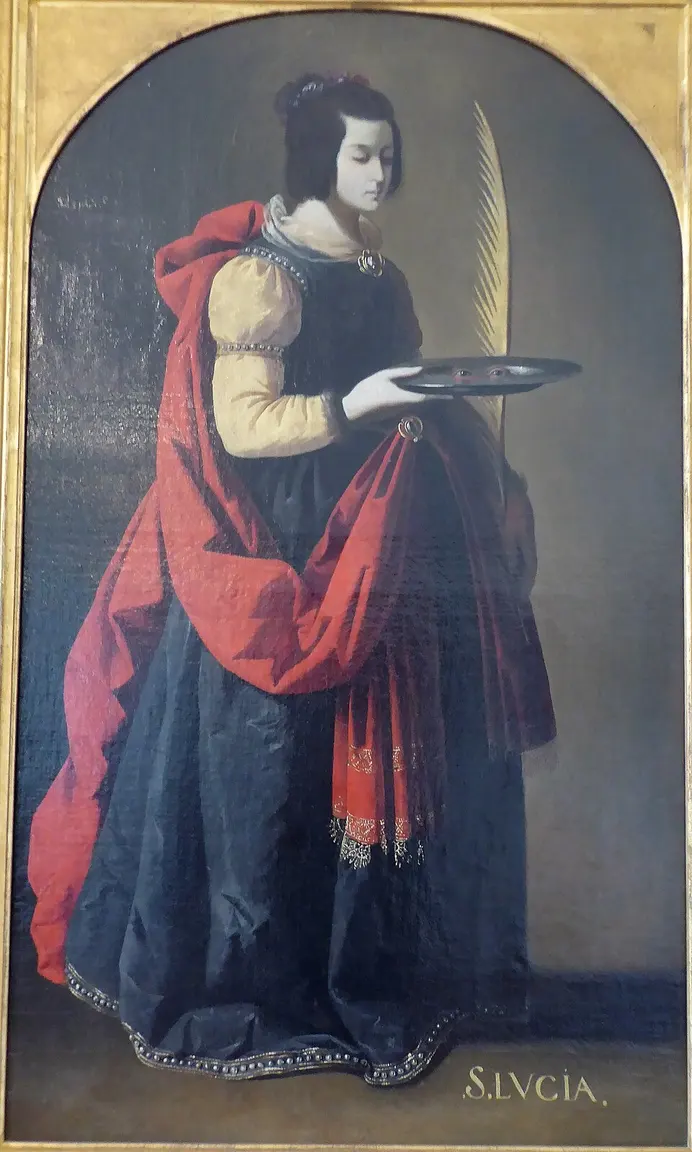
Saint Catherine of Alexandria and Saint Lucy
The toothed wheel distinguishes Catherine of Alexandria. Eyes on a dish mark Saint Lucy.
Most commonly confused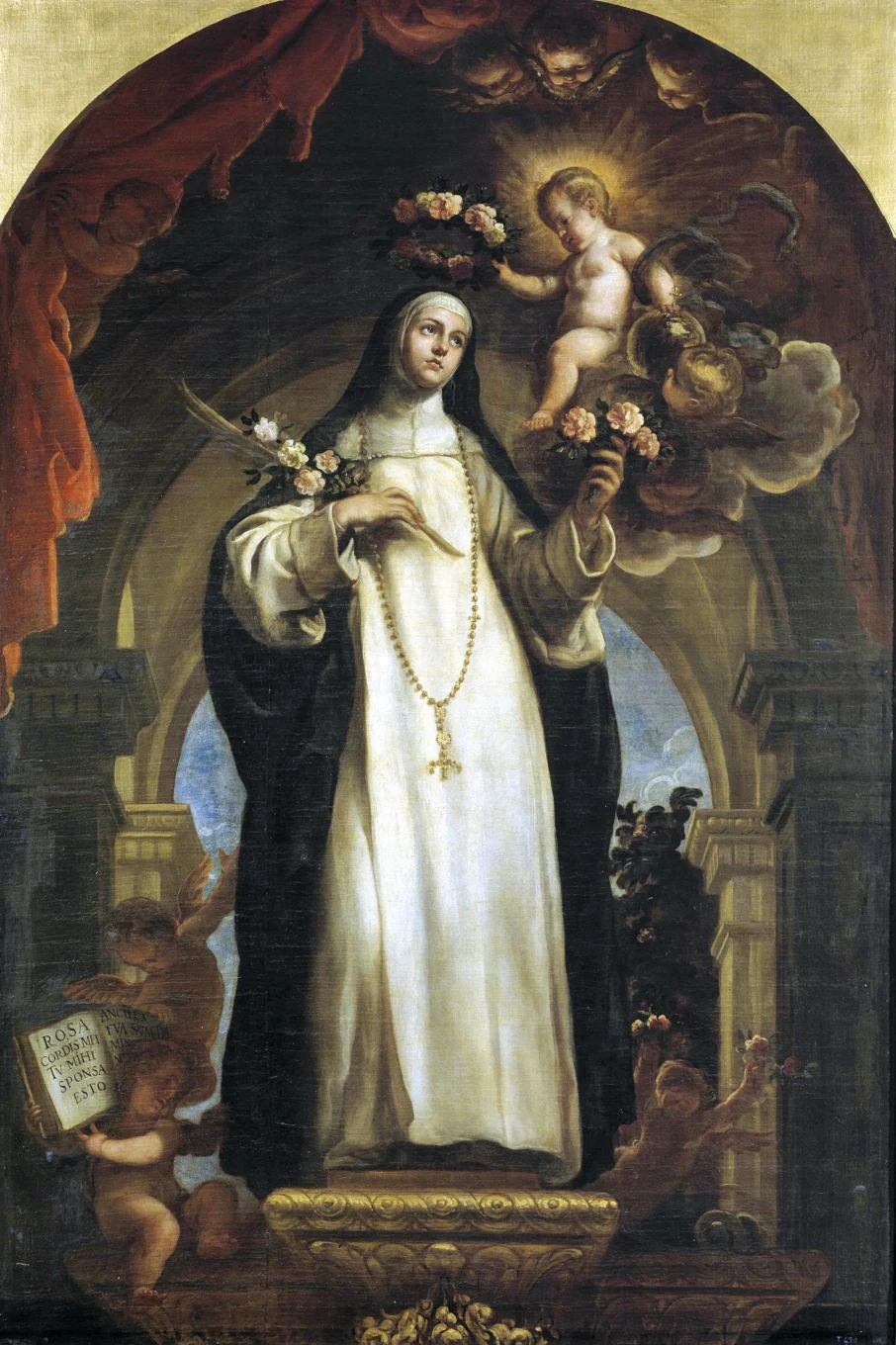
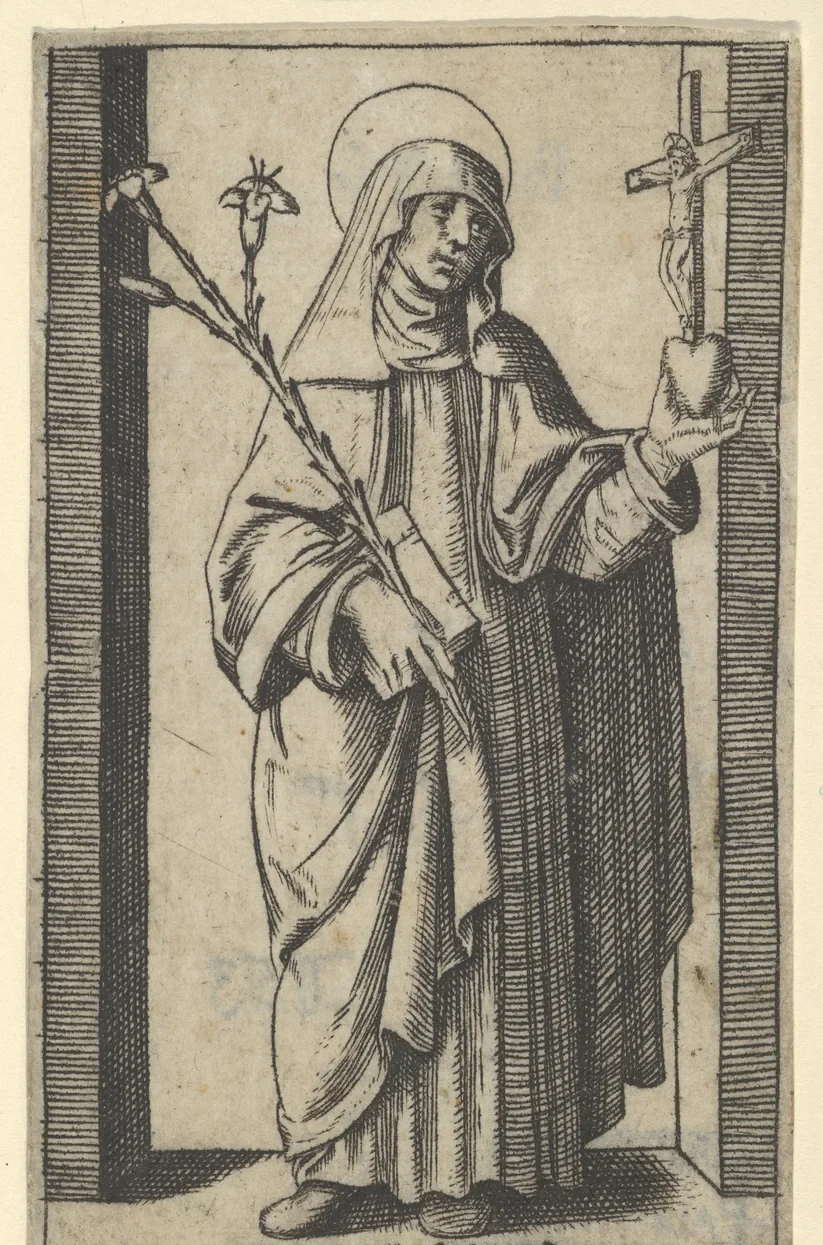
Rose of Lima and Catherine of Siena
Rose and Catherine share a Dominican habit. The Christ Child raising a garland in Coello and the heart offered beneath the crucifix in Raimondi are stronger clues in these two works.
Apostles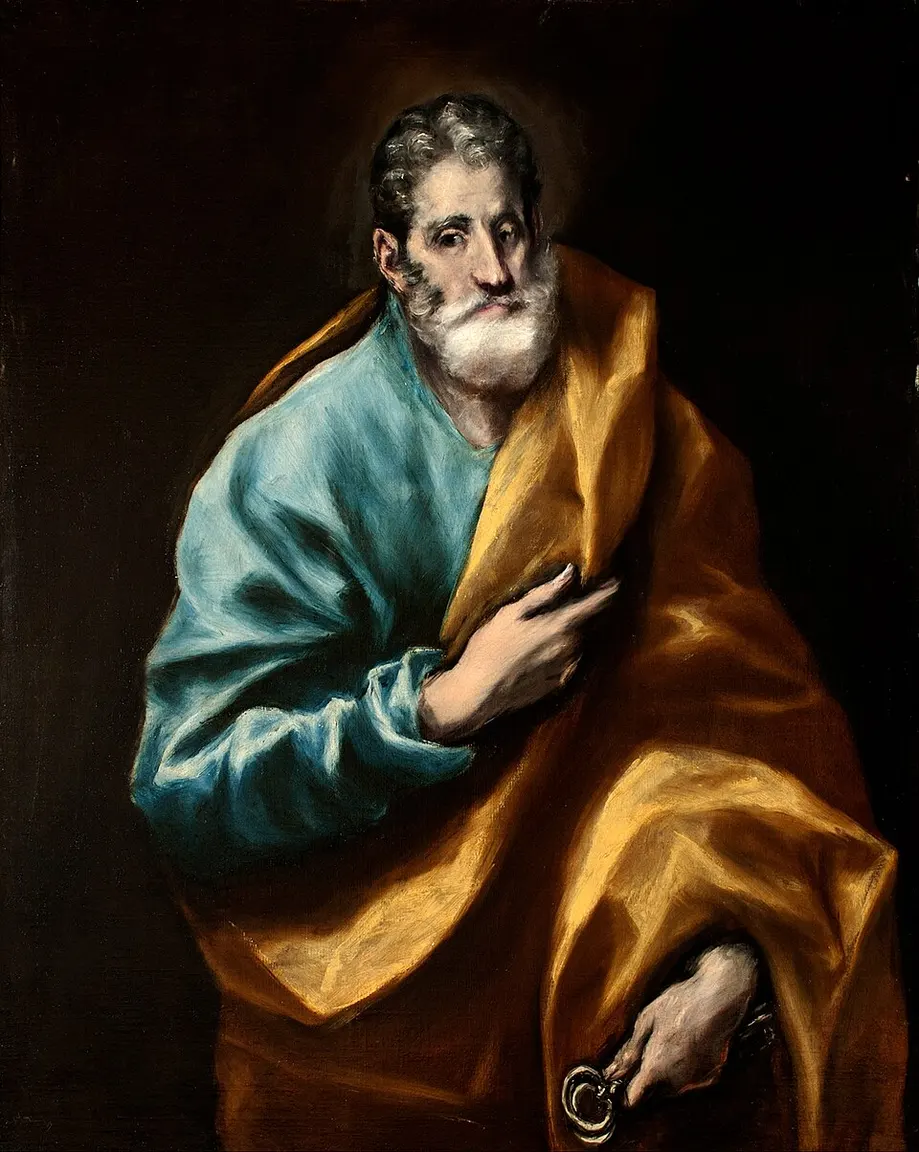
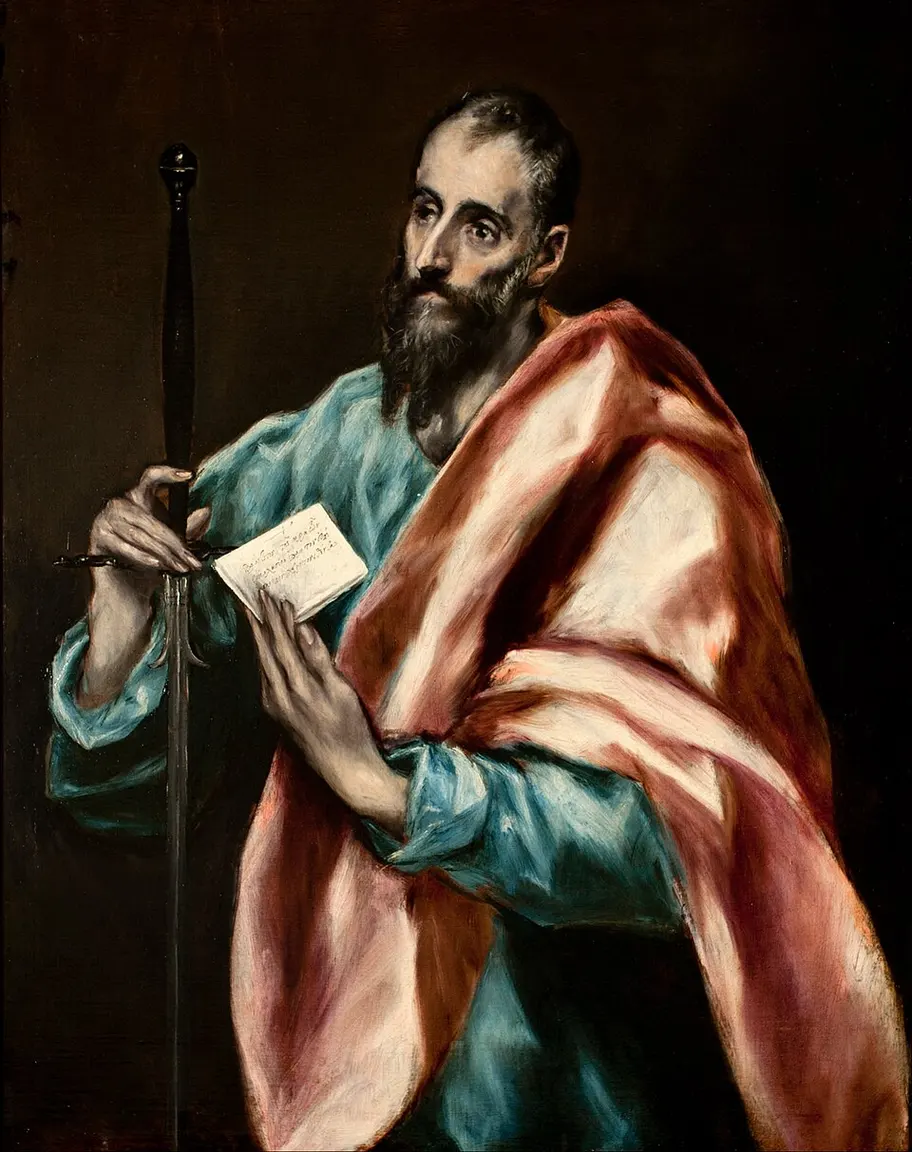
Saint Peter and Saint Paul
Peter’s keys and Paul’s sword and book distinguish these apostles in paired portraits and altarpieces.