Cross
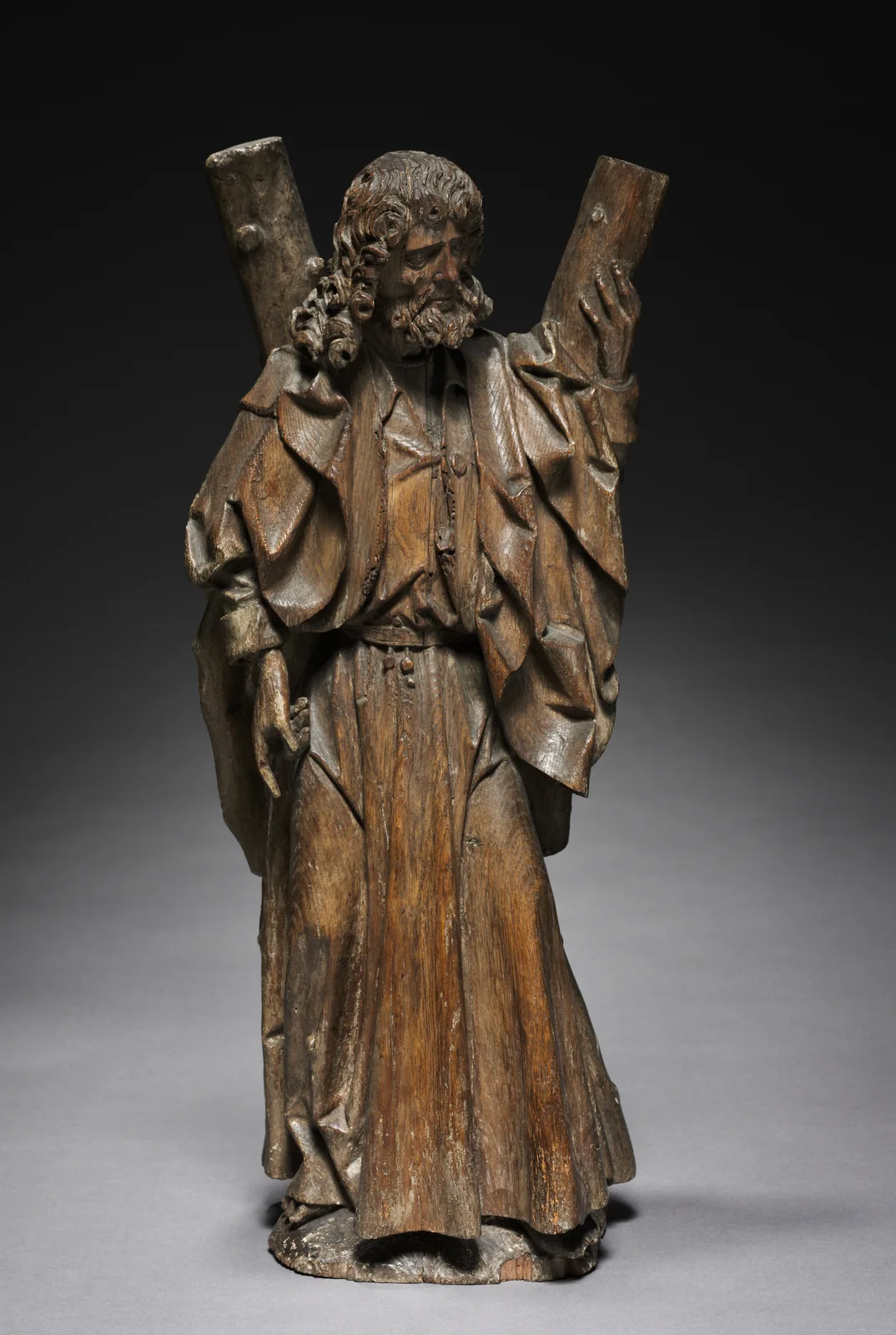
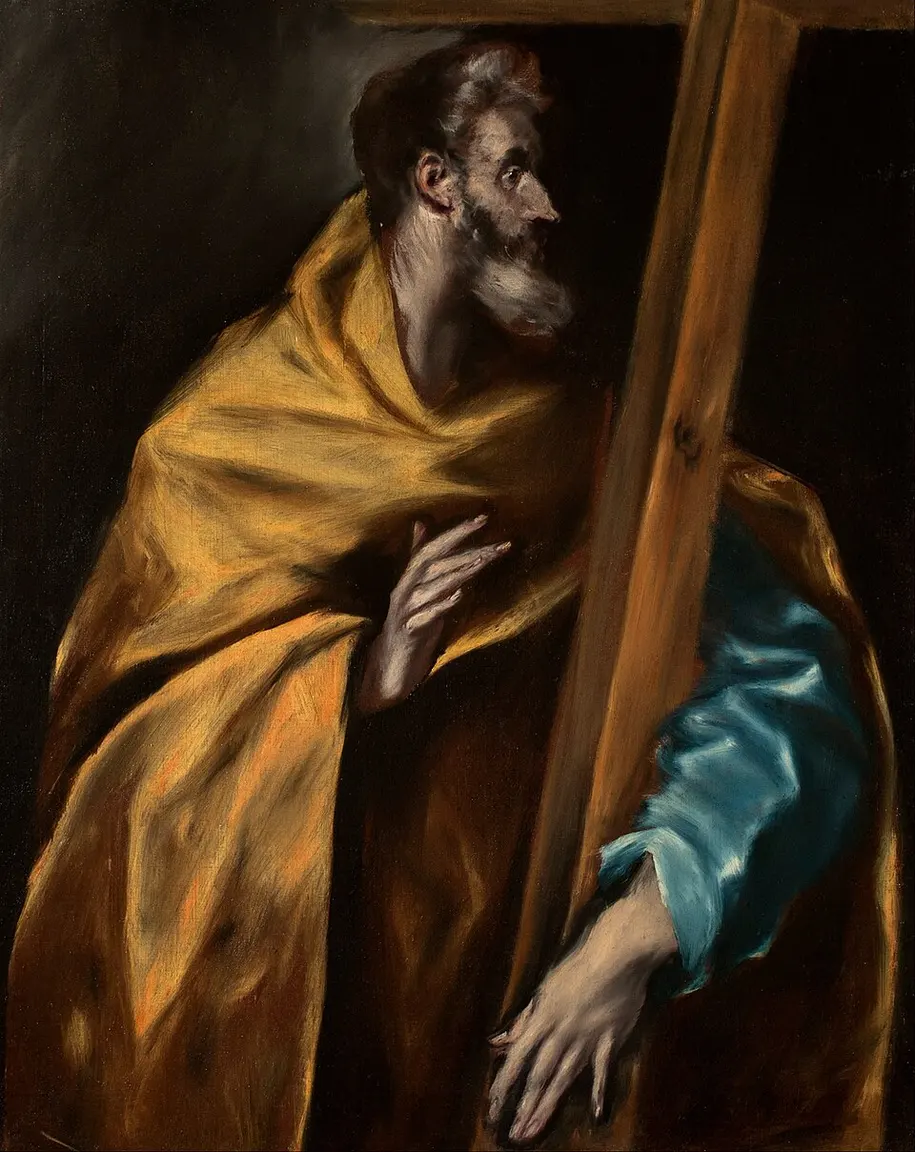
Tau or Latin cross staff—distinct from Andrew’s saltire.
Apostles
Philip the Apostle
Philip was one of the Twelve Apostles. John’s Gospel places him in Bethsaida and shows him inviting Nathanael to meet Jesus.
Iconographic Attributes
John records several occasions on which Philip speaks. Jesus asks him about bread for the crowd; later, Philip asks to be shown the Father. These separate episodes explain his place in scenes of conversation and teaching.
Accounts of his preaching and martyrdom at Hierapolis belong to later traditions. The cross in his images recalls that memory of martyrdom, while the book presents him as a bearer of Christian teaching.
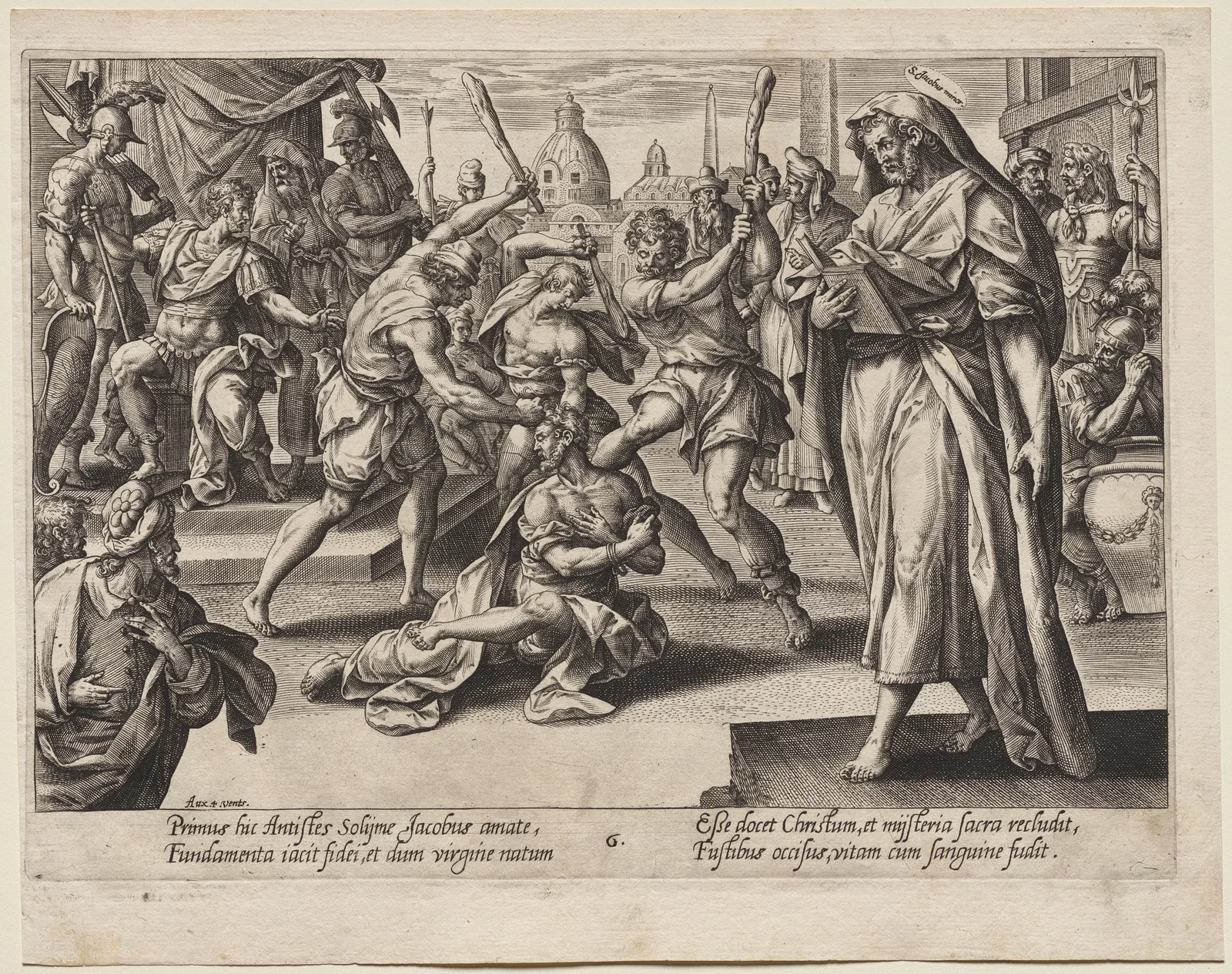
Compare the cross held by the main figure with the small background scene. How are they connected?
Goltzius, following a design by Maarten de Vos, combines the apostle holding his cross with a crucifixion scene. The composition connects an attribute with a martyrdom narrative. It does not depict the feeding of the multitude.
Tau or Latin cross staff—distinct from Andrew’s saltire.
Multiplication of loaves narrative.
Garments of the Twelve or evangelists
Venerable age of prophets and Baptist
Lily staff or prophet's rod
4 of 4 works
The two should be distinguished. Acts 21 identifies that Philip as “one of the Seven” and mentions his four daughters. This differs from the identification of Philip as one of the Twelve.
No. Many saints carry crosses. Here the inscription, the apostolic series and the background scene help establish his identity; a cross on its own does not settle the question.
The Twelve Apostles course
Distinguish Philip’s portrait attribute from a shared narrative detail.
Study this lesson 8 min · FreeReviewed on