Skip to content
Library

Apostles

Saint Peter

Simon Peter

Saint Peter was one of Jesus’s apostles. The Gospels also call him Simon and give him a prominent place among the disciples. In art, keys are his most recognisable attribute.

Feast
June 29
Era
1st century · Galilee, Jerusalem, Rome
In the gallery
5 works

Iconographic Attributes

From Simon to Peter the Apostle

Read the sources

In Matthew 16, Peter identifies Jesus as the Messiah and receives the promise of the keys of the kingdom of heaven. The same Gospel later describes his three denials and his tears. Authority and repentance therefore form distinct subjects in his imagery: a bunch of keys does not tell the same episode as a rooster.

El Greco includes him in the Toledo museum’s series of apostles as an elderly, white-bearded man in blue and yellow. These are pictorial conventions, not a portrait made from life. The series gives each apostle individual gestures and colours; here, a hand placed against the chest accompanies the hand holding the keys.
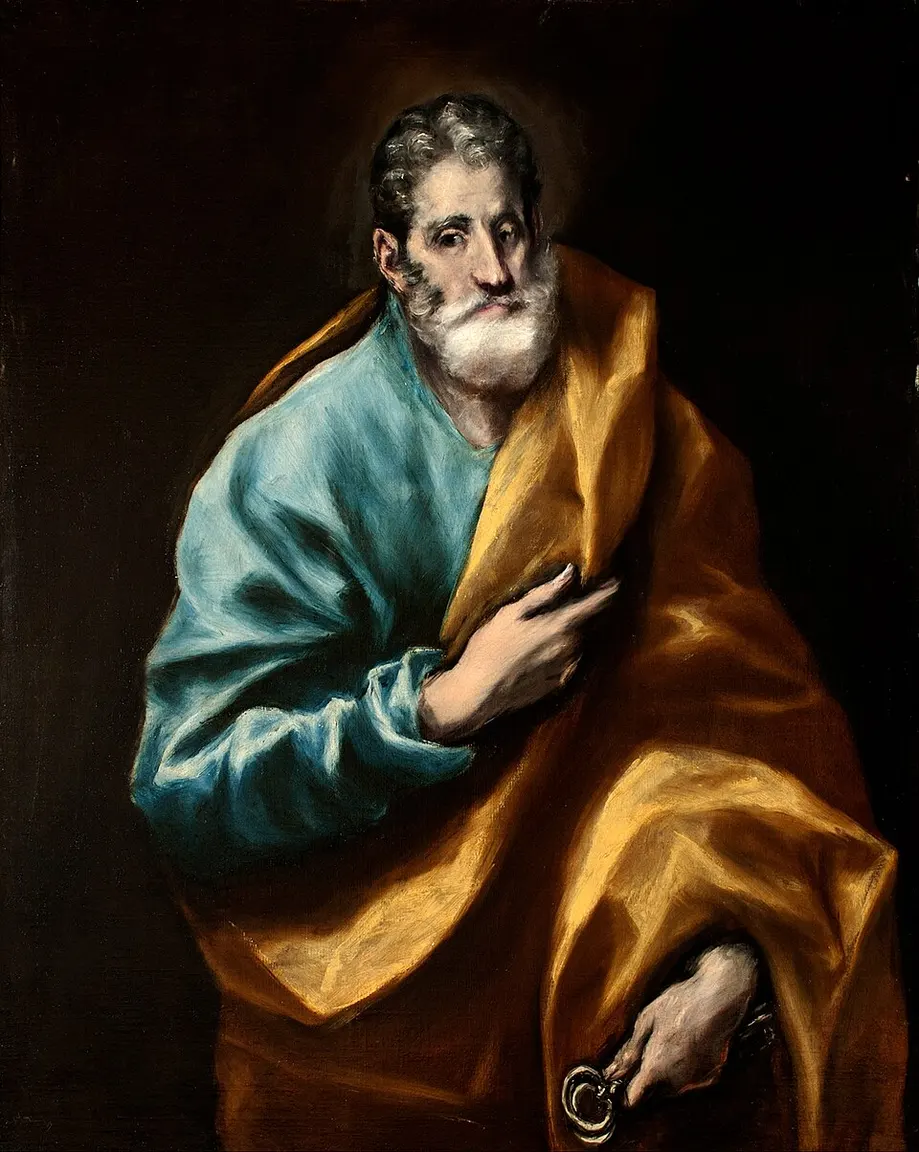
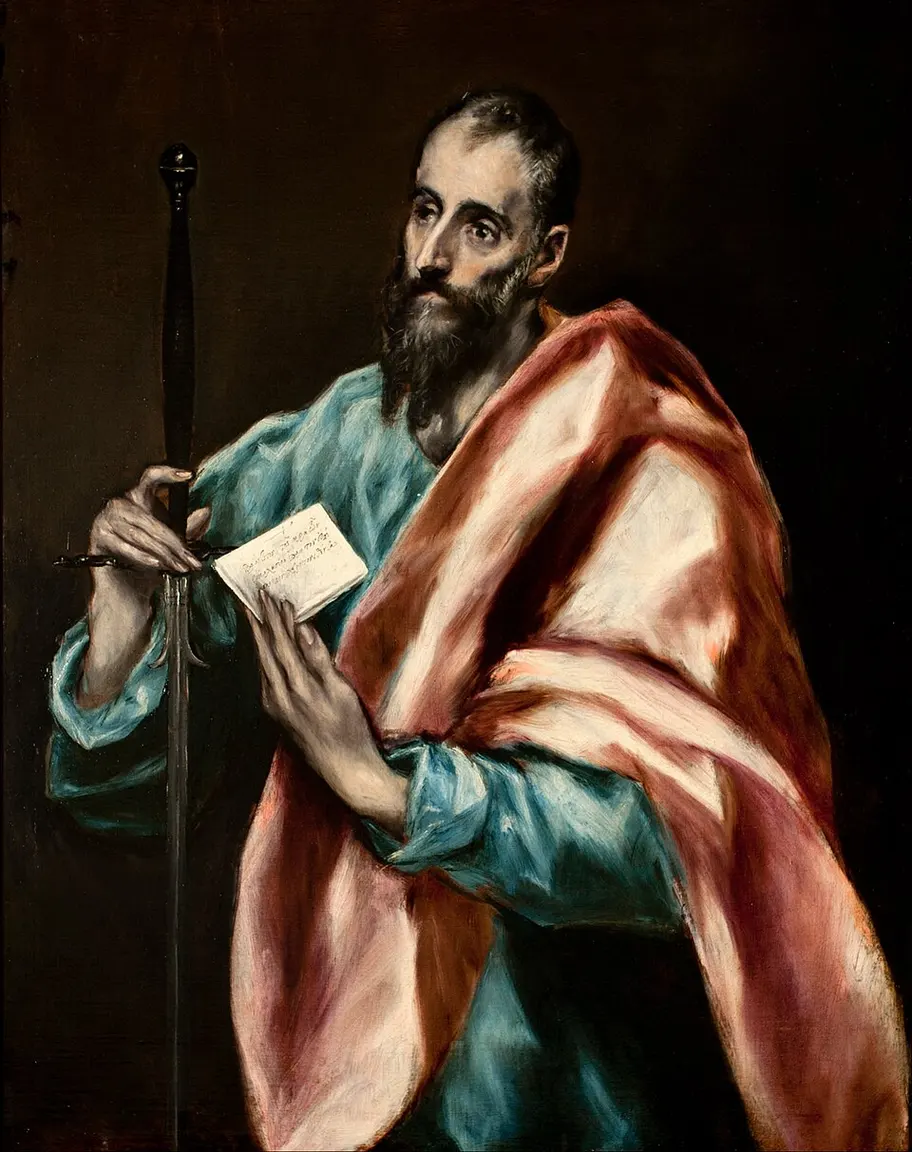
The apostle Saint PeterEl Greco · 1610–1614Artwork record

Study an artwork

Follow both hands in El Greco’s Saint Peter. What does each contribute to the figure’s meaning?

See what to look for

The lower hand, to our right, holds keys with visible ring-shaped handles; the other rests against his chest. The keys support an identification as Peter more securely than the yellow cloak or beard. The gesture at his chest makes the figure seem personally engaged and reflective without identifying a particular episode on its own.

Identifying features

Clothing
blue tunic · yellow/gold cloak · papal vestments
Colours
blue · yellow · gold
Symbols
crossed keys · papal tiara · inverted cross
Common scenes
delivery of the keys · denial · inverted crucifixion · miraculous catch · walking on water
object

Keys

Christ’s words in Matthew 16:19—“I will give you the keys of the kingdom of heaven”—were visualized from the Middle Ages as the papal insignia. Gold and silver keys sometimes represent spiritual and temporal power in later heraldry; in Renaissance panels they are simply the unmistakable sign of Peter.

Saint Peter’s keys

symbol

Inverted Cross

The Acts of Peter and later martyrologies describe Peter requesting an inverted cross out of humility. In modern popular culture the symbol is often misread; in sacred art it is a Petrine martyrdom badge, sometimes held as a small cross staff.

creature

Rooster

After the triple denial “before the cock crows twice” (Mark 14:30), the bird became a fixed companion in Denial scenes and standalone portraits reminding viewers of mercy.

object

Boat

Refers to the fishing boats of Capernaum and the post-Resurrection miraculous catch (John 21), linking Peter’s labor to ecclesial mission.

object

Fishing Net

A secondary attribute evoking the call narrative; appears in altarpieces of the vocation rather than papal state portraits.

object

Book

Gospels, doctrine, or wisdom

symbol

Cross

Passion, baptismal staff, or triumph

More details to look for
  • Keys (one gold, one silver) Symbol of the power to bind and loose that Christ gave him
  • Papal vestments or blue/yellow robes Colors associated with the papacy and his role as first Pope
  • Elderly man, gray beard and bald Traditional iconography representing him in old age
  • Inverted cross Reference to his martyrdom: he asked to be crucified upside down
  • Rooster nearby Recalls his triple denial before the cock crowed

Questions and answers

Why does Saint Peter carry keys?

They refer to Jesus’s promise in Matthew 16:19 and to the authority to bind and loose. In a devotional picture they serve as an attribute: Christ need not be shown handing them over. Nor does every painting have to show exactly two.

Are Simon, Cephas and Peter the same person?

In these accounts, yes. John 1:42 identifies Simon with Cephas and translates the name as Peter. Cephas is the Aramaic form and Peter the Greek, both related to the idea of rock, which Matthew 16 develops through a play on words.

The apostle Peter

The Twelve Apostles course

Peter and the teeth of a key

Locate the physical detail that distinguishes a key from a staff.

Study this lesson 8 min · Free

Sources for this entry

Reviewed on