Eagle
Symbol of John the Evangelist
Apostles
John the Evangelist is the figure to whom Christian tradition attributes the fourth Gospel, identifying him with the apostle John, James’s brother and the son of Zebedee.
Iconographic Attributes
Tradition brings together the apostle, the evangelist and the beloved disciple. The Gospel itself does not name that disciple. His relationship to the composition of the text is a subject of study, rather than an identification to present as proven without qualification.
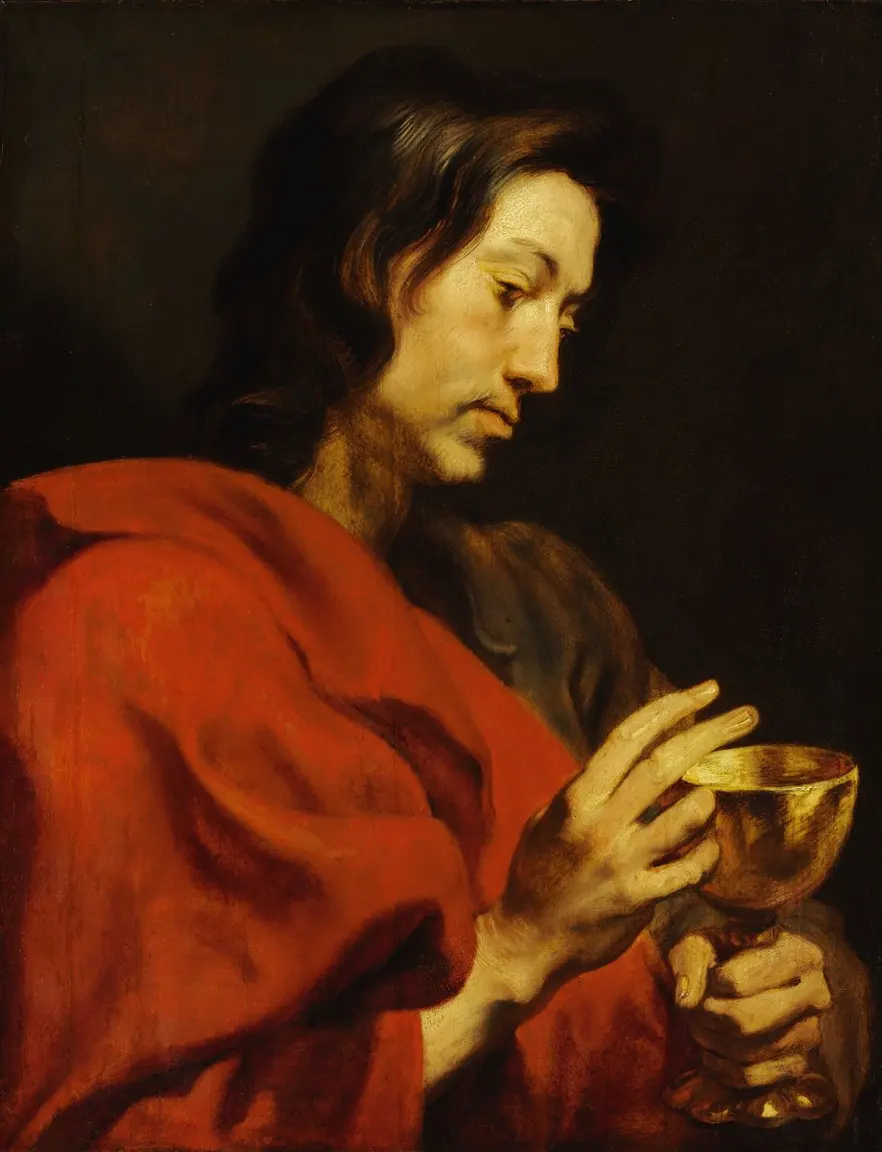
In Memling’s panel, a serpent emerges from John’s chalice, recalling an apocryphal story in which he survives a poisoned drink. His eagle appears in other works. It is one of four creatures traditionally linked to the Evangelists through visions in Ezekiel and Revelation.
Look at the rim of the chalice. Which detail changes the meaning of the vessel?
The serpent emerging from the cup signifies the poison in the legendary account. The chalice should therefore not be read simply as a liturgical vessel: the small animal helps identify John and the story being recalled.
Symbol of John the Evangelist
Chalice legend of John at Ephesus
Gospel composition—open codex with eagle nearby or overhead.
Divine or sanctified light around the head
Youthful apostle robes without camel skin.
4 of 4 works
No. The National Gallery connects it with the apocryphal Acts of John. This tradition explains the painting’s attribute; it is not a scene from the fourth Gospel.
He is not named in that way. His identification with John the Apostle belongs to tradition. The Gospel’s authorship and formation are studied without treating an evangelist’s portrait as a literal record of a single writer.
The Twelve Apostles course
Read two attributes that belong to different traditions about John.
Study this lesson 8 min · FreeReviewed on